Contracting within Local Government Solid Waste Management
This post is written by current student Callie Barnett.
Callie Barnett is a student in the online format and lives in her hometown of Franklin, NC. She completed her undergraduate degree in Political Science with a concentration in public management from Appalachian State University. Originally interning with the Macon County Government as an undergraduate student in the fall of 2024, she is now completing her professional work experience with the Macon County Solid Waste Department.
———————————————————————————————————-
Throughout the UNC MPA program, specifically in Foundations of Public Administration and Organizational Theory, we are taught the idea and value of collaborating and contracting with outside governments, nonprofits, and businesses. During my Professional Work Experience (PWE), I have gained significant hands-on experience with these concepts and practices and have learned more about the positives and negatives associated with relying on other organizations.
Within my time with Macon County Solid Waste, I have had the opportunity to work with and read through three different contracts. The first being the county’s franchise agreement with a private waste disposal/hauling company. The franchise agreement describes that the company will be the only doorstep trash pickup service that will be able to run within the confines of Macon County. Stipulations of this agreement include a set price that the company can charge a user, and the county allowing the company to use its landfill for “free,” since residents pay an availability fee yearly, thus offsetting the cost.
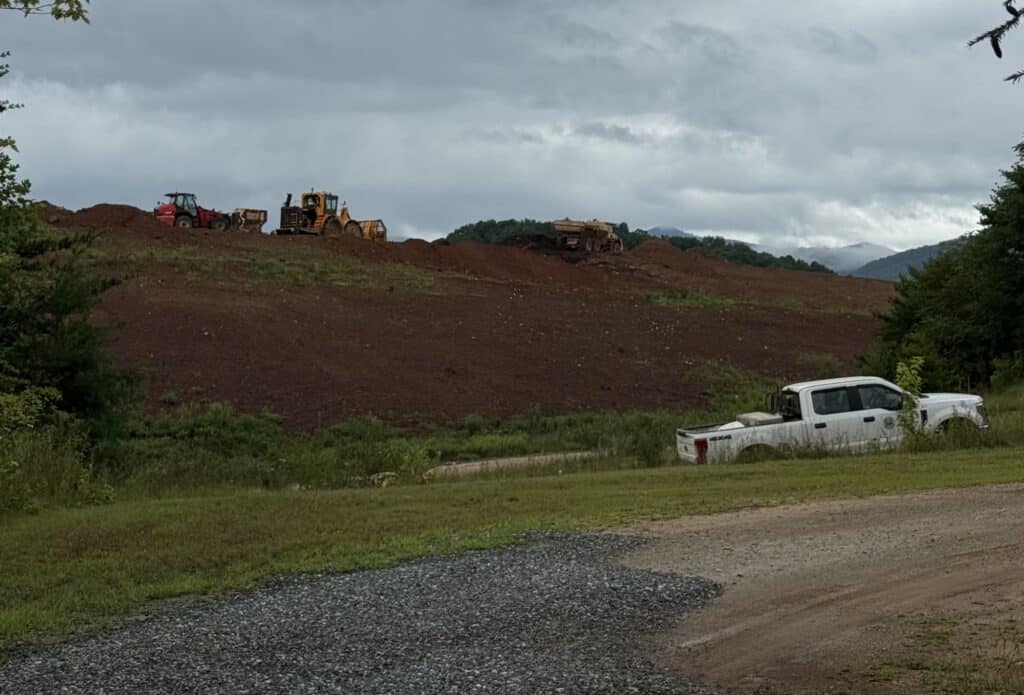
The second contract is with the same company as mentioned above. However, under this agreement, the company hauls all trash from the eleven county convenience centers. If residents do not want to pay for curbside trash pickup, they can bring their household waste to one of these convenience centers and dump it there for free (provided by the yearly availability residents pay). Additionally, due to the county’s size and terrain, there is a solid waste transfer station located in Highlands (whereas the landfill is in Franklin). This contract guarantees the company 32 hauls a month to the Franklin Landfill and sets a defined price. The current problem is that the company is not able to keep up with the volume of waste that is coming into this transfer station. Thus, the county and solid waste department are considering hauling some of the trash to another landfill via another contractor to meet the current demand. The main issue within this contract is that it doesn’t list a penalty if the company is not able to meet the demands of hauling waste from the transfer/convenience centers to the landfill. This puts the county in a difficult situation because its needs are not being met and there is no incentive for the company to uphold their end of the contract.
The third contract that I have looked at is the department’s agreement with its mulching firm. With the landfill accepting large amounts of downed trees and limbs and the state banning putting these items directly into the landfill, mulching is the only way to dispose of these materials. Once mulched, the debris can be used within the landfill cell as cover or be given away. However, the department does not own a mulching machine and is not interested in purchasing one; thus, they contract with a local company to do so. This arrangement saves the county and solid waste department the headache of purchasing new (and pricey) machinery and having to maintain it, while also boosting the local economy by keeping money in a self-contained loop.
In class, we are taught the value of contracting out work and collaborating with other organizations, but until it is viewed in the workplace, it was hard to wrap my mind around the complexity of relying on outside vendors to provide essential services. Through working with the contracts mentioned above, I have come to understand the importance of a well-crafted agreement that uses both carrots and sticks to encourage vendors to uphold the deal. Within my classes thus far, I have only encountered the “pros” of contracting and not the downsides; however, through my PWE, I have concluded that local governments can find themselves in a lot of trouble if a contract is poorly written and doesn’t institute the proper guardrails.