
The original sign from the Canton Train Depot
The original sign from the Canton Train Depot
This week I wandered over to the Canton Historical Museum, conveniently located beside town hall. As a history major, I have wanted to visit the museum since I moved to Canton. Caroline, the museum curator, greeted me at the door and was happy to show me around the many exhibits that line the walls of the old building. For a small town, the number and quality of items that have been preserved is impressive. Caroline explained that the extensive collection resulted, in part, from the pride of the residents and their desire to document the town’s story. She described the recent donation of a box of photos and documents found in an attic and walked me through the process of organizing and documenting the items. In 2004, the building flooded and some of the items were damaged or lost. Despite this setback, thousands of unique items remain on display, including a large exhibit from the paper mill and the original sign from an old train depot.
An item from Canton, Ohio, prompted me to ask about the connection. Caroline and a volunteer who joined our conversation explained that the piece, part of a bridge once located in the center of town, was the reason behind the town’s name. They described how a board member in 1893 stormed out of a meeting to decide the name of the town following a heated exchange. As he walked through town, the board member crossed this bridge and noticed the name “Canton” on the metalwork of the iron structure. When he returned to the meeting, the man recommended naming the town “Canton,” and the board unanimously agreed. After roaming through the exhibits, I am convinced that the museum staff could have offered an anecdote like this for every item in the museum.
Throughout February, my posts have featured women in local government, focusing on their roles and highlighting their contributions to the community. This week, we meet Kristina Smith, alderwoman for the town of Canton.
Many individuals point to a specific event that inspired them to enter public service. Hopeful MPA applicants may include descriptions of inspirational experiences in their personal statements. Politicians often tell stories describing encounters that motivated them to seek office. When I asked Alderwoman Kristina Smith what compelled her to enter public service, she pointed to a series of events. The city council meeting she attended as a young girl. The speech given by a president calling on individuals to get involved to make their communities a better place. An unexpected opportunity to lead in her new town.
The city council meeting Kristina attended as a young girl scout marked her first exposure to local government. She was struck by the diversity of leadership on the council. Following this experience, she realized serving in a leadership position does not require a specific type of person with a certain set of skills. Anyone can lead if they are willing to take on the challenge! Years later, Kristina moved to Canton with her family and became involved in her community. When the opportunity to run for local office arose, Kristina accepted
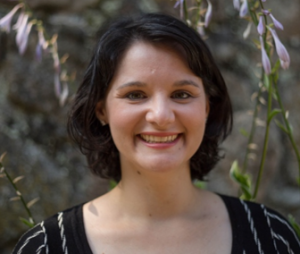
the challenge and was elected in 2017. In her new role as Alderwoman, Kristina enjoys engaging the community, problem solving, and always searching for the best outcome for Canton, regardless of the issue.
Given her experience, I asked Kristina if she had any advice to share with women interested in local government careers. Don’t doubt yourself or question your abilities, she said, “rather than asking yourself ‘can I lead?’ tell yourself, ‘I’m ready to lead.’” She emphasized the power of transferable skills and how beneficial they can be in taking on new opportunities. “There isn’t a single role for you,” she remarked, “think about all of your experiences and how they complement different roles.” As Kristina learned in that city council meeting, anyone can lead. The only limitations you have are the ones you put on yourself.
During the month of February, my posts will feature Women in Local Government, focusing on their roles and highlighting their contributions to the community. This week, we meet Teresa and Sandy, two individuals committed to serving the town of Canton in their roles as Accounting Clerks.
When visitors walk through the double glass door of the William G. Stamey Municipal Building in downtown Canton, NC, they are typically welcomed by a friendly greeting from Sandy or Teresa. Beyond being the first town employees that residents interact with, Sandy and Teresa keep the front office running smoothly by managing a diverse list of responsibilities. They field questions about trash pick up, board meetings, water services, facility rentals, and more, a task that often requires a lot of patience. Sandy and Teresa warmly welcomed me when I began my PWE and have since been very kind to answe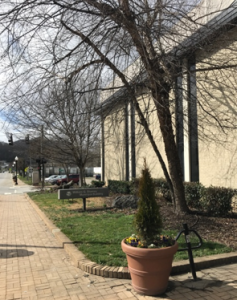 r my ongoing questions, including the ones for this interview! As they explained, to work in these positions, a person must have a strong understanding of local government and “everything that happens in town hall.” Serving in the position of Accounting Clerk involves more than just answering questions; they also process financial transactions and collect payments. Occasionally, their duties take them outside the office where they have participated in everything from working the Labor Day concert to driving a utility vehicle alongside town officials in the Christmas parade.
Despite the challenge of having to deal with complaints, Sandy and Teresa had a lot to say when I asked what they enjoy most about their jobs. They described how working in public service was more fulfilling than their previous positions in the private sector. Leaving at the end of a day knowing they have helped someone solve a difficult problem makes the job enjoyable. When describing the benefits of working in local government, they emphasized teamwork, learning, and community involvement. With a small staff, events like the Labor Day Festival requires months of planning and involves staff from every department. This is a point that might surprise people. As Sandy explained, “residents wake up and their trash can is empty or they show up to a large event like the Labor Day Festival and think it just happens. They don’t often think about the hours of work it takes from people behind the scenes.” According to Sandy and Teresa, having a good team not only makes a job more manageable, it also makes it fun.
Another perk to working in local government which Sandy and Teresa discussed is the opportunity to learn more about how the town functions. Years into their careers, they both indicated that they continue to learn something new every day. Learning about local government helps foster a better connection with the town and facilitates community involvement. For this series, I conclude every interview with the same question: What advice do you have for someone interested in working in local government? Their suggestion: Get involved in the community! At this point in the interview another staff person wandered into the conversation, and she seconded this recommendation. She also highlighted the importance of staying informed through attending board meetings or reading the minutes (available online). When I asked Sandy and Teresa if they would recommend a career in local government, they responded without hesitation, “yes!”
If you thought of a Carolina MPA professor, you guessed it!
 Meet adjunct professor Kody H. Kinsley, who is part of the team pushing to end the opioid crisis in North Carolina AND teaching Carolina MPA online students. He currently serves as the Deputy Secretary for Behavioral Health & Intellectual and Developmental Disabilities for the North Carolina Department of Health and Human Services (NC DHHS). In his current role, Kinsley focuses on state-wide public policy and operations that promote whole-person health for individuals living with mental illness, intellectual or developmental disabilities, traumatic brain injuries, and substance use disorders. (To learn more about Kinsley’s work with NC DHHS, click here).
In 2016, North Carolina had one of the highest opioid overdose death rates in the nation and was one of the top eight states for fentanyl overdose deaths (North Carolina Health and Human Services Press Release). In response, state and community partners created the NC Opioid Action Plan. As a result of the implementation of the plan, North Carolina saw a decrease in unintentional opioid-related overdose deaths for the first time in five years and a 24 percent decrease in opioid dispensing.

For that reason, Kinsley was invited to testify at the “A Public Health Emergency: State Efforts to Curb the Opioid Crisis ” hearing held by the U.S. House Committee on Energy and Commerce Oversight and Investigations Subcommittee on January 14th, 2020. Kinsley was asked to share how North Carolina has used and is using federal funds to promote opioid treatment and recovery efforts. (To learn more about this hearing, click here).
In addition to his role at the NC Department of Health and Human Services, Kinsely serves as an adjunct professor for the PUBA 721: Professional Communication course in the Carolina MPA online program. He comes to the program with experience serving as the presidentially appointed Assistant Secretary for Management in the United States Department of Treasury, as well as private-sector work. Kinsley brings a unique perspective and plethora of professional communication experience to the Carolina MPA program and its students. We are lucky to have him!
On Saturday, Canton drew crowds of superheroes, daredevils, and ballerinas for the town’s 8th Annual Polar Plunge. Canton hosts the fundraiser at the local aquatic center that recently underwent a major renovation and is a great location for community events. The Polar Plunge marked my first community event since starting the PWE in January. Attended by hundreds of individuals from Canton and surrounding areas, the Polar Plunge included participants from Asheville firefighters, to Canton’s mayor, to students at Canton’s two middle schools. Canton is located in the mountains of western North Carolina where snow fell throughout the week, including yesterday! The temperature on Saturday morning was a chilly forty degrees! Beyond the entertainment, the event offered a glimpse of town employees’ responsibilities that extend beyond the traditional workday. From planning the program to monitoring the safety of participants, town employees worked alongside volunteers to help make the event a success.
Sponsored by the Town of Canton and the Haywood Waterways Association, this event benefits a community program called Kids in the Creek. This program involves about 700 middle school students each year in activities aimed at generating environmental awareness and highlighting the importance of clean water. Students explore the quality of water by participating in hands-on activities in local bodies of water. Local science teachers are happy to discuss how Kids in the Creek complements their lessons and promotes responsible citizenship. Created by the Tennessee Valley Authority, the Kids in the Creek program represents how effective collaboration among federal and local governments and nonprofit organizations can lead to successful outcomes in communities. As an intern, exposure to events like this is important to developing a better understanding of a local government career. Speaking of careers in local government, next week I am starting a series about women in local government. I look forward to sharing highlights from interviews with women who serve in public service positions from town employees to elected officials.

 I have often heard local government employees explain that they love their jobs because each day brings new challenges and opportunities. The same has been true in my PWE. Last week, the town manager sent me an unexpected and fun assignment. I planned to start this week continuing my research on local ordinances but instead had the opportunity to write a report for the town’s planned upcoming dog park. Prior to this week, I knew nothing about dog parks, so I really enjoyed researching the topic and writing the report. Did you know the top citizen priorities for dog parks are typically cleanliness, shade, and water? I discovered best practices related to everything from amenities to location to surface materials!
Through my PWE, I am learning more about the range of responsibilities local government employees tackle every day. In Canton, that means completing tasks like delivering recycling bins, meeting with local business leaders, and planning events. As I mentioned previously, I have no local government experience. Completing my internship in a small town with a limited number of staff provides me with the opportunity to gain a broad perspective of duties and expectations required of town employees. While functioning with a smaller staff can be challenging, it also means that town employees develop a diverse skill set. The dog park is part of a larger parks and recreation improvement project, and I’m excited to see the transformation. As I continue in my PWE, I look forward to sharing with you the details of other assignments that come my way. With multiple projects planned, it’s an exciting time to be working with the Town of Canton!
Week two has been filled with research. Lots of research. In my first day on the job, I was handed a large binder containing the Town Code of Ordinances. I spent a couple of days reading through the binder familiarizing myself with the Town’s laws. The Town Code is available online, but I liked having the binder. It felt very official. Starting off with this assignment turned out to be really constructive given my lack of experience in local government and limited knowledge of the laws in my Town. After all, it would be difficult to work 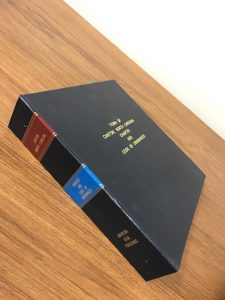
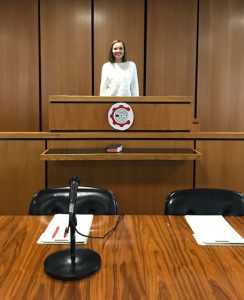 effectively without knowing the Town rules, right?
One of the benefits of completing my PWE here in the town manager’s office is the opportunity to work on projects like the one I completed this week. After taking the time to read the Canton Code of Ordinances, I began conducting research on sections that town officials expressed an interest in updating. My report this week related to the Town Sign Ordinance. I reviewed the current Sign Ordinance and researched ordinances in comparable municipalities then provided some recommendations in a report to the town manager. Throughout this process, I spent a lot of time searching Municode, reviewing Supreme Court cases, and reading through state statutes. Next week the Locating Legal Resources Activity is due in my Law class, and after all this research in my PWE, I am much better prepared to tackle that assignment! My experience this week also confirmed just how relevant that Law class is to a public service career. Next week I will be working on a really fun project that I am excited to share with you! Stay tuned!
Hello everyone!
Happy New Year & welcome back to the school year!
I am not sure about y’all, but the MPA program is super excited to begin this semester. Want to know why? Well…it’s because we have NEW students! We want to extend a huge congratulations and WELCOME to our January 2020 online cohort!!! This group comes to us with an interesting background and diverse perspectives. Here are some cool things to know about our new students
DEMOGRAPHICS
We have quite the group starting this January in our online program. Demographically, our new students are coming to our program from Minnesota, Alaska, California, Florida, New Jersey, and more! See below to see exactly which states and how many students.
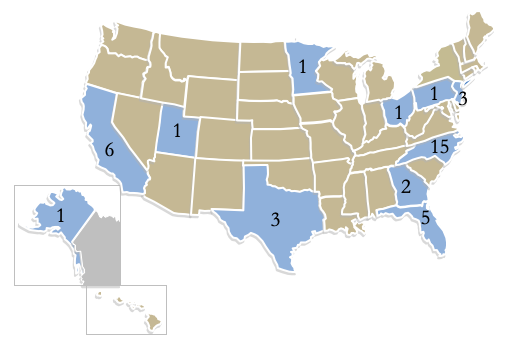
Highlighted states with corresponding number of students coming into our 2020 January Online Cohort.
And as far as the gender-binary goes, we have almost an even 50-50 split; This cohort has 11 female students and 10 male students! The cohort’s average is 34 years old, which shows that they are bringing their own wealth of knowledge and experience into the program!
EXPERIENCE
Speaking of experience…this cohort has an average of 10+ years of working 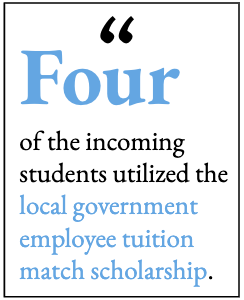 experience! Four of the new students utilized our new local government employee tuition match scholarship! Of those four, two were firefighters, one was the head of a local government IT department, and the last one was a town manager. The cohort has two other students with a military background. Also, they have three students transitioning from working in the private sector to working in the public sector. Can you imagine the fruitful conversations that will be happening during their class times?
INTERESTS
Given the students’ diversity of experience and location, it is to be expected that they would have diverse interests as well. (And it’s true!) Their interests range from healthcare administration to IT in local government to financial management in state government. We even have one student who is interested in running for office! A long with their personal and career interests, the January 2020 online cohort expressed varying areas of interest in the MPA program.
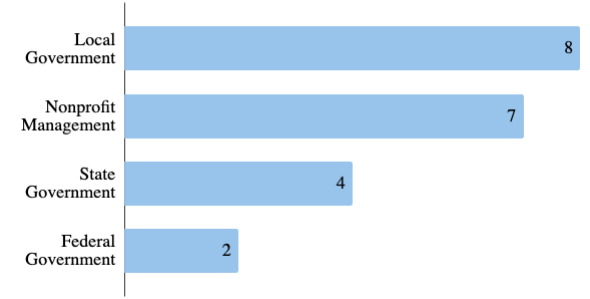
The majority of our incoming students expressed interest in local government (8) and nonprofit management (7). However, the cohort also has students interested in state government (4) and federal government (2).
All in all, we are so very happy to welcome our January 2020 online cohort! We can’t wait to see where the MPA takes our new students.
 On Monday, I began my PWE in the office of the town manager in Canton, North Carolina. Canton is located in Haywood County just twenty miles outside of Asheville. Surrounded by the Appalachian Mountains. Canton attracts adventure seekers who enjoy hiking the surrounding trails that include popular landmarks like Cold Mountain, floating down the Pigeon River that runs through town, or visiting downtown businesses that feature delicious southern food and locally made goods. In the center of town sits a large papermill that manufactures Starbucks coffee cups, juice cartons, and other paper products. Due to the central location and large size of the mill, the locals affectionately refer to Canton as “Papertown.”
As a current graduate student, one of my favorite things about this program is the fact that we have such a small cohort. Our cohorts usually range from 20-25 students. These are the students that you will share all of your core classes with. (To see a list of the core courses, click here). Even though our online students don’t typically meet in-person (outside of electing to do the immersion course), the MPA program tries to replicate the small cohort feel by using video conferencing and small class sizes of about 15 people. In my opinion, here are the best parts about having a small cohort.
The perks of the small, personable cohort is one of the main reasons that I was so drawn to this program.