
Christopher ‘Layne’ Cole is from Roxboro, NC, a small town about an hour north of Durham where he grew up on a small farm. He went to UNC Asheville and graduated with an economics and international studies major and minors in human rights law and political science.
We sat down to talk with Layne about his recent work with the NC benchmarking project. Also, note that while we are interviewing Layne about this project, there are 3 other research assistants (Keegan Huynh, Noah Ellington, and Kirsten Tucker, who are also working on this project and are doing equally as important work.
—————————————————————————————————————————
Q: How did you find your way to the MPA program at UNC Chapel Hill?
Layne: I was kind of all over the place with my undergrad, but I have always been civically and politically minded. If I have to work, I want it to be for the betterment of my community and for the people that I care about. I love North Carolina, and I knew I wanted to stay here. Once I graduated I heard about the program called Lead for North Carolina from a friend of mine. I applied, got accepted, and became acquainted with the School of Government, the faculty and staff, and all the opportunities in local government across North Carolina. I got to know the program, and it seemed like a great community with a lot of really good resources and networking.
Q: We hear you are working with Dr. Obed Pasha on the benchmarking project. Could you tell us more about what this is and what your work entails?
I started with Dr. Pasha during my first semester in the program as a graduate assistantship, and it turned into a research assistantship. The original benchmarking project started in 1995 as a way for municipalities to come together and compare their services and their performance trends with other participating municipalities in North Carolina. When Dr. Pasha was hired, it became known as benchmarking 2.0 because it was focused on an overhaul of the data collection system and expanding the project to include more municipalities and peer conversations about best practices. But benchmarking as a field and as a subject, is about gathering data on your organization’s performance and metrics and then comparing that throughout multiple years (and also with comparable organizations), so that you can find new solutions to wicked problems, or, you know, timely issues. We work with 17 municipalities as of now, and we have give or take 15 service departments. It really is all about making local government better.
Q: What are examples of some of these data points?
Layne: We collect fire service data from every municipality that we work with, and it gets down to a very granular level to the amount of fires put out within 10 min. When that is tracked, and a municipality has a high level of number of fires that have been put out quickly, they can have a conversation with other local governments about how they do that and what resources they use to get this done. Then other local governments can start to advocate within their own government about funding resources and best practices to implement to do better.
Q: What has been an outcome of all this work?
Layne: It’s really three aspects we work to support. First is the data collection. We create a dashboard that’s publicly available, and this allows municipalities or even public citizens to compare service departments, metrics, and see how high performing or low performing your municipality is compared to the rest of North Carolina. The second part are the performance strategy sessions. This is where all 17 municipalities, representatives from different departments come together at the School of Government to have conversations about what best practices are what issues they’re running into. They take and borrow from each other, and we provide the space for that. And then lastly is an annual report about new and best practices that came out of these sessions that is then sent to every participating municipality. And also it becomes a publicly available resource on our website (here is 2023’s report).
Q: What has this research opened your eyes to?
Layne: We need public leaders now more than ever and people willing to push the envelope and work with new ideas and innovation. My experience has been that local governments are open to this level of experimentation, and that frequent narrative that it’s bearucratic and set in their ways is not what I have seen from this work. It made me hopeful.
Personally, it has helped me with hard and soft skills as a leader. I work very closely with the other RA’s assigned to this project – Keegan Huynh, Noah Ellington, and Kirsten Tucker. I’ve learned how to communicate with local government professionals, academics, and my fellow peers. Dr. Pasha really empowers us to make our own decisions, and even though he’s the subject matter expert, he really respects our opinion and wants us to be leaders in our own right.
Q: Tell us about Dr. Pasha.
Layne: Dr. Pasha is not only a great professor, but he’s also just a great person. He’s really caring and thoughtful, and I think that is a pillar of a good leader. Communication and collaboration is the foundation of how we work together. You know, we always bounce ideas back and forth, and I think that leads to a lot of success. But with that, we are very empowered to work independently and use our own skill set to make the benchmarking project better.
Q: Can you give us an example of something you initiated or implemented with this project?
Layne: As you can imagine, manually auditing data is a big part of this project, and validity is crucial for the service we provide, so I reached out to the AI Club on campus and proposed that they work with us to create a program that will clean or flag data audit before we check it and really streamline that system. The proposal was accepted and over the next year we’ll be working with the AI Club to create a program that will improve our data collection and really offer an opportunity for more robust analysis.
Hallie Springer, 2nd year student
Hometown: Winston-Salem, NC
Undergraduate Majors: Economics and Public Policy
Undergraduate School: University of North Carolina at Chapel Hill
Research Assistantship: Hallie has been working for ncIMPACT since she began the MPA program in August 2023. ncIMPACT aims to provide sound data, research, and analysis to civic leaders and policy influencers across the state. It also helps to provide evidence-based insight and creative policy options for public leaders through an enhanced understanding of innovative practices happening in North Carolina, across the U.S., and around the world.
Current Project: Hallie’s current project in collaboration with ncIMPACT and NCGrowth is evaluating North Carolina’s system of economic development tiers. The North Carolina County Tiers system was originally developed to encourage job creation in economically distressed counties by providing tax incentives. Since its inception, the Tiers system has also been used to allocate school funds, determine health care provider loan forgiveness, and more. She’s participated in and coded around 20 research interviews with state and local leaders in economic development and is contributing to a draft report that will inform policy makers on whether this system accomplishes its stated purpose. To read more about the purpose and challenges of this tier system, Hallie helped write this blog post.
Q: What are you all hoping will come out of this research?
The economic development tier system is intended to help funnel money and businesses into economically distressed areas with low income and low employment. So places with low income or low employment and stuff like that. As the system currently sits, it doesn’t do that effectively. And so people often want to change it. Our goal is to help streamline the system and ensure the money that this system brings in goes where it’s supposed to go and help advance those distressed communities.
Q: What are some things you’ve gotten personally or professionally out of this experience?
Probably number one is, I’ve learned a lot about how to interact with people in the field. I feel like before I did this, I was kind of like, ‘Whoa, they work for the state.’ That they’re high up there. That’s scary. But now I’m just kind of like, okay, everyone knows each other, and you just gotta talk to them like a person, and they’ll talk to you like a person. And I feel like I’ve gotten a lot of good experience like figuring out how to communicate in a professional way, but also a way where you are not shrinking yourself down. And then the second thing is I’ve learned a lot about working professionally on a team. Our team (ncIMPACT) is relatively small but we work with another team (NCGrowth), and so it’s been really helpful to see how we all support each other and also be able to look ahead at how to prioritize things in the future. It’s been a great experience of making sure your voice is heard while not forcing your will. Teams often have very different working styles and experiencing these different styles has been important for me professionally.
Q: As you gear up to graduate next semester, where do you see your career going?
I’m really excited about the work and the type of organization that ncIMPACT is. I plan to seek out other government-adjacent organizations like ncIMPACT or similar non-profits where the work goes hand in hand with a lot of community level organizations, state level organizations, and local government organizations. I really just realized I like the intersection of all these constituents and this collaboration towards the same goal.
This interview highlights the rewarding research work of Lilly Parker, an MPA student as she works with Dr. Teshanee Williams and nonprofit organizations to find new ways to objectively measure what these organizations use to achieve their missions.
Q: Where are you from originally?
Lilly Parker: I’m from Louisville, Kentucky. After undergrad at Wake Forest, I moved to Atlanta to teach. But now, I’m loving life in North Carolina, especially the Triangle area. I live in Chapel Hill, but I have friends in Durham and Raleigh, so it’s great having all three cities nearby. The Triangle area has so much to offer, and it’s such a welcoming place. Living in a college town like Chapel Hill has been a unique experience. There’s a real sense of community and creativity here.
Q: Can you tell me a little bit about your role as a Research Assistant?
Lilly Parker: Yes! So, I work with Dr. Teshanee Williams, who is the main nonprofit management professor in the MPA program. This semester, she’s teaching the nonprofit management class online, and next semester she’s teaching a class on local government and nonprofit collaboration.
I was really excited when I got paired up with her for my RA job because I’ve always been interested in nonprofit management. One thing that attracted me to the UNC MPA program was its focus on cross-sector collaboration, especially between nonprofits and local governments. So, when I learned I’d be doing research with Dr. Williams, I was thrilled. Her research is centered around nonprofit capacity building and collaboration between the public sector and nonprofits.
Q: Can you tell me more about the concept of capacity building that you’re working on?
Lilly Parker: Absolutely! Nonprofit capacity refers to everything an organization uses to achieve its mission. We are examining five different components of capacity: organizational, resource, network, political, and programmatic.
When I first met with Dr. Williams, she explained that in her previous research, review boards often mentioned the need for a more objective way to measure capacity. Most current methods rely on surveys filled out by executive directors, who might unknowingly or knowingly answer in ways that reflect positively on their organizations. So, we’re designing an objective way to measure capacity. It’s really exciting because I’ve been involved since the beginning stages, and Dr. Williams is walking me through every step.
Q: What have you worked on so far?
Lilly Parker: We started by reviewing the existing literature on how capacity is measured, focusing on whether it has been measured objectively in the past. I wrote a literature review based on our findings, and we decided on our research variables. We’re looking at how revenue diversification—like getting funds from many different sources such as government grants, foundations, earned income, and/or individual donations—correlates with each component of capacity.
Right now, we’re finishing up designing the tool that we will use to measure each component of a nonprofit’s capacity. We are also beginning to collect available data on Smart Start, the organization we will be studying. Dr. Williams has been an incredible mentor, guiding me through each phase. This has been especially helpful since I didn’t have a ton of prior research experience.
Q: Did you always know you wanted to work in the nonprofit sector? What drew you to this position?
Lilly Parker: My journey into the nonprofit sector started in high school and undergrad. I volunteered with many organizations like the Boys and Girls Club in Louisville and Latino Community Services in Winston-Salem. These experiences helped me realize that I love volunteering for nonprofits and working with kids. After college, I taught for three years but quickly realized that there were many systemic issues affecting my students that I couldn’t address as a teacher. That’s what inspired me to pursue the MPA—I want to work in organizations influencing system-level change. Nonprofits have always appealed to me because of their mission-driven work and the autonomy they have in how they operate.
Q: That’s such an inspiring journey. How has it been working with Dr. Williams?
Lilly Parker: She’s incredible to work with. We meet weekly, and she’s very committed to guiding her students. She walks me through her thought process, explains what we’re trying to achieve, and then trusts me to carry out the work. It’s been a fantastic learning opportunity.
One thing I really appreciate about Dr. Williams is her commitment to making sure that her research directly benefits the communities and organizations we study. She ensures that our research provides practical tools that nonprofits can use to improve their capacity.
Q: What are your plans post-graduation?
Lilly Parker: I’m still figuring that out! I want to work in the nonprofit sector, ideally as an advocate for children and families. The MPA program is great because it’s giving me a wide range of skills, from law to financial management to HR. I’m taking grant writing next semester, which I think will be super useful. I’m leaning towards roles in either development or program management, but I’m open to exploring different options.
After a summer state government internship and a waste audit, Brianna Beadle is back to studying public administration.
By Joshua McCormack, University Communications, Wednesday, September 11th, 2024
For Brianna Beadle, public service has long been part of her identity.
After receiving a bachelor’s degree in criminal justice from Florida Atlantic University, Beadle took time off to work in the Florida Student Power Network, where she serves as part of their advisory board. She is now in Chapel Hill pursuing a dual master’s degree in public administration with the UNC School of Government and the city and regional planning department in the College of Arts and Sciences.
Despite the intense workload a dual master’s degree entails, Beadle was not interested in having a quiet summer. Instead, she spent most of her time interning with the North Carolina Department of Environmental Quality.
“It was my job to research composting across the state and find how recycling can feed into our economy,” Beadle said. “I would talk to individuals at composting recycling facilities and ask how they believed they were affecting their community.”
Beadle says it was eye-opening to see how political machinations and cynicism among state residents influenced either a negative or indifferent response to composting in many communities. Certain projects, however, reminded her of the positive impact composting can have.
“I worked on a waste audit at the department’s building where we implemented a composting bin and then analyzed a day’s worth of trash,” Beadle explained. “We found out that after implementing the bin, we had reduced waste in the building over the summer.”
Beadle was also inspired by the hard work of the department’s team. When she wasn’t gathering statistics or doing field site visits to different North Carolina counties, she sat in on meetings listening to individuals talk about making a difference.
“One of the most impactful things was when I got to do a Q&A with the DEQ secretary Elizabeth Biser,” Beadle said. “Just having someone at her level say, ‘Hey, there’s a future for you on this career path’ was really important.”
Biser and others have provided inspiration for what Beadle can do after her time at Carolina. She has developed a passion for state government and believes this summer’s experience with the DEQ gave her an understanding of how environmentalism is feasible in our economy.
“I learned so much about how our climate and economy are intertwined,” Beadle said. “I’d love to have a role in telling people how renewable energy is feasible and how to embrace composting. I want to let people know there’s a way to slowly transition to better resources for our environment.”
This year at Carolina, Beadle is looking forward to expanding her knowledge in housing and community development. She will also serve as president of the MPA’s Diversity Committee, in which she hopes to showcase different career opportunities in public administration that celebrate diversity.
No matter what Beadle accomplishes during her time here at Carolina or in the years that follow, there can be no doubt that her work will be for the betterment of the community.
UNC MPA is excited to welcome 64 new students in fall 2024—with 29 joining the on-campus format and 35 enrolling in our online format. These students hail from Washington State to Washington D.C., representing different interests and academic backgrounds and professional goals.
They are unified in their pursuit for an excellent education among like-minded leaders who are committed to impacting communities, governments, and organizations that serve the public for the better. Meet a few of them below!
Carlos Morales
Hometown: Columbia, SC
Undergrad Degree and Alma Mater: BA in Public Health, with a major in Food Systems, Nutrition and Health and University of Washington
Areas of Interest: Food and Environmental Policy, rooted in social and racial justice

Q: Why the MPA? How did you decide it was the right degree for you and your career goals?
Over the past decade, I have been on a path of public service that has continually evolved, from owning a restaurant and serving community members to serving as a food educator with AmeriCorps and teaching kids how to grow and cook the food from the school garden. Next, I would find myself farming, learning regenerative practices, and working to reconnect to the land and my body. This path brought me to the local food bank in Bellingham, WA, where I would serve on the Board of Directors for the past two years, serving the community and trying to discover how we can better meet the needs of the people who use us a resource. All of these steps along the way were driven by relationship building, learning, and hearing one another’s journey. These experiences helped to reconstruct my focus and illuminate a new path forward, focusing on my goal of policy reform and having a seat at the table to imagine how we can deconstruct and reestablish policies that better serve the communities they are trying to impact. Gaining an MPA will help prepare me with the tools necessary to help facilitate, lead, and construct the change I’d like to see and will prepare me to be a public service leader and beyond.
Q: There are lots of places out there to get your MPA. How did you end up at Carolina?
I appreciate that Carolina’s MPA program has a focus on local government. To me, local government is where a lot of policy and programming gets to be practiced and implemented firsthand. Being involved with the public sector on a local level gives you the opportunity to have relationships with the community you serve and allows for more robust interventions and systemic change, identifying gaps and working together to bridge the change that’s needed. UNC’s dedication to the state and local government will give me the required knowledge and help illuminate each sector’s nuances, privileges, and barriers. Carolina will build my confidence around scalability and prepare me to help our systems better reflect the city and the people we serve.
Q: Is there a class or professor or experience you are looking forward to in the program?
I’m looking forward to getting to know our cohort and professors. One thing that stood out about the MPA program was how tight the cohort size was. I’m excited to develop my relationships with everyone, dive into discussions, and learn from one another.
Q: Last question for fun, what are you currently reading or listening to?
I’m currently reading What It Takes to Heal: How Transforming Ourselves Can Change the World by Prentis Hemphill.
Andrea Sheetz
Hometown: Olmsted Falls, Ohio
Undergrad Degree and Alma Mater: Bachelors in Economics and Sociology from Elon University
Current job title/Employer: Workforce and Economic Development Administrator at Forsyth County Government
Areas of Interest: Public-private partnerships, strategic planning in local government

Q: Why the MPA? How did you decide it was the right degree for you and your career goals?
In undergrad I studied systemic social and economic disadvantages and often saw the public sector as a solution to those issues through policy revision and assistance programs, but only when led and managed effectively. In my current role, I collaborate with many businesses, educational institutions, and non-profits around helping the private sector find a talented workforce, ensuring jobs in our community are accessible through training programs, and that wrap-around supports are adequately funded and meeting the needs of their target population. I regularly make and see decisions around funding, policy language, and eligibility criteria that can determine a program’s success in helping the community. Earning an MPA will enhance my ability to affect change in my current community, hone my professional interests and talents to learn where I can be the most effective leader, and help me develop the skills and resources necessary to succeed in a variety of settings.
Q: There are lots of places out there to get your MPA. How did you end up at Carolina?
When working with County management on a new project or issue, one of the first questions our leadership asks is “What does the School of Government have to say about that?” I have frequently seen the School of Government serve as the preeminent expert on local government leadership and policy in North Carolina. It is clear this institution and program understands the importance of, continually invests in, and stays committed to public servants. I have been fortunate to find a variety of mentors in my organization and across my community whose perspective and dedication to public service I deeply admire, all of whom have received their MPA from Carolina. From my current director calling a former faculty member to get his advice on legal housing solutions, to classmates of a former County manager attending his retirement celebration, the relationships I am looking forward to building in this program will go beyond graduation and shape my career for years to come.
Q: Is there a class or professor or experience you are looking forward to in the program?
I am most looking forward to the applied research problem! There are many topics in my day-to-day work I want to dive deeper on and can’t wait to have that opportunity with the expertise of scholars and other practitioners.
Q: Last question for fun, what are you currently reading or listening to?
Recently my music has been a rotation of Lord Huron, Maggie Rogers, and the new Glass Animals album. I just finished reading Never Let Me Go by Kazuo Ishiguro and am in the middle of Real Americans by Rachel Khong.
Kara Morton
Hometown: Milton, Florida (currently resides in Raleigh, NC)
Undergrad Degree: BS Criminal Justice, concentration in Homeland Security
Alma mater: North Carolina Central University, Eagle Pride!
Civilian Job Title: Federal Police Officer for the Department of Veterans Affairs, United States Army Reserves Seargant First Class (SFC)
Areas of Interest: Military Police & Anti-Terrorism/ Force Protection Advisor

Q: Why the MPA? How did you decide it was the right degree for you and your career goals?
My earliest memories are of my parents’ selfless service to others, which sparked a desire in me to serve others from a young age. My experience in the U.S. Army and law enforcement has not only deepened this commitment but also ignited a passion for public service leadership. With an Master’s in Public Administration (MPA), I aim to become a skilled leader prepared to apply policy that effectively addresses complex issues in public service. My ultimate aspiration is to join the Department of Homeland Security Advisory Council (HSAC), where I can leverage my unique blend of military, law enforcement, and academic expertise to recommend and implement vital security policies that benefit both the private and public sectors.
Q: There are lots of places out there to get your MPA. How did you end up at Carolina?
Easy question! Carolina has a rich history of public service and reputation of leadership excellence and policy. From the faculty to advisors, and even alumni- I am confident that I am among likeminded driven leaders who are committed to my academic and professional growth. The thought of being apart of a supportive and collaborative community, excites me as I look forward to the fall semester.
Q: Is there a class or professor or experience you are looking forward to in the program?
Absolutely, I am thrilled to have the opportunity to attend Leadership Courses under Dr. Morse, an expert in Public Administration and Leadership and to be a part of the MPA Immersion experience. The immersion experience will provide a valuable opportunity to network and learn from seasoned professionals, who currently work in the government sector.
Q: Last question for fun, what are you currently reading or listening to?
Currently, I’m reading The Serving Leader Jennings and Stahl-Wert (2016), which has been a really impactful book for me. I’ve only made it to the fourth chapter so far, but I’m already seeing a lot of relevance to my own leadership style and goals.
Noah Champion
Hometown: Ellenboro, NC
Undergrad Degree and Alma Mater: Bachelor of Arts in History, North Carolina State University
Current job title/Employer: Procurement Intern with the North Carolina Department of
Administration
Areas of Interest: Local Government & Economic Development

Q: Why the MPA? How did you decide it was the right degree for you and your career
goals?
Throughout undergrad, I knew that I wanted to pursue a career in public service and find
a way to better my community but I tossed around how. Following an internship with the City of Gastonia, I fell in love with local government work and discovered the MPA. After extensive research, I realized how versatile the degree is and how I could make a real impact on my community and others. Along with that, the degree itself will allow me to pursue a career where I feel fulfilled in the work that I am doing.
Q: There are lots of places out there to get your MPA. How did you end up at Carolina?
After discovering that I wanted to pursue a career in government I began to research MPA
programs. When I saw that Carolina was ranked #2 in local government management it was the obvious choice. However, what sealed the deal for me was the community that I not only read about on student blogs and reviews of the program but also what I experienced at the MPA Open House. During this event, I was able to hear about the cohort community along with interacting with prospective students, professors, and some alumni. These interactions proved to me how engaged the community is at Carolina and how I wanted to be a part of it.
Q: Is there a class or professor or experience you are looking forward to in the program?
From the outside looking in I am extremely excited about jumping into coursework while also getting to know the 2025 & 2026 cohorts. With my coursework, I am looking forward to taking some electives in economic development and potentially making it my concentration. One course I’m especially excited about eventually taking is Community Development and Revitalization Techniques with Professor Mulligan. This topic interests me especially because my county’s economic growth has been tepid for as long as I can remember and I would like to explore ways to potentially remedy that problem. Along with coursework, I am looking forward to the MPA Immersion and seeing how AI is going to potentially revolutionize public sector work.
Q: Last question for fun, what are you currently reading or listening to?
This summer, I have slowly been reading “A People’s History of the United States” by Howard Zinn. I picked the book up both out of genuine curiosity and because it focuses on wiring a history from below, an area of historical writing that I find fascinating. Along with reading, I have been listening to both Elton John’s album “Madman Across the Water” and Rod Stewart’s album Every Picture Tells a Story on repeat.
The UNC Master of Public Administration program aims to help mold the next generation of public service talent—for North Carolina and beyond—that can address the multifaceted issues public officials are expected to contend with in the coming years.
As UNC MPA graduates continue to navigate the changing challenges of public service, three recent UNC MPA graduates share below how their degrees helped them overcome obstacles and discover creative solutions to issues that inundate the public sector.
Scott Powell (’24)

After graduating from the UNC MPA program this spring, Powell returned to work for Wake County—where he serves as a budget and management analyst. In his role, Powell manages department budgets in his portfolio and advises the county to make informed financial choices.
From his time in the program, Powell said he gained the academic and practical knowledge to successfully effect collaborative change for the county.
“I’m more pragmatic now than I was two years ago,” he said. “With the help of experience—much of which is a direct result of UNC’s MPA program—I find myself to be more curious and willing to figure out how to actually get big things done in a community that reflect shared values.”
Now that he has graduated from UNC MPA, Powell aims to continue to leverage the knowledge he learned in the program to improve the outcomes of his public service—both at work and at home.
“I will continue to learn and grow as much as I can with Wake County. I also plan to become more civically engaged in Durham, where I live.”
Giving advice to prospective and incoming students to the program, Powell reiterated the importance of creating far-reaching and diverse relationships—both in the program and out. He sees the opportunity to build strong bonds across the UNC campus as a unique advantage of the program.
“Invest in the friendships and community you make during this chapter of life. Some of those will come from the built-in community of your cohort, which can be an awesome experience, but they may also come from somewhere else on campus,” he said. “Among many other things, it’s what sets this program apart.”
Charles Rocci (’24)

Charles Rocci currently serves as the planning administrator for the Town of Pine Knoll Shores. In his role, he administers town, state, and federal requirements for land use planning and economic development in the town. He additionally works with community stakeholders to develop long-term strategic plans and comprehensive land use plans to drive the decision-making process for future town policies and programs.
As Rocci works to secure a bright future for Pine Knoll Shores, he often finds himself relying on the organizational proficiency he gained from his UNC MPA degree to make both immediate and long-term decisions that are in the best interest of its residents.
“I use my MPA degree to improve processes for the Town to better serve its residents and support its employees,” he said. “In the long term, I would like to use my degree to promote sustainable and equitable development practices in the Coastal North Carolina region, whether that be at the state or local government level.”
In the program, Rocci said he found a renewed appreciation for public service. One specific discussion in class, he said, helped him discover a shared perspective and admiration for public officials among his academic peers.
“I recall the personal mission in vision discussion in the Public Service Leadership course as a very impactful moment for me in the MPA program,” he said. “Along with being able to reflect on my life experience and motivations, which brought me down this path, I was also able to see the unique experiences and motivations of my classmates, which created a similar drive in them. I came out of that discussion with a greater appreciation for those who choose a career in public service and an optimistic perspective for the future of the field.”
Jennifer Taylor-Monteagudo Mora (’24)

Jennifer Taylor-Moneagudo Mora began the UNC MPA program in fall 2020, completing coursework virtually while working full time. As she completed her public administration studies, she found a newfound appreciation for public service and decided to make a significant career change—moving from working in education to local government.
It was a choice that paid off. Taylor-Moneagudo Mora now works as a budget and policy analyst for the City of Richmond, VA. In this position, she works with a team to create the annual fiscal plan for the city. In addition, she analyzes proposed state legislation and determine if and how much said legislation will have a fiscal impact on the city.
After completing the program this past spring, Taylor-Moneagudo Mora plans to continue in her current role, but to use the skills and theory she learned in at UNC MPA to eventually rise in the local government field into a management position.
With real world experience working in local government management under her belt, Taylor-Moneagudo Mora knows the problems governments encounter are not simple to solve—but still feels prepared to address them. She credits her UNC MPA degree with preparing her to tackle complex public sector challenges.
“I have become comfortable with the fact there may not be an easy solution and there is likely someone with deeper knowledge on a topic at hand,” she said. “I have learned to embrace discomfort because it helps me to grow personally and professionally.”
Dr. Maureen Berner, and UNC MPA student and current physician, Dr. Amro Ilaiwy were published in the North Carolina Pharmacist, official journal of the North Carolina Association of Pharmacists. The Journal is a resource for pharmacists and health professionals in North Carolina, providing drug and practice information from across the state and around the world.
Their piece, “Who Gets What? Drivers of Emergency Room Use and Access to Medication Assistance Programs in North Carolina.”, is an analysis of Prescription Assistance Programs in North Carolina and their effect on healthcare use based on the volume of local emergency room visits.
“Having professors collaborate with students with a wide variety of backgrounds, just getting started on their careers or seeing how to apply their current specialty in a new way via applied research projects is a win-win-win for students, faculty, and communities in North Carolina” said Dr. Berner.
Dr. Ilaiwy was the driving force behind this publication, and Dr. Berner aided in the research process.
“As a physician who provided care to many patients via the Cumberland County Medication Access Program (CCMAP), I saw tremendous value in gaining better understanding of how these programs work and identifying opportunities for improvement. Dr. Berner inspired me to conduct a program evaluation as part of the PUBA720 class in hopes of bridging the knowledge gap both on a local and state level” Dr. Ilaiwy states.
Two major findings came out of this research. The first finding was that residents within rural counties utilize emergency services at a higher volume than residents in urban counties. Dr. Ilaiwy describes this discovery can be attributed to lack of access to urgent care or primary care facilities in rural areas. Moreover, residents of rural counties are less likely to have adequate or health insurance in general. The second finding presented in the publication was there appeared to be no association between increased access to medication assistance programs in rural counties and lower ER visit volumes per capita.
Dr. Ilaiwy warns, “One caveat to note here is higher numbers of MAP sites within a county may simply reflect declining insurance coverage and increased need for prescription assistance.”
This collaboration allowed Dr. Ilaiwy to develop a deeper understanding of program evaluation. He was also able to gain experience working with, collecting, and analyzing data.
“Students like Amro support my love of working with our students as much as (I hope) my working with him has allowed him to advance is passion for helping people live better and longer lives” states Dr. Berner.
by Stephen Wright
This year, an MPA student with a record of service and dedication to the public interest was recognized with the prestigious Harvey Beech Scholarship.
As a child welfare advocate and online student in the Master of Public Administration program here at the School of Government, Angelica Foster feels that the University of North Carolina at Chapel Hill, and especially the UNC MPA program, was the only choice she could have made in pursuit of her master’s degree. To her, becoming a 2024 recipient of the UNC Harvey Beech Scholarship solidified that choice and builds upon the legacy of the first African American to graduate from the UNC-Chapel Hill School of Law.
The Harvey Beech Scholarship is awarded annually to UNC-Chapel Hill students interested in careers in law. Recipients are selected based on academic progression, GPA improvement, and contributions to campus life. Only five Carolina students receive the award per year.
The award is named for Harvey Beech, who was born in Kinston, North Carolina, in 1923. He attended Harris Barber College in Raleigh and later Morehouse College in Atlanta alongside Martin Luther King, Jr. In 1950, Beech was asked to join a court case that would ultimately lead to him and four other African American students being admitted to UNC School of Law in 1951. Beech graduated in 1952 and had a successful career as a criminal defense and personal injury lawyer for more than 35 years, becoming a well-regarded civic leader in his hometown of Kinston. Beech would ultimately pass away in 2005, having paved the way for other African American students to attend and transform UNC-Chapel Hill.
Foster saw a kinship with Harvey Beech’s advocacy and serves as a child welfare advocate herself. Her belief that no child should go through the pains of abuse and mistreatment, along with deeply personal experience with the issue, informs her desire to one day serve as a family court judge and be avoice for children. For her, public service means becoming a “force for leadership and change,” rising to occasion and paving the way forward.
For Foster, receiving this scholarship is more than a means of furthering her own public service goals; it is a testament to all that African Americans have done, and must still do to create a place for themselves at Carolina.
“My ancestors built this university but could not attend it,” said Foster. “They built this university and did not have a choice. Harvey Beech paved the way forward.” She also highlights that as a Black woman, “It’s not about glass ceilings, it’s almost like cement; it’s just that much harder. I do this because my ancestors could not, and to pave the way for my own daughter and others to come.”
This January the UNC MPA program welcomed 21 new students into the program.
Read about a few of them below.
Hometown: Morganton, NC (currently resides in Durham, NC)
Alma mater: UNC Greensboro
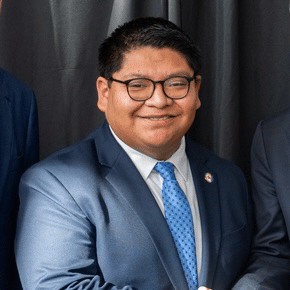
Lorenzo Pedro, UNC MPA current student
Degree: BA Psychology, minors in Photography and Spanish
Current Job Title:
Legislative Liaison for the North Carolina Department of Transportation
What are your areas of interest in the program?
My primary areas of interest involve enhancing my leadership skills to succeed in diverse professional environments while leveraging my background in curating and drafting legislation to deepen my understanding of policy implementation within an MPA program. This knowledge can be applied effectively in both the private sector and across different levels of government.
Why did you decide to get your MPA at UNC?
I chose UNC’s MPA Program because it is nationally recognized and offers students the opportunity to interact with professors and instructors who have extensive knowledge and real-world experience in public administration. The program’s flexibility caters to professionals like myself, allowing us to utilize our skilled backgrounds to engage in meaningful discussions and connect with fellow students. Moreover, UNC promotes an environment that encourages understanding of diverse perspectives, ultimately broadening our awareness of what is important in public administration.
Hometown: Charlotte, NC (currently resides in Washington, D.C.)
Alma mater: Tulane University
Degree: BA Sociology, Jewish Studies, minor in Political Science
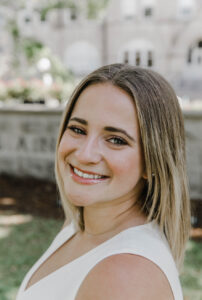
Current Job Title:
Associate Regional Director for BBYO
What are your areas of interest in the program?
When researching graduate programs in my area of interest, I immediately noticed that MPA at UNC truly has it all. The program’s focus on developing public service leaders despite their current occupation or interests stood out to me. As an aspiring nonprofit executive, I was originally hesitant to be entering a government-focused space, but upon looking through the curriculum and meeting my peers, I knew MPA@UNC was the right fit. I am confident I will gain skills in nonprofit management, organizational theory, financial management and general public service while learning from peers and instructors who serve in an array of public service jobs.
Why did you decide to get your MPA at UNC?
What stood out to me most about MPA@UNC was their focus on people. During my interview, Cara Robinson, director of admissions, mentioned that they are one of the few virtual graduate MPA programs that goes through an interview process. She explained that the reason for this is because, despite being completely virtual, they want to build a strong cohort of driven leaders. Graduate school, like undergrad, should not only be about learning texts and completing exams, it should also focus on the ability to engage and learn from classmates with varying backgrounds on a personal level. MPA@UNC is unique as it found a way to accomplish this completely virtually, allowing students to continue their full-time careers while getting the most out of a graduate program. I look forward to the ways in which MPA@UNC will allow me to grow as a public service leader.

Hometown: Currently resides in Fort Huachuca, Arizona
Alma mater: Florida State University
Degree: BA International Affairs
Current Job Title:
Military Intelligence Officer, United States Military
What are your areas of interest in the program?
My greatest areas of interest at this time are the degree concentrations in local government and nonprofit management. As I plan my transition from the military and into the real world, I find myself drawn to fields where I can still find purpose in serving the community and supporting the common good. Both the local government and nonprofit fields allow me those opportunities, and though I’ve learned a lot from my time in the military, I admittedly possess a lot of knowledge gaps regarding nonprofit and local government affairs. I look forward to learning all I can about both fields while enrolled with UNC.
Why did you decide to get your MPA at UNC?
The University of North Carolina at Chapel Hill is known throughout the country as a prestigious institution and from my experience carries an even higher degree of prestige throughout the southeastern United States. This level of institutional renown and the local government program’s top national ranking made the MPA@UNC an easy choice when it came time to decide where to enroll.
Thursday, February 2, 2023
5:00 p.m. – 8:00 p.m.
Tate’s Craft Cocktails
279 W. 4th Street
Winston-Salem, NC 27101
If you’re in town for the NCCCMA Winter Seminar, or if you are simply in town, join us for our first Happy Hour Hub of 2024! There is no charge but PLEASE let us know you’re coming by registering HERE. If you would like to help organize a Happy Hour Hub in your community, contact Brandon Foster at foster@sog.unc.edu or 919.962.0426.