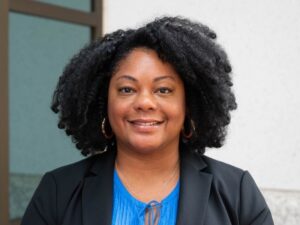
Amanda Wesson, UNC MPA Class of 2023
Hogan Medlin has been a current student in the UNC MPA program since 2021. As he gears up to graduate this December, he took some time to reflect on his career and his decision to pursue the MPA. With a path that includes corporate work, health care, diversity/equity/inclusion work, strategy, innovation, leadership, and change, he has touched so much with his public service values and has no plans to stop. Read more about his path here.
This December the UNC MPA program will be welcoming 17 new graduates into our alumni community.
Read about a few of them below.
Amanda Wesson, UNC MPA Class of 2023
Hometown: Wake Forest, NC
Alma mater: North Carolina Central University
Degree: BA Psychology, MEd Communication Disorders
What’s your current title, and what do you do?
I am a speech-language pathologist of over a decade who most recently assessed preschoolers as part of a transdisciplinary team for a local school system. In this work, I used play therapy techniques to elicit responses for assessments to help determine young children’s needs. I also recently worked as an early childhood policy analyst with a non-profit organization. There, I helped coordinate events for legislators, synthesized information and provided policy considerations on various topics related to child care and early education.
What are your plans after graduation?
I recently signed on with Wake County Budget and Management Services to become a Budget and Management Analyst beginning in January! There, I will work closely with department staff to evaluate funding and program requests, collaborate to develop alternatives, and recommend approaches that align with the County’s overall objectives. I plan to engage in continuous learning activities and also hope to maintain my license and certification as a speech-language pathologist.
Looking back on who you were at the start of the program to who you are now, how have you changed?
Wow, it feels like so long ago, but I began this process as a direct provider and clinician. I knew I had a heart for public service and always strived to produce outcomes for public benefit. My experience led me to look at each case with an individualized lens. With the knowledge and connections I’ve gained from this program, I now have a head for public service—I’ve gained technical skills, theoretical frameworks, and practical experience. More than that, I’ve opened up myself to all the possibilities and ways I can contribute to my community and the communities of those I serve.
What is one class, one project, one faculty member, one experience, one discussion, or some other aspect of our program that had an impact on you and proved to be meaningful in your professional life?
I entered this program with a general idea of which direction I thought it would take me. However, I became interested in budget and management while taking PUBA 731 – Public Financial Management, taught by Monica Allen. I assumed it would be merely accounting, but it is much more comprehensive. It encompasses data, strategy, stakeholder and citizen engagement, problem-solving, and writing—many of the things that attracted me to the field of speech-language pathology. In taking this course, I realized how I could make a more significant impact at a macro level to support systems that provide education, public health, and human services.
A brief quote or piece of advice for those considering the UNC MPA or a career in public service?
The UNC MPA program has been instrumental in shaping my journey from a seasoned speech-language pathologist to an emerging public administrator in budget and management services. Embrace the opportunity to broaden your horizons, as the skills and insights gained here will empower you to make a meaningful impact in the lives of others.
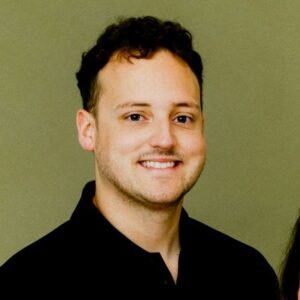
Shane Rudloff, UNC MPA Class of 2023
Hometown: Denver, CO
Alma mater: Ohio State University
Degree: BS International Relations
What’s your current title, and what do you do?
I am currently a Senior Grant Writer at a nonprofit called Growing Home in Westminster, CO. I build relationships with funders and secure grants for our programs which include a food pantry, a community garden, housing assistance, and early childhood education resources.
What are your plans after graduation?
After graduation I’d like to pursue a career in local government, preferably at the City Manager’s Office where I can interact with all kinds of stakeholders that work with government. I live by learning and enjoy observing the contexts and perspectives of different experts and professionals in the public sector.
Looking back on who you were at the start of the program to who you are now, how have you changed?
Looking back at who I was before I started the program, I’d say I’m much more cognizant of the inner workings of how the government operates. I was originally aware of the surface level details (elections, bills becoming law, politics, etc.), but now I understand there’s more that goes into getting things done (budgets, hiring the right people, working with private contractors, etc.). I have a more holistic view of how the public sector works.
What is one class, one project, one faculty member, one experience, one discussion, or some other aspect of our program that had an impact on you and proved to be meaningful in your professional life?
I would say that one class/experience that really stood out to me during my time at UNC was the immersion. I loved the opportunity to get to meet some of my peers in person which is a rarity for an online student. There I was able to meet some incredible professionals and people, and I am still very close friends with some of my classmates.
A brief quote or piece of advice for those considering the UNC MPA or a career in public service?
This is a pathway that provides an opportunity to help shape the way communities, states, and nations operate. It will make you a person people turn to when they are looking for solutions, and you will do little things daily that contribute to improving something. I take pride in that fact, and that is what public service is all about.
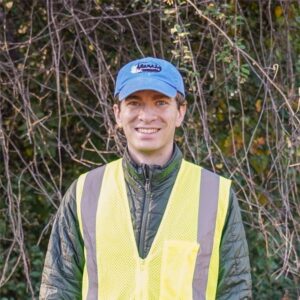
Joanthan Hill, UNC MPA Class of 2023
Hometown: Raleigh, NC
Alma mater: Duke University
Degree: Public Policy and History
What’s your current title, and what do you do?
My current title is Executive Director of Keep Charlotte Beautiful. I’m a full-time employee of the City of Charlotte, but it’s a little like running a nonprofit within the city government. The program has a City Council-appointed board, its own social media channels, and conducts some fundraising. An AmeriCorps service member (whom I manage) and I run numerous, community-driven initiatives related to litter prevention, waste reduction, and beautification.
What are your plans after graduation?
Throughout the MPA program, I’ve been able to apply lessons learned from class to greatly expand the programming scope and offerings of Keep Charlotte Beautiful. I hope to continue that after graduation. Two of my goals for the coming year are to launch a resident-operated ‘Friends of Keep Charlotte Beautiful’ spin-off nonprofit to enable easier fundraising for the program and to implement an in-depth litter study using our city’s Solid Waste Services department and students from UNC-Charlotte.
Looking back on who you were at the start of the program to who you are now, how have you changed?
When I applied for the program, I had just learned that I had received funding to hire an AmeriCorps service member for the first time, and wanted to hone in my leadership skills. The MPA program has enabled me to do that and more. In some instances, the MPA program enabled me to put a theoretical name to practices I was already implementing. In many others, it enabled me to consider new ideas and new ways of managing. I have become a more strategic-thinking, results-driven, and public-oriented manager because of it.
What is one class, one project, one faculty member, one experience, one discussion, or some other aspect of our program that had an impact on you and proved to be meaningful in your professional life?
As I mentioned to my oral exam panel, the idea of inspiring a shared vision from Kouzes and Posner’s The Leadership Challenge has stuck with me. Much of the work I do is collaborative, but a lot of it is driven by me, rather than being driven with the help of others. That message has reoriented my focus towards public engagement. In other words, I have what I think are a lot of great ideas, but they may not be what the public wants or even needs. Deploying a consensus-driven approach to tackling wicked problems provides for a more meaningful solution while broadening my perspective as a public servant.
A brief quote or piece of advice for those considering the UNC MPA or a career in public service?
Always consider how you might apply the lessons learned in class to your day-to-day work. Putting those theories to practice not only helps you learn more about them, it enables you to determine what works best for you.
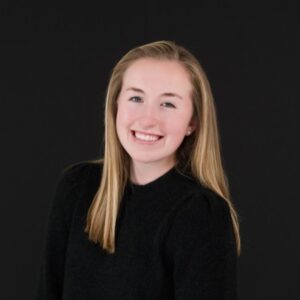
Julia Murphy, UNC MPA Class of 2023
Hometown: Pittsfield, MA
Alma mater: Providence College
Degree: BA in Political Science, Minor in Public and Community Service Studies
What’s your current title, and what do you do?
I am a Special Assistant to the Deputy Secretary at the United States Department of Commerce. I directly support the Deputy Secretary by overseeing his external engagements, supporting the day-to-day operations of the office, and advising on policy matters. As a political appointee in the Biden-Harris Administration, most of our work is centered around advancing and implementing the President’s priorities.
What are your plans after graduation?
I’m only three months into my current job so I’m hoping to stay for a while! I was working in the Massachusetts State Legislature when I began the program, so making the leap to the federal government and working in the executive was a goal that I had for a while and I’m grateful I was able to achieve while obtaining my MPA.
Looking back on who you were at the start of the program to who you are now, how have you changed?
My time in the program has reaffirmed that I want to be in public service for as long as I can. Taking classes while getting real-world experience allowed me to develop a public administration lens that I use every day to think about challenges, potential solutions, and how to move the needle forward. My decisions are directly informed by the frameworks and practical applications that I encountered in my courses. My ability to communicate concisely and effectively has significantly improved, and taking a deep dive into my leadership abilities has given me tremendous confidence both personally and professionally.
What is one class, one project, one faculty member, one experience, one discussion, or some other aspect of our program that had an impact on you and proved to be meaningful in your professional life?
This is such a hard question because I have genuinely learned so much from every professor, class, and classmate I’ve had! I think back to Prof. Julie Bregman’s Institutions and Values course that I took in my first semester of the program where we talked about equity as a core and competing value of public administration. When talking about equity versus effectiveness, I remember having a lightbulb moment where I said something along the lines of, “If programs aren’t working for the people they are intended to serve equitably, are they effective at all?” From this point forward, equitable public administration has been top of mind for me and has driven my focus areas in the program and the way that I think about the world, and is something I hope I can continue to foster as a public service leader. Government is a powerful tool to help people, and I would push back on anyone who claims that you can’t have equity and efficiency at the same time. It may not be easy, but it is our job as leaders to find a way forward.
A brief quote or piece of advice for those considering the UNC MPA or a career in public service?
The answer to both is simple — do it! There are a lot of complex challenges that our world faces and we need bold, courageous, thoughtful, and visionary leaders to take those challenges on. The UNC MPA equips you with the tools to tackle those problems, and you learn from the best and brightest faculty and classmates. Public service is an honorable undertaking and allows you to make an impact on other people’s lives in a way that other professions don’t offer. The MPA program was one of the best choices I’ve made and I feel incredibly well-prepared for wherever my path may take me.
Leisha DeHart-Davis is a professor of public administration at the University of North Carolina at Chapel Hill. She is also the director of the Local Government Workplaces Initiative at the School of Government. LGWI is a research program that investigates workplace climate and employee engagement. This information aids local government agencies in creating great work environments. DeHart-Davis also researches organizational behavior within the public sector, organizational structure, and workplace incivility. She is also a Fellow of the National Academy of Public Administration which is a nonprofit organization that provides expertise on public policy and governance issues. DeHart-Davis is also a two-time published author of Creating Effective Rules in Public Sector Organizations and Understanding Gender Imbalance in Public Sector Leadership. Her research articles have also been published in Journal of Public Administration Research and Theory, Public Administration Review, International Public Management Journal, Administration and Society, and Review of Public Personnel Administration. The article is an interview with Leisha DeHart-Davis about her service through research to the University of North Carolina at Chapel Hill. It discusses her career path and her passion for local government. It also highlights her overall dedication to the School of Government and the Carolina community.
Read the full interview written by UNC Research here.
The School of Government is pleased to announce that Willow S. Jacobson has been selected by the National Academy of Public Administration for inclusion in its 2023 Class of Academy Fellows, in recognition of her years of public administration service and expertise.
Jacobson is a distinguished professor of public administration and government at the School, where she also serves as associate dean for graduate studies and director of the UNC Master of Public Administration program. She is an expert on human resource management, leadership development, and organizational theory and behavior. Jacobson’s research has appeared in publications including Public Administration Review and Public Personnel Management.
Previously, she directed the LGFCU Fellows program, which she helped create in 2011 to develop local government leaders in North Carolina. She earned a Ph.D. from Syracuse University and joined the School’s faculty in 2003.
She joins fellow faculty members Leisha DeHart-Davis, Kimberly L. Nelson, Carl W. Stenberg, and David N. Ammons (ret.) as current Academy Fellows.
“I am very pleased to welcome Willow Jacobson to the Academy’s 2023 class of Fellows,” said Terry Gerton, President and CEO of the Academy. “Our distinguished Academy Fellows are nationally recognized and respected for their expertise in the field of public administration and Willow is no exception. We proudly welcome this outstanding new class of Fellows that will help advance the Academy vision – a just, fair, and inclusive government that strengthens communities and protects democracy.”
Selection of the Academy’s new Fellows follows a rigorous review of the individual’s contributions to the field of public administration and policy. A Fellows Nominating Committee makes its recommendations to the full Fellowship, which then votes on those individuals to be elected. The 2023 class joins nearly 1,000 Academy Fellows—including former cabinet officers, members of Congress, governors, mayors and state legislators, as well as prominent scholars, business executives, and public administrators.
Induction of the new Fellows will occur during the annual Academy Fall Meeting, which will take place in-person November 1-3 at the Grand Hyatt Hotel in Washington, D.C., with a focus on “The Grand Challenges in Public Administration.”

Panel discussion participants Christopher Everett, Alex Lassiter, Elizabeth Biser and Pablo Friedmann discuss how Tar Heels contribute to North Carolina during the 230th University Day celebration at Memorial Hall on the campus of the University of North Carolina at Chapel Hill. Thursday October 12, 2023. (Jon Gardiner/UNC-Chapel Hill)
UNC Master of Public Administration program alumna Elizabeth Biser participated as a panelist at 2023 University Day on October 12, 2023. This year’s University Day celebrated UNC’s 230-year-history and centered around the theme of “Service to Our State.”
Biser ’17 spoke on a panel with three fellow UNC alumni, discussing “Tar Heel Contributions to North Carolina.” The conversation was facilitated by UNC Study Body President Christopher L. Everett. Pablo Friedmann ’09, director of the Multilingual Resource Center for Durham Public Schools, and Alex Lassiter ’10, founder and CEO of GreenPlaces, spoke alongside Biser.
As secretary of the North Carolina Department of Environmental Quality (DEQ), Biser is charged with oversight of the agency, which protects the state’s environment and natural resources. Its programs seek to safeguard air, water, land, coastal fisheries, and the public’s health; the agency also offers technical assistance and encourages responsible behavior and respect toward the environment.
Biser spoke during the panel about the honor to work with and lead her colleagues in the effort to safeguard North Carolina’s environmental future.
“Getting a chance to lead the state agency whose mission is to provide science-based environmental stewardship for the health and prosperity of all North Carolinians is an honor every day,” she said.
“I work with 1,600 folks across the state whose entire career is dedicated to making sure that we have clean air to breathe, clean water to drink, and that our environment is supporting our way of life.”
Biser credited her educational experience at the School of Government—and particularly the UNC MPA program—as vital in instilling the knowledge and interpersonal skills necessary to lead the agency’s increasingly complex work.
“The lessons that I learned at the School Government definitely helped me every day in thinking about public service leadership, how to motivate a team that is dedicated to public service, that faces so many challenges, especially in an increasingly divisive world.”
Closing out the discussion, Biser spoke to the audience about the importance of lifelong learning, in public service or any other professional field.
“Learning does not stop once you graduate. To prepare for public service—and really to prepare for anything—it’s about not thinking that the last time you walk out that classroom that it’s over,” she said.
“The key to success is making sure you are growing as a person, you are growing your skillset, and you are learning from other fields and sectors around you.”
Biser imparted the audience with advice to succeed in truly making an impact in their work: have a continued desire to be curious, ask questions, learn from them, and grow.
“The people that I have seen be most successful have embodied that lifelong learner mentality and seek out opportunities to improve.”
Biser is a double graduate of UNC-Chapel Hill, holding a Bachelor of Arts and a Master of Public Administration. She has a strong background in environmental affairs. In addition to her work at Biser Strategies LLC, she served as vice president of policy and public affairs at The Recycling Partnership, government relations and policy director for Brooks, Pierce, McLendon, Humphrey & Leonard LLP, and as director of legislative and intergovernmental affairs at the North Carolina Department of Environment and Natural Resources (the predecessor of DEQ). Biser served on the School’s Foundation Board from 2019 to 2021.
Each year on Oct. 12, Carolina celebrates University Day, which marks the laying of the cornerstone of Old East — the campus’ first building and the oldest state university building in the nation. The day is a celebration of our mission as the country’s first public university and our service to North Carolina, the nation and the world through our teaching, research, and public service.
Watch the full recording of the University Day ceremony.
This Fall we welcomed 29 new students into the online format of our MPA. They come from different geographic regions, bring varied interests and experiences, and we are so happy they chose us. Read about 3 of them here!
Hometown: San Diego, CA
Alma mater: UNC-Chapel Hill
Degree: Bachelor’s degree in Public Policy
Where were you before you joined the MPA program?
I attend the online MPA@UNC program from Nashville, Tennessee where I lead education and outreach efforts for Metro Nashville Waste Services, a division of metropolitan government. I develop waste reduction programs and promote resilient waste, recycling, and composting collection for Nashville residents.
I was born and raised in San Diego, California and I attribute my passion for local environmental regulation from growing up surrounded by these policies in my own community. I took this passion with me to Chapel Hill when I attended Carolina for my undergraduate studies in Public Policy and Environmental Studies. I would not be where I am without the expertise and guidance from UNC Public Policy faculty, and I am thrilled to be returning virtually to Carolina to further my skills for public service.
What are your areas of interest in the program?
I was drawn to the MPA@UNC program because of its clear focus on building public service leaders. I have already enjoyed meeting fellow public servants in my first semester classes – some of my classmates are city planners, librarians, civil affairs officers, municipal information technology managers, and elected officials. I enjoy opportunities to get to know my classmates and learn from their specialized experiences within public service.
I also plan to concentrate in Local Government, which includes coursework such as City and County Management, Productivity Improvement in Local Government, and Governmental and other Nonprofit Accounting and Reporting. I look forward to learning a deeper understanding of local government structure and function through this coursework.
Why did you decide to get your MPA at UNC?
Through my combination of undergraduate and professional work experience in waste reduction, I envision a career path for myself championing solid waste regulation to serve communities across the United States. The MPA@UNC curriculum provides the academic and public service framework that will position me for greater professional success in this field.
It is an honor to be furthering my public administration education at my alma mater and the country’s first public university. I value that Carolina faculty are committed to understanding and improving government.
Hometown: Richmond, Virginia
Alma mater: Hampton University
Degree: Bachelor’s degree in Finance
Where were you before you joined the MPA program?
Before I joined the MPA program I was doing a few things. First, I am currently a Bank Examiner at the Federal Reserve Bank of Richmond. Second, I am a JV Football Coach at Glen Allen High School. For me this is my day-to-day life, and those two roles definitely keep me busy.
What are your areas of interest in the program?
There are many things about the program that interest me but so far my intro to public administration course has kept my attention the most. To see the connection between how governments interact with each other has super interesting and has opened my eyes to the roles we can play in public administration.
Why did you decide to get your MPA at UNC?
I decided to get my MPA from UNC because I have always wanted to be a Tarheel. My parents used to bring to the football games as a kid and I loved the Tarheel spirit. In addition to that, my mentor at the Federal Reserve went through the MPA program here and loved it! So I truly only had one option.
Hometown: Royal Oak, Michigan
Alma mater: Michigan State University
Degree: Bachelor’s degree in Social Relations and Policy
Where were you before you joined the MPA program?
I graduated from Michigan State University in 2014 with an undergraduate degree in Social Relations and Public Policy. I then began working at a high school in Detroit through the College Advising Corps, an AmeriCorps program. After my AmeriCorps service ended, I moved to Washington, DC, where I began working in program operations at the Relay Graduate School of Education—a nonprofit institution of higher education that provides a variety of professional development programs to teachers and school leaders across the country. I now live back home in Metro Detroit.
What are your areas of interest in the program?
I have greatly enjoyed the trajectory of my career thus far, working in direct community outreach, program operations, and partnership development. I am eager to get better at the work that I have been doing and to learn how to be a stronger leader at public service institutions. The MPA@UNC covers topics that I am interested in—for example, how can I be a strong organizational leader, particularly in the nonprofit space? How can I better collect, interpret, and react to data? How can I be a good steward of public dollars?
Why did you decide to get your MPA at UNC?
The MPA@UNC was my top choice when looking at graduate programs. This program is offered online, which would allow me to stay in Michigan, stay in my current role, and ensure a strong alumni network both in and out of North Carolina. The interactive structure of the program ensures that I will have the opportunity to engage in the material, not just complete asynchronous assignments. Finally, I was excited at the opportunity to visit campus and meet fellow students at an Immersion weekend on campus.
UNC School of Government faculty member Margaret Henderson retired from her full-time position in September 2023 after more than 20 years of service to the University and the State of North Carolina.
“Margaret is a symbol of what the School of Government can and should be,” said Aimee Wall, dean of the School. “The caring, depth, honesty, and integrity she possesses are what we all strive to embody in our work. She is a true public servant, and it is difficult to imagine the School without her.”
Henderson’s career embodies the public service mission of the School and the University. Before she arrived at Carolina, she spent 20 years in human services, including work in state and local government and the nonprofit sector. These experiences included service as the executive director of the Orange County Rape Crisis Center.
An expert in facilitation and human services, Henderson leveraged her scholarship to work as a leading actor in the fight to protect vulnerable North Carolinians. In recent years, her workfocused onassisting local governments in their efforts toaddress and stem human trafficking and elder abuse. She lent herexpertise to countless organizations dedicated to this work, including the North Carolina Human Trafficking Commission, NC Stop Human Trafficking, the University’s Project No Rest, and the School of Government’s Adult Protection Network.
In April 2023, her dedication to service was recognized by the University community as she received the Office of the Provost Engaged Scholarship Award for engaged research.
“I have spent 24 years collaborating with Margaret on projects and with clients,” said Lydian Altman, teaching assistant professor at the School. “In her quiet manner, she drops pearls of wisdom into almost every conversation. She offers the opportunity to see things differently and more holistically—how to appreciate and seek out the differences that enrich our work and add meaning to our lives.”
Henderson possesses a unique depth of knowledge on the practical challenges and opportunities of cross-organizational collaborations. She directed the Public Intersection Project, researching and communicating strategies to strengthen these relationships. Her scholarship, teaching, and facilitation helped governments, community programs, and nonprofit organizations bridge divides and generate more effective solutions to public problems.
A UNC MPA graduate, Henderson later taught in the program for more than 20 years. She has co-authored articles that appeared in Popular Government, ICMA’s IQ Report and PM Magazine, American Review of Public Administration, PA Times, and the FBI Law Enforcement Journal. Beyond published scholarly works, Henderson provided foundational resources for local governments. Most recently, these include sheets with basic facts about sex and labor trafficking, blog posts about recognizing trafficking indicators, and discussion guides for trafficking prevention strategies.
Henderson’s background in collaboration allowed her to identify new connections and pathways for local government cooperation in the fight against human trafficking. One such example is a bulletin generated by Henderson and colleague Kirk Boone, “Property Tax Officials Can Help Recognize Human Trafficking Indicators.”
Henderson’s influence can be seen across the state and in the halls of the Knapp-Sanders Building. A devoted colleague and friend, her collaboration and leadership fostered new connections and made the School a better place to work. Most recently, she served as a co-chair of the School’s Committee for an Inclusive Workplace.
The School of Government thanks Henderson for her dedicated service to clients, students, and the State of North Carolina and wishes her the best in retirement.

Students take a sip from The Old Well on the first day of classes on the campus of the University of North Carolina at Chapel Hill. August 21, 2023.
(Jon Gardiner/UNC-Chapel Hill)
The waning days of August bring new academic terms for students enrolled in both the on-campus and online formats of the UNC Master of Public Administration program. UNC MPA students represent a wide range of professional experiences, academic disciplines, interests, and career ambitions—but all are bound by a common interest in public service.
Below, we caught up with some of the newest Tar Heels joining the program this fall both in-person and remotely. Read on to meet a few of these current and future public service leaders.
Hometown: Denver, North Carolina
Alma mater: UNC-Chapel Hill
Degree: Bachelor’s degree in psychology and English with a minor in creative writing
Where were you before you joined the MPA program?
Prior to returning to UNC, I was participating in a two-year fellowship with the Town of Spencer through the School of Government called Lead for North Carolina. I am continuing to work for the Town while I complete my MPA.
What are your areas of interest in the program?
My primary interests are community development, resident-retaining downtown development, public art, and placemaking projects. I am currently in the process of developing a downtown mural walk in Spencer that will encourage visitors to the North Carolina Transportation Museum to come across the street and engage with the community.
Dual degree with City/Regional Planning
Hometown: Coral Springs, Florida
Alma mater: Florida Atlantic University
Degree: Bachelor’s degree in criminal justice with a minor in political science
Where were you before you joined the MPA program?
Before graduating (from FAU), I was involved with two organizations: Color of Change and Florida Student Power Network. These groups are what really got me involved in community organizing and gave me a first-hand view of problems in my community. I saw how little trust community members had in the government to enact effective change and wanted to act as a bridge between community needs and actions. After graduating, I continued working with those organizations as well as others, where I got to lobby in Tallahassee with state legislatures, participate in monthly citizenship drives to help immigrants in South Florida gain citizenship, and other community organizing efforts.
Why did you decide to get your MPA at UNC?
I knew I wanted to stay in the South to see how other states were handling their own issues and how those solutions could translate to Florida, so that is what drew me to North Carolina. UNC’s MPA program emphasizes practice and theory in a way that is unique from other programs; that made me confident that I would be equipped upon graduating with the skills I need to be an effective advocate for the communities that I want to fight for. I am most interested in community and economic development at either the local or state levels because of my specific focus on being an advocate for the most disenfranchised groups in Florida.
Hometown: Raleigh, North Carolina
Alma mater: Appalachian State University
Degree: Bachelor’s degree in criminal justice
Why did you decide to get your MPA at UNC?
During my time as an intern with the Charlotte-Mecklenburg Police Department, I was able to interact with high-achieving department officers, many of whom I found had something in common: a master’s degree in public administration. After this experience, I realized to become the best law enforcement officer I could be, as well as reach the highest levels of law enforcement, I too would need to attain an MPA.
I initially had many questions about how I would fit into UNC’s MPA program, as a career in law enforcement is atypical of UNC MPA students. (Director of Admissions) Cara Robinson answered all my questions and put me in contact with current students, who assured me that the program would be beneficial to my career aspirations. A constant refrain that I heard attached to the UNC MPA program was that once you were a part of the program as a student, the program would do everything in its power to help you succeed. This gave me a great sense of comfort with the program and made the decision to attend UNC a simple one.
What are your areas of interest in the program?
I am interested in a career in federal law enforcement after the MPA program. Leadership is invaluable to law enforcement. Being able to communicate professionally, work within and lead a team, and inspire fellow officers and citizens are all critical components of leadership in policing and are skills that I am confident will be sharpened through the MPA program.
Hometown: Birmingham, Alabama
Alma maters: Mississippi State University (B.A., M.A.), University of Southern Mississippi (MLIS)
Degrees: Bachelor’s degree in English, Master of Arts, Master of Library and Information Science
Why did you decide to get your MPA at UNC?
I decided to get my MPA at UNC because I want to build my leadership skills and learn more about how to build strong foundations for public organizations. I have seen what solid ground-level support can do for an organization, and I want to become that source of support in the organizations where I work. I am also really interested in building community both within organizations and between public entities and their communities. I love this work and want to build my strategic planning, organizational management, and personnel management skills.
What are your areas of interest in the program?
I am currently the library director at the Hocutt-Ellington Memorial Library, a municipal library in Clayton, North Carolina. I am especially interested in organizational management, internal communications, and community engagement. I believe that organizations that focus on building strong, connected teams are effective and responsive to the public.
Over the past academic year, UNC MPA piloted the Student Professional Development Grant program. This initiative provides up to $250 to every student for professional development expenses such as conference attendance, professional meetings, workshops, or professional organization membership. This funding is in addition to program-sponsored professional development like registration for the North Carolina City and County Management Association Winter Seminar and School of Government courses.
During the pilot year, the program had nine students apply for and be awarded funds. Students used the funds for experiences ranging from leadership summits and registration costs, to travel expenses for conferences. To receive funding, students must apply for development opportunities, discuss how the experience fits with their professional goals with Allison Binkley, the Associate Director of Career Services & Professional Development, and then reflect upon the experience afterwards. The sponsored experiences provided tremendous value for the students and a few shared their thoughts on the experience:
“I was able to network and meet with alumni, learn about skills needed for MPA students, and attend coaching sessions with current managers.” – Shane Digan
“Prior to the conference, I knew almost nothing about the structure and behavior of a budget office. The conference sessions introduced me to concepts like zero-based budgeting and participatory budgeting. The sessions were helpful, but nothing compares to connecting with budget professionals from across the state.” – Scott Powell
“I attended presentations ranging from the Chair of the National Endowment for the Arts, regional artists, and community development advocates, to public art funders. I also networked with arts administrators from across the South. Some of my takeaways include: grant processes for public art (specifically focusing on the story to be told with the art rather than the artists’ resume. Start with a letter of intent before accepting full proposals), considerations for equitable pay for guest artists from near and far, and how to engage communities who have been impacted or will be impacted. These takeaways were important to me as I consider foundation funding, leading proposal reviews, and equitably building community through the arts.” – Lauren Duncan ‘22
After a very successful pilot year, the MPA program is excited to continue to continue this initiative for a second year and encourage professional development relating to students’ unique interests.
Meet alumna and instructor Katie Loovis and hear her thoughts on a public service career, leadership, and the MPA program. Along with her work with the UNC MPA program, Professor Katie Loovis was recently named as Executive Director for the North Carolina Community Colleges Foundation.
What do you teach in the MPA program, and how long have you been affiliated with the program?
I have the pleasure of teaching Nonprofit Management (PUBA 756) to UNC-Chapel Hill Master of Public Administration (MPA) students and many other master’s students who join the course from other disciplines, including business, public policy, and law; as well as some exceptional undergraduate students who want to challenge themselves with a masters-level course. I taught this course in the fall semester of 2021 and will do so again this Fall 2023.
I’m a 2002 graduate of the UNC MPA program and have enjoyed staying in touch with several MPA classmates and UNC School of Government (SOG) faculty members and administrators over the last twenty years. Also, I previously served on the MPA Alumni Association Board of Directors and now serve on the SOG Foundation Board of Directors. As you can imagine, I feel a kindred spirit with those in the MPA program and so appreciate and respect everyone at the SOG for continuing to hold dear the values of being non-partisan, policy-neutral, and responsive.
What’s your education background?
I earned a BA in communication studies with honors in 1999 and an MPA in 2002 from UNC-Chapel Hill, and am currently earning an EdD from NC State in Community College Leadership. I expect to complete my doctorate in 2024. At the same time, I earned a 100-hour graduate level teaching certificate from NC State, which has helped inform my teaching philosophy and practice in the classroom at UNC.
I love been looking at careers like yours – ones that take a lot of pivots. You’ve been in government, business, non-profit. You’ve focused in workforce development and now education. You’ve gone from nationally focused work to more locally focused work and now state focused work. What is the common thread in your career?
I am really grateful to have had such an interesting and meaningful career journey that has allowed me the opportunities to serve in the public (White House), private (GSK), and nonprofit (Achieving the Dream) sectors, as well as with the US Chamber and a local chamber of commerce.
Public service has been a common thread throughout my career. Looking back, I’ve been drawn to the place where the sectors intersect for the good of communities and individuals. I have found that big, thorny issues like closing achievement gaps, increasing access to medicines, or improving the talent pipeline requires leaders from business, government, and the nonprofit sectors to work together. No one sector can do it alone! I really enjoy being at that point of intersection where the sectors come together with shared vision, programming, and accountability, and, together, make a measurable and lasting impact in the lives of others.
Most recently, I’ve had the honor of being a part of a collective impact initiative, called the Summer Careers Academy, which was selected into the UNC SOG’s ncIMPACT “Carolina Across 100,” “Our State, Our Work” initiative. The SOG is a true think tank/do tank when it comes to sector intersection and accelerating positive results for our state. Anita Brown-Graham and her team at the SOG deserve a lot of credit, recognition, and support for their groundbreaking work in partnering for the public good!
Talk about something specific you try to teach your students that you have found as necessary and an important part of all your roles (can be a skill, attribute, concept, etc.)
There is a wonderful Chinese proverb that says, “Tension is who you think you should be. Relaxation is who you are.”
I have found many UNC students to be intelligent, dutiful, high achievers. While these are virtuous attributes, they can be limiting factors when students are trying to make sense of the best career pathway for them, especially if they want their career to be an extension of their life purpose. The path of public service, especially with local non-profit organizations, while tremendously meaningful, requires a great deal from its executive directors. I try to give my students a realistic perspective of the many responsibilities of a non-profit executive (as well as the joys!) and also give them the opportunity to reflect on their own personal and professional skills and aspirations.
“Throughout the semester, I invite students to pause and engage in reflection activities to consider who they are, how they are built, and what career pathway(s) are most aligned and will make their heart sing.”
My hope is that, whether they choose to become a paid non-profit professional or a volunteer serving on a non-profit board of directors, they will be well-equipped to add a lot of value and make a positive and lasting difference. (Here is a transcript of a keynote speech I delivered to the Chapel Hill Magazine Women of Achievement 2019 event, which brings this theme of purpose and leadership together.)
In thinking about the course of your career, where do you give credit to its success? In every role that you’ve considered or passed up or taken, what has helped you in navigating the course?
I have benefited in my career from the help of so many people along the way, especially those who coached me through UNC Athletics, taught me at UNC and now at NC State, and those colleagues who gave me great career advice and championed me behind closed doors when employment decisions were made.
One great piece of advice I received from a former White House colleague was: “say yes.” I took this to heart and despite having demanding jobs, I said yes to opportunities to meet with many people I would not have met otherwise. Through these new connections and acquaintences, I also experienced exciting doors open for me, so I encourage all of my students to ‘say yes’.
What do you learn from your students?
My default mode of operating is to be very focused on getting things done. There is not much I love more than checking things off a to-do list. However, being an educator is helping me shift my focus more to other people and their long-term success. Students have really stirred in me a deep sense of compassion for where they are and the challenges they are navigating. As an educator, I see myself as a facilitator of my students’ learning journey. Facilitation is more than simply lecturing, it is helping students connect their personal and professional interests and goals to the course objectives and outcomes, and then encouraging them to explore new ideas and concepts, guiding them through the learning process, and motivating them to apply new knowledge and skills.
Leadership is an important part of the MPA program, and leadership is an important aspect of your new role as Executive Director. This isn’t an interview, but what do you want to say to us about leadership?
Leadership is one of my favorite topics to study. In fact, through my dissertation, I have found that leadership and management are two distinct concepts that are often muddled together. My favorite way to distinguish the two is what Bennis and Nanus (2007) said: “Managers are people who do things right and leaders are people who do the right thing.” This purposeful distinction is so important. Public servants must be good at both. Sometimes these two things can be diametrically opposed – managers can be working to maintain the very systems leaders are trying to change – and therein lies the tension. The School of Government does an extraordinary job at helping public servants understand these leadership/management pain points, make sense of their options, and equip them for the path ahead.
I have enjoyed learning about the School of Government’s Center for Public Leadership and Governance and the work that Peg Carlson and her team are doing to build up teams of public servants across the state who can successfully navigate leadership and management challenges.
What advice do you have for those considering a public service career or a career change to the public sector or to those who want to impact in some area but are feeling frustrated.
No matter what career pathway you choose, the reality is that we are living in rapidly changing times. I’ve enjoyed following futurist Heather McGowan who talks about how “the future of work is learning.” She says workers today are likely to have 17 different jobs across 5 different industries and, going forward, 25% to nearly 50% of the work we currently do will be replaced with technology in the next ten years (McGowan, 2019). While nearly all careers are changing, the field of public service has dynamic and important job opportunities in the public, private, and non-profit sectors. I encourage students to keep an open mind and heart about the different sectors of service, and to remember that as Picasso said, “Your call is to find your gift, and your purpose is to give it away”.