
We recently had the pleasure of connecting with Elizabeth Anderson, a UNC MPA/MSW dual degree alumnus and a dedicated advocate for education and youth development. Anderson serves as the Director of the North Carolina Center for Afterschool Programs (NC CAP). In our conversation, we explored her journey into nonprofit work, the vital role after-school programs play in children’s education, and how she mobilized her MPA/MSW degree to shape her career path.
Q: Can you tell me a little about your current role?
Absolutely! I am the Director of the North Carolina Center for Afterschool Programs (NC CAP), which is a statewide afterschool network in North Carolina. It’s a coalition of partners from nonprofit organizations, government agencies, public schools, and more. We work together to ensure access to high-quality out-of-school time learning opportunities. NC CAP is part of the Public School Forum of North Carolina, which focuses more broadly on education advocacy in the state. However, my role is specifically focused on after-school and summer programs, as well as any learning opportunities that take place outside the classroom. Considering that kids spend about 80% of their time outside the classroom, we focus on ensuring those hours are filled with enriching learning experiences.
Q: That’s incredible! What are some specific programs or initiatives you’ve worked on at NC CAP?
We do a lot at NC CAP! One of our programs focuses on supporting professional development for out-of-school time providers. For instance, we have a STEM Hub that helps providers, who may not have a background in STEM, feel confident in delivering high-quality STEM programming. We also host advocacy events, like our upcoming “Lights on Afterschool,” where we bring together elected officials, students, and stakeholders to raise awareness about the importance of afterschool programs.
Additionally, we prepare talking points and policy agendas to empower other advocates to push for more public investment in out-of-school programs. We also serve as a research clearinghouse for best practices and conduct landscape analyses of what out-of-school programs are available in different regions of North Carolina. Lastly, we convene stakeholders—whether through regional meetings or our annual conference—to discuss how to improve the out-of-school time system.
Q: What is your most recent ‘win’ at work?
I think in the past year or so my favorite “win” happened in Western NC, where we conducted a landscape study of afterschool programs and launched the Western NC After 3PM Collaborative – a collective impact and peer learning group for youth development professionals – in partnership with the Dogwood Health Trust. We used Community Based Participatory Research methods to get really deep community engagement in our landscape study. The connections we made & relationships we built when we traveled in Western NC for the study helped make the launch of our Collaborative successful. Our work is all about genuine connection and relationships and I think we’ve had a lot of success building those relationships through WNC After 3PM Collaborative in Western NC. Those relationships have been critical as we work to support afterschool programs and the kids and families they serve in the wake of Tropical Storm Helene and we would not be able to provide the kind of support that we have been providing post-hurricane if we had not had those strong relationships in place.
Q: You have such a diverse set of responsibilities! What was your educational and professional journey to this role?
My bachelor’s degree was in journalism, and after graduating, I moved into nonprofit work, focusing on youth development. My first big step in education was working in the education department at the Georgia O’Keeffe Museum in New Mexico. That experience led me to take on more roles in out-of-school time, including working as a site director for various programs and as a coordinator with Communities in Schools of New Mexico. In these roles, I was embedded in the public school system and coordinated wraparound services for both schools and individual students.
Through these experiences, I began to see how broken many systems were, and I wanted to work on a broader level to create systems that actually serve kids and families. That’s when I decided to pursue an MPA and MSW through the dual-degree program at UNC.
Q: What is one current challenge or thing you’re working towards?
We are working on building our capacity as a Statewide Afterschool Network and growth is hard! There is so much that we want to be doing and could be doing, but there are always growing pains when you work to expand. You have to think about how to grow that in a way that is sustainable and aligned with mission and vision. It can be a little bit messy – but very worth it in the long run.
Q: How was balancing the MPA and MSW programs at UNC?
It was definitely a challenge! There was a lot of negotiation, especially with aligning the Public Work Experience (PWE) for the MPA with the second-year practicum for the MSW. However, I received great support from both the MPA and MSW programs. There was also some coursework overlap between the two programs, especially since I focused on macro practice in social work.
I found the combination of both degrees incredibly helpful. The MPA gave me a broad understanding of cross-sector collaboration, which is critical in my role now, while the MSW provided me with deeper content knowledge on child welfare, poverty policy, and supporting kids and families.
Q: Did you always know you wanted to work in youth development?
I knew I wanted to support kids and families, but I wasn’t exactly sure what that would look like. During my Master’s program, one of my practicums was with UNC Refugee Wellness, which had me working with refugee mental health. For a while, I thought I might want to work with immigrant and refugee children, but my long history in education led me back to that field. The dual-degree program helped elevate my capacity to work at a systems level, particularly in bringing together nonprofits, government agencies, and other partners for a common goal—supporting kids.
Q: What advice would you give to prospective or current MPA students?
Stay open-minded. Many people come into the program thinking they know exactly what they want to do, but your interests and career goals can evolve. For example, I took a performance management class that I didn’t think I would ever need, but now I use those skills every day! The MPA program prepares you as a generalist, which is great because it opens a lot of doors and gives you options when you finish.
Q: How was the transition from full-time work to being a full-time student?
It was a good change of pace. My time in the workforce helped me contextualize a lot of what I was learning in class. I had real-world experience that gave me a frame of reference for concepts like change management and organizational theory. I also wouldn’t have chosen the MPA program if I hadn’t spent those years working directly with kids and families. That hands-on experience helped me realize that I wanted to do systems-level work, and it set me on the right path.
Q: What is your favorite part of being a UNC alumnus?
Connecting with other UNC Alumni in different settings, both professional and personal, and always feeling superior during basketball season.
The UNC MPA program will host a Happy Hour Hub in conjunction with the ICMA conference in Pittsburgh, PA. (Re)Connect with MPA alumni, students, faculty, and staff for drinks, lite bites, and great conversation. This event is open to faculty, current students, alumni, and program friends.
This event will take place at The Yard, 11 Fifth Ave, Pittsburgh, PA 15222.
Join students, alumni, faculty, staff, friends, and their families for some tasty food and great conversation at the annual UNC MPA Alumni Kickoff Picnic. This event is free, and please bring your families, roommates, etc.!
This event will take place at the School of Government in the Dining Room.
The UNC Master of Public Administration program aims to help mold the next generation of public service talent—for North Carolina and beyond—that can address the multifaceted issues public officials are expected to contend with in the coming years.
As UNC MPA graduates continue to navigate the changing challenges of public service, three recent UNC MPA graduates share below how their degrees helped them overcome obstacles and discover creative solutions to issues that inundate the public sector.
Scott Powell (’24)
After graduating from the UNC MPA program this spring, Powell returned to work for Wake County—where he serves as a budget and management analyst. In his role, Powell manages department budgets in his portfolio and advises the county to make informed financial choices.
From his time in the program, Powell said he gained the academic and practical knowledge to successfully effect collaborative change for the county.
“I’m more pragmatic now than I was two years ago,” he said. “With the help of experience—much of which is a direct result of UNC’s MPA program—I find myself to be more curious and willing to figure out how to actually get big things done in a community that reflect shared values.”
Now that he has graduated from UNC MPA, Powell aims to continue to leverage the knowledge he learned in the program to improve the outcomes of his public service—both at work and at home.
“I will continue to learn and grow as much as I can with Wake County. I also plan to become more civically engaged in Durham, where I live.”
Giving advice to prospective and incoming students to the program, Powell reiterated the importance of creating far-reaching and diverse relationships—both in the program and out. He sees the opportunity to build strong bonds across the UNC campus as a unique advantage of the program.
“Invest in the friendships and community you make during this chapter of life. Some of those will come from the built-in community of your cohort, which can be an awesome experience, but they may also come from somewhere else on campus,” he said. “Among many other things, it’s what sets this program apart.”
Charles Rocci (’24)

Charles Rocci currently serves as the planning administrator for the Town of Pine Knoll Shores. In his role, he administers town, state, and federal requirements for land use planning and economic development in the town. He additionally works with community stakeholders to develop long-term strategic plans and comprehensive land use plans to drive the decision-making process for future town policies and programs.
As Rocci works to secure a bright future for Pine Knoll Shores, he often finds himself relying on the organizational proficiency he gained from his UNC MPA degree to make both immediate and long-term decisions that are in the best interest of its residents.
“I use my MPA degree to improve processes for the Town to better serve its residents and support its employees,” he said. “In the long term, I would like to use my degree to promote sustainable and equitable development practices in the Coastal North Carolina region, whether that be at the state or local government level.”
In the program, Rocci said he found a renewed appreciation for public service. One specific discussion in class, he said, helped him discover a shared perspective and admiration for public officials among his academic peers.
“I recall the personal mission in vision discussion in the Public Service Leadership course as a very impactful moment for me in the MPA program,” he said. “Along with being able to reflect on my life experience and motivations, which brought me down this path, I was also able to see the unique experiences and motivations of my classmates, which created a similar drive in them. I came out of that discussion with a greater appreciation for those who choose a career in public service and an optimistic perspective for the future of the field.”
Jennifer Taylor-Monteagudo Mora (’24)

Jennifer Taylor-Moneagudo Mora began the UNC MPA program in fall 2020, completing coursework virtually while working full time. As she completed her public administration studies, she found a newfound appreciation for public service and decided to make a significant career change—moving from working in education to local government.
It was a choice that paid off. Taylor-Moneagudo Mora now works as a budget and policy analyst for the City of Richmond, VA. In this position, she works with a team to create the annual fiscal plan for the city. In addition, she analyzes proposed state legislation and determine if and how much said legislation will have a fiscal impact on the city.
After completing the program this past spring, Taylor-Moneagudo Mora plans to continue in her current role, but to use the skills and theory she learned in at UNC MPA to eventually rise in the local government field into a management position.
With real world experience working in local government management under her belt, Taylor-Moneagudo Mora knows the problems governments encounter are not simple to solve—but still feels prepared to address them. She credits her UNC MPA degree with preparing her to tackle complex public sector challenges.
“I have become comfortable with the fact there may not be an easy solution and there is likely someone with deeper knowledge on a topic at hand,” she said. “I have learned to embrace discomfort because it helps me to grow personally and professionally.”
(Re)Connect with MPA alumni, students, faculty, and staff for drinks, lite bites, and great conversation in Beaufort for a UNC MPA Happy Hour Hub. Whether you are attending the NCLGBA Conference or not, we’d love to see you!
Thursday, July 11th
6:00-7:30 PM
Moonrakers (map)
326 Front St
Beaufort, NC 28516
The UNC School of Government is proud to share the continued success of its Master of Public Administration program. Now in its 27th year at the School, the UNC-Chapel Hill MPA has once again been named one of “America’s Best Graduate Schools” by U.S. News & World Report in its 2025 rankings.
The program earned a 23rd overall rank in the public affairs category and remains the top-ranked MPA graduate program in North Carolina. This marks the 12th consecutive year UNC MPA has maintained its position among the top 25 public affairs programs in the United States.
In addition, the program retained its prestigious second-ranked position in the local government management specialty area. As part of the public affairs category, U.S. News ranked Carolina programs and specialty areas based in the School of Government and the College of Arts and Sciences’ department of public policy.
The program improved its top standing in the public management and leadership field, improving three spots to rank 10th in the nation. UNC MPA also improved its position in the public finance and budgeting specialty, ranking among the top 20 programs in the field at 18th best in the nation.
“The work we do—through research, advising, and instructing—generates award-winning, transformative scholarship that shapes the practice and future of public administration,” said UNC MPA Program Director Willow S. Jacobson. “ We are grateful to our esteemed public affairs counterparts for recognizing our continued impact and achievements.”
“As always, our faculty, staff, students, and alumni are united in ensuring the program enjoys continued success in the coming year and beyond.”
This year’s list—released April 9, 2024—saw numerous University of North Carolina at Chapel Hill graduate programs earn high rankings. Altogether, 23 programs increased their rankings, including multiple programs in the Gillings School of Global Public Health, School of Nursing, School of Education, Kenan-Flagler Business School, and UNC School of Law.
Find all of the U.S. News & World Report rankings online.
Thursday, February 2, 2023
5:00 p.m. – 8:00 p.m.
Tate’s Craft Cocktails
279 W. 4th Street
Winston-Salem, NC 27101
If you’re in town for the NCCCMA Winter Seminar, or if you are simply in town, join us for our first Happy Hour Hub of 2024! There is no charge but PLEASE let us know you’re coming by registering HERE. If you would like to help organize a Happy Hour Hub in your community, contact Brandon Foster at foster@sog.unc.edu or 919.962.0426.
Thursday, February 1, 2024 – 7:30 a.m.
M.C. Benton Convention Center, Gaines 2
Winston-Salem, NC 27101
This annual event hosted during the North Carolina City-County Managers Winter Conference is a great opportunity to (re)connect with MPA alumni, faculty, and staff, and to meet current students.
You don’t need to be registered for the conference to attend the breakfast, however, you do need to register by going HERE, scroll down and click the Register Now button below City and County Management Seminar. You may need to create a login and password but once you’ve done that, you’ll see an option to register for the breakfast.
If you are having any issues, you can reach out to Brandon at 919.962.0426 who can help you through the process.
Hogan Medlin has been a current student in the UNC MPA program since 2021. As he gears up to graduate this December, he took some time to reflect on his career and his decision to pursue the MPA. With a path that includes corporate work, health care, diversity/equity/inclusion work, strategy, innovation, leadership, and change, he has touched so much with his public service values and has no plans to stop. Read more about his path here.
This December the UNC MPA program will be welcoming 17 new graduates into our alumni community.
Read about a few of them below.
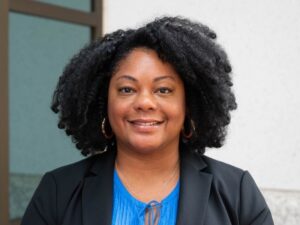
Amanda Wesson, UNC MPA Class of 2023
Hometown: Wake Forest, NC
Alma mater: North Carolina Central University
Degree: BA Psychology, MEd Communication Disorders
What’s your current title, and what do you do?
I am a speech-language pathologist of over a decade who most recently assessed preschoolers as part of a transdisciplinary team for a local school system. In this work, I used play therapy techniques to elicit responses for assessments to help determine young children’s needs. I also recently worked as an early childhood policy analyst with a non-profit organization. There, I helped coordinate events for legislators, synthesized information and provided policy considerations on various topics related to child care and early education.
What are your plans after graduation?
I recently signed on with Wake County Budget and Management Services to become a Budget and Management Analyst beginning in January! There, I will work closely with department staff to evaluate funding and program requests, collaborate to develop alternatives, and recommend approaches that align with the County’s overall objectives. I plan to engage in continuous learning activities and also hope to maintain my license and certification as a speech-language pathologist.
Looking back on who you were at the start of the program to who you are now, how have you changed?
Wow, it feels like so long ago, but I began this process as a direct provider and clinician. I knew I had a heart for public service and always strived to produce outcomes for public benefit. My experience led me to look at each case with an individualized lens. With the knowledge and connections I’ve gained from this program, I now have a head for public service—I’ve gained technical skills, theoretical frameworks, and practical experience. More than that, I’ve opened up myself to all the possibilities and ways I can contribute to my community and the communities of those I serve.
What is one class, one project, one faculty member, one experience, one discussion, or some other aspect of our program that had an impact on you and proved to be meaningful in your professional life?
I entered this program with a general idea of which direction I thought it would take me. However, I became interested in budget and management while taking PUBA 731 – Public Financial Management, taught by Monica Allen. I assumed it would be merely accounting, but it is much more comprehensive. It encompasses data, strategy, stakeholder and citizen engagement, problem-solving, and writing—many of the things that attracted me to the field of speech-language pathology. In taking this course, I realized how I could make a more significant impact at a macro level to support systems that provide education, public health, and human services.
A brief quote or piece of advice for those considering the UNC MPA or a career in public service?
The UNC MPA program has been instrumental in shaping my journey from a seasoned speech-language pathologist to an emerging public administrator in budget and management services. Embrace the opportunity to broaden your horizons, as the skills and insights gained here will empower you to make a meaningful impact in the lives of others.
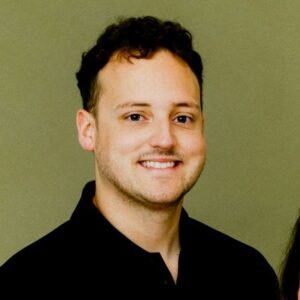
Shane Rudloff, UNC MPA Class of 2023
Hometown: Denver, CO
Alma mater: Ohio State University
Degree: BS International Relations
What’s your current title, and what do you do?
I am currently a Senior Grant Writer at a nonprofit called Growing Home in Westminster, CO. I build relationships with funders and secure grants for our programs which include a food pantry, a community garden, housing assistance, and early childhood education resources.
What are your plans after graduation?
After graduation I’d like to pursue a career in local government, preferably at the City Manager’s Office where I can interact with all kinds of stakeholders that work with government. I live by learning and enjoy observing the contexts and perspectives of different experts and professionals in the public sector.
Looking back on who you were at the start of the program to who you are now, how have you changed?
Looking back at who I was before I started the program, I’d say I’m much more cognizant of the inner workings of how the government operates. I was originally aware of the surface level details (elections, bills becoming law, politics, etc.), but now I understand there’s more that goes into getting things done (budgets, hiring the right people, working with private contractors, etc.). I have a more holistic view of how the public sector works.
What is one class, one project, one faculty member, one experience, one discussion, or some other aspect of our program that had an impact on you and proved to be meaningful in your professional life?
I would say that one class/experience that really stood out to me during my time at UNC was the immersion. I loved the opportunity to get to meet some of my peers in person which is a rarity for an online student. There I was able to meet some incredible professionals and people, and I am still very close friends with some of my classmates.
A brief quote or piece of advice for those considering the UNC MPA or a career in public service?
This is a pathway that provides an opportunity to help shape the way communities, states, and nations operate. It will make you a person people turn to when they are looking for solutions, and you will do little things daily that contribute to improving something. I take pride in that fact, and that is what public service is all about.
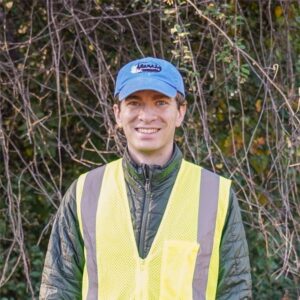
Joanthan Hill, UNC MPA Class of 2023
Hometown: Raleigh, NC
Alma mater: Duke University
Degree: Public Policy and History
What’s your current title, and what do you do?
My current title is Executive Director of Keep Charlotte Beautiful. I’m a full-time employee of the City of Charlotte, but it’s a little like running a nonprofit within the city government. The program has a City Council-appointed board, its own social media channels, and conducts some fundraising. An AmeriCorps service member (whom I manage) and I run numerous, community-driven initiatives related to litter prevention, waste reduction, and beautification.
What are your plans after graduation?
Throughout the MPA program, I’ve been able to apply lessons learned from class to greatly expand the programming scope and offerings of Keep Charlotte Beautiful. I hope to continue that after graduation. Two of my goals for the coming year are to launch a resident-operated ‘Friends of Keep Charlotte Beautiful’ spin-off nonprofit to enable easier fundraising for the program and to implement an in-depth litter study using our city’s Solid Waste Services department and students from UNC-Charlotte.
Looking back on who you were at the start of the program to who you are now, how have you changed?
When I applied for the program, I had just learned that I had received funding to hire an AmeriCorps service member for the first time, and wanted to hone in my leadership skills. The MPA program has enabled me to do that and more. In some instances, the MPA program enabled me to put a theoretical name to practices I was already implementing. In many others, it enabled me to consider new ideas and new ways of managing. I have become a more strategic-thinking, results-driven, and public-oriented manager because of it.
What is one class, one project, one faculty member, one experience, one discussion, or some other aspect of our program that had an impact on you and proved to be meaningful in your professional life?
As I mentioned to my oral exam panel, the idea of inspiring a shared vision from Kouzes and Posner’s The Leadership Challenge has stuck with me. Much of the work I do is collaborative, but a lot of it is driven by me, rather than being driven with the help of others. That message has reoriented my focus towards public engagement. In other words, I have what I think are a lot of great ideas, but they may not be what the public wants or even needs. Deploying a consensus-driven approach to tackling wicked problems provides for a more meaningful solution while broadening my perspective as a public servant.
A brief quote or piece of advice for those considering the UNC MPA or a career in public service?
Always consider how you might apply the lessons learned in class to your day-to-day work. Putting those theories to practice not only helps you learn more about them, it enables you to determine what works best for you.
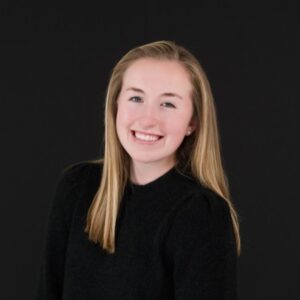
Julia Murphy, UNC MPA Class of 2023
Hometown: Pittsfield, MA
Alma mater: Providence College
Degree: BA in Political Science, Minor in Public and Community Service Studies
What’s your current title, and what do you do?
I am a Special Assistant to the Deputy Secretary at the United States Department of Commerce. I directly support the Deputy Secretary by overseeing his external engagements, supporting the day-to-day operations of the office, and advising on policy matters. As a political appointee in the Biden-Harris Administration, most of our work is centered around advancing and implementing the President’s priorities.
What are your plans after graduation?
I’m only three months into my current job so I’m hoping to stay for a while! I was working in the Massachusetts State Legislature when I began the program, so making the leap to the federal government and working in the executive was a goal that I had for a while and I’m grateful I was able to achieve while obtaining my MPA.
Looking back on who you were at the start of the program to who you are now, how have you changed?
My time in the program has reaffirmed that I want to be in public service for as long as I can. Taking classes while getting real-world experience allowed me to develop a public administration lens that I use every day to think about challenges, potential solutions, and how to move the needle forward. My decisions are directly informed by the frameworks and practical applications that I encountered in my courses. My ability to communicate concisely and effectively has significantly improved, and taking a deep dive into my leadership abilities has given me tremendous confidence both personally and professionally.
What is one class, one project, one faculty member, one experience, one discussion, or some other aspect of our program that had an impact on you and proved to be meaningful in your professional life?
This is such a hard question because I have genuinely learned so much from every professor, class, and classmate I’ve had! I think back to Prof. Julie Bregman’s Institutions and Values course that I took in my first semester of the program where we talked about equity as a core and competing value of public administration. When talking about equity versus effectiveness, I remember having a lightbulb moment where I said something along the lines of, “If programs aren’t working for the people they are intended to serve equitably, are they effective at all?” From this point forward, equitable public administration has been top of mind for me and has driven my focus areas in the program and the way that I think about the world, and is something I hope I can continue to foster as a public service leader. Government is a powerful tool to help people, and I would push back on anyone who claims that you can’t have equity and efficiency at the same time. It may not be easy, but it is our job as leaders to find a way forward.
A brief quote or piece of advice for those considering the UNC MPA or a career in public service?
The answer to both is simple — do it! There are a lot of complex challenges that our world faces and we need bold, courageous, thoughtful, and visionary leaders to take those challenges on. The UNC MPA equips you with the tools to tackle those problems, and you learn from the best and brightest faculty and classmates. Public service is an honorable undertaking and allows you to make an impact on other people’s lives in a way that other professions don’t offer. The MPA program was one of the best choices I’ve made and I feel incredibly well-prepared for wherever my path may take me.