
Students take a sip from The Old Well on the first day of classes on the campus of the University of North Carolina at Chapel Hill. August 21, 2023.
(Jon Gardiner/UNC-Chapel Hill)
Students take a sip from The Old Well on the first day of classes on the campus of the University of North Carolina at Chapel Hill. August 21, 2023.
(Jon Gardiner/UNC-Chapel Hill)
The waning days of August bring new academic terms for students enrolled in both the on-campus and online formats of the UNC Master of Public Administration program. UNC MPA students represent a wide range of professional experiences, academic disciplines, interests, and career ambitions—but all are bound by a common interest in public service.
Below, we caught up with some of the newest Tar Heels joining the program this fall both in-person and remotely. Read on to meet a few of these current and future public service leaders.
Hometown: Denver, North Carolina
Alma mater: UNC-Chapel Hill
Degree: Bachelor’s degree in psychology and English with a minor in creative writing
Where were you before you joined the MPA program?
Prior to returning to UNC, I was participating in a two-year fellowship with the Town of Spencer through the School of Government called Lead for North Carolina. I am continuing to work for the Town while I complete my MPA.
What are your areas of interest in the program?
My primary interests are community development, resident-retaining downtown development, public art, and placemaking projects. I am currently in the process of developing a downtown mural walk in Spencer that will encourage visitors to the North Carolina Transportation Museum to come across the street and engage with the community.
Dual degree with City/Regional Planning
Hometown: Coral Springs, Florida
Alma mater: Florida Atlantic University
Degree: Bachelor’s degree in criminal justice with a minor in political science
Where were you before you joined the MPA program?
Before graduating (from FAU), I was involved with two organizations: Color of Change and Florida Student Power Network. These groups are what really got me involved in community organizing and gave me a first-hand view of problems in my community. I saw how little trust community members had in the government to enact effective change and wanted to act as a bridge between community needs and actions. After graduating, I continued working with those organizations as well as others, where I got to lobby in Tallahassee with state legislatures, participate in monthly citizenship drives to help immigrants in South Florida gain citizenship, and other community organizing efforts.
Why did you decide to get your MPA at UNC?
I knew I wanted to stay in the South to see how other states were handling their own issues and how those solutions could translate to Florida, so that is what drew me to North Carolina. UNC’s MPA program emphasizes practice and theory in a way that is unique from other programs; that made me confident that I would be equipped upon graduating with the skills I need to be an effective advocate for the communities that I want to fight for. I am most interested in community and economic development at either the local or state levels because of my specific focus on being an advocate for the most disenfranchised groups in Florida.
Hometown: Raleigh, North Carolina
Alma mater: Appalachian State University
Degree: Bachelor’s degree in criminal justice
Why did you decide to get your MPA at UNC?
During my time as an intern with the Charlotte-Mecklenburg Police Department, I was able to interact with high-achieving department officers, many of whom I found had something in common: a master’s degree in public administration. After this experience, I realized to become the best law enforcement officer I could be, as well as reach the highest levels of law enforcement, I too would need to attain an MPA.
I initially had many questions about how I would fit into UNC’s MPA program, as a career in law enforcement is atypical of UNC MPA students. (Director of Admissions) Cara Robinson answered all my questions and put me in contact with current students, who assured me that the program would be beneficial to my career aspirations. A constant refrain that I heard attached to the UNC MPA program was that once you were a part of the program as a student, the program would do everything in its power to help you succeed. This gave me a great sense of comfort with the program and made the decision to attend UNC a simple one.
What are your areas of interest in the program?
I am interested in a career in federal law enforcement after the MPA program. Leadership is invaluable to law enforcement. Being able to communicate professionally, work within and lead a team, and inspire fellow officers and citizens are all critical components of leadership in policing and are skills that I am confident will be sharpened through the MPA program.
Hometown: Birmingham, Alabama
Alma maters: Mississippi State University (B.A., M.A.), University of Southern Mississippi (MLIS)
Degrees: Bachelor’s degree in English, Master of Arts, Master of Library and Information Science
Why did you decide to get your MPA at UNC?
I decided to get my MPA at UNC because I want to build my leadership skills and learn more about how to build strong foundations for public organizations. I have seen what solid ground-level support can do for an organization, and I want to become that source of support in the organizations where I work. I am also really interested in building community both within organizations and between public entities and their communities. I love this work and want to build my strategic planning, organizational management, and personnel management skills.
What are your areas of interest in the program?
I am currently the library director at the Hocutt-Ellington Memorial Library, a municipal library in Clayton, North Carolina. I am especially interested in organizational management, internal communications, and community engagement. I believe that organizations that focus on building strong, connected teams are effective and responsive to the public.
Over the past academic year, UNC MPA piloted the Student Professional Development Grant program. This initiative provides up to $250 to every student for professional development expenses such as conference attendance, professional meetings, workshops, or professional organization membership. This funding is in addition to program-sponsored professional development like registration for the North Carolina City and County Management Association Winter Seminar and School of Government courses.
During the pilot year, the program had nine students apply for and be awarded funds. Students used the funds for experiences ranging from leadership summits and registration costs, to travel expenses for conferences. To receive funding, students must apply for development opportunities, discuss how the experience fits with their professional goals with Allison Binkley, the Associate Director of Career Services & Professional Development, and then reflect upon the experience afterwards. The sponsored experiences provided tremendous value for the students and a few shared their thoughts on the experience:
“I was able to network and meet with alumni, learn about skills needed for MPA students, and attend coaching sessions with current managers.” – Shane Digan
“Prior to the conference, I knew almost nothing about the structure and behavior of a budget office. The conference sessions introduced me to concepts like zero-based budgeting and participatory budgeting. The sessions were helpful, but nothing compares to connecting with budget professionals from across the state.” – Scott Powell
“I attended presentations ranging from the Chair of the National Endowment for the Arts, regional artists, and community development advocates, to public art funders. I also networked with arts administrators from across the South. Some of my takeaways include: grant processes for public art (specifically focusing on the story to be told with the art rather than the artists’ resume. Start with a letter of intent before accepting full proposals), considerations for equitable pay for guest artists from near and far, and how to engage communities who have been impacted or will be impacted. These takeaways were important to me as I consider foundation funding, leading proposal reviews, and equitably building community through the arts.” – Lauren Duncan ‘22
After a very successful pilot year, the MPA program is excited to continue to continue this initiative for a second year and encourage professional development relating to students’ unique interests.
Meet alumna and instructor Katie Loovis and hear her thoughts on a public service career, leadership, and the MPA program. Along with her work with the UNC MPA program, Professor Katie Loovis was recently named as Executive Director for the North Carolina Community Colleges Foundation.
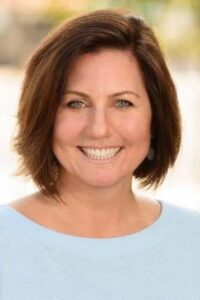
What do you teach in the MPA program, and how long have you been affiliated with the program?
I have the pleasure of teaching Nonprofit Management (PUBA 756) to UNC-Chapel Hill Master of Public Administration (MPA) students and many other master’s students who join the course from other disciplines, including business, public policy, and law; as well as some exceptional undergraduate students who want to challenge themselves with a masters-level course. I taught this course in the fall semester of 2021 and will do so again this Fall 2023.
I’m a 2002 graduate of the UNC MPA program and have enjoyed staying in touch with several MPA classmates and UNC School of Government (SOG) faculty members and administrators over the last twenty years. Also, I previously served on the MPA Alumni Association Board of Directors and now serve on the SOG Foundation Board of Directors. As you can imagine, I feel a kindred spirit with those in the MPA program and so appreciate and respect everyone at the SOG for continuing to hold dear the values of being non-partisan, policy-neutral, and responsive.
What’s your education background?
I earned a BA in communication studies with honors in 1999 and an MPA in 2002 from UNC-Chapel Hill, and am currently earning an EdD from NC State in Community College Leadership. I expect to complete my doctorate in 2024. At the same time, I earned a 100-hour graduate level teaching certificate from NC State, which has helped inform my teaching philosophy and practice in the classroom at UNC.
I love been looking at careers like yours – ones that take a lot of pivots. You’ve been in government, business, non-profit. You’ve focused in workforce development and now education. You’ve gone from nationally focused work to more locally focused work and now state focused work. What is the common thread in your career?
I am really grateful to have had such an interesting and meaningful career journey that has allowed me the opportunities to serve in the public (White House), private (GSK), and nonprofit (Achieving the Dream) sectors, as well as with the US Chamber and a local chamber of commerce.
Public service has been a common thread throughout my career. Looking back, I’ve been drawn to the place where the sectors intersect for the good of communities and individuals. I have found that big, thorny issues like closing achievement gaps, increasing access to medicines, or improving the talent pipeline requires leaders from business, government, and the nonprofit sectors to work together. No one sector can do it alone! I really enjoy being at that point of intersection where the sectors come together with shared vision, programming, and accountability, and, together, make a measurable and lasting impact in the lives of others.
Most recently, I’ve had the honor of being a part of a collective impact initiative, called the Summer Careers Academy, which was selected into the UNC SOG’s ncIMPACT “Carolina Across 100,” “Our State, Our Work” initiative. The SOG is a true think tank/do tank when it comes to sector intersection and accelerating positive results for our state. Anita Brown-Graham and her team at the SOG deserve a lot of credit, recognition, and support for their groundbreaking work in partnering for the public good!
Talk about something specific you try to teach your students that you have found as necessary and an important part of all your roles (can be a skill, attribute, concept, etc.)
There is a wonderful Chinese proverb that says, “Tension is who you think you should be. Relaxation is who you are.”
I have found many UNC students to be intelligent, dutiful, high achievers. While these are virtuous attributes, they can be limiting factors when students are trying to make sense of the best career pathway for them, especially if they want their career to be an extension of their life purpose. The path of public service, especially with local non-profit organizations, while tremendously meaningful, requires a great deal from its executive directors. I try to give my students a realistic perspective of the many responsibilities of a non-profit executive (as well as the joys!) and also give them the opportunity to reflect on their own personal and professional skills and aspirations.
“Throughout the semester, I invite students to pause and engage in reflection activities to consider who they are, how they are built, and what career pathway(s) are most aligned and will make their heart sing.”
My hope is that, whether they choose to become a paid non-profit professional or a volunteer serving on a non-profit board of directors, they will be well-equipped to add a lot of value and make a positive and lasting difference. (Here is a transcript of a keynote speech I delivered to the Chapel Hill Magazine Women of Achievement 2019 event, which brings this theme of purpose and leadership together.)
In thinking about the course of your career, where do you give credit to its success? In every role that you’ve considered or passed up or taken, what has helped you in navigating the course?
I have benefited in my career from the help of so many people along the way, especially those who coached me through UNC Athletics, taught me at UNC and now at NC State, and those colleagues who gave me great career advice and championed me behind closed doors when employment decisions were made.
One great piece of advice I received from a former White House colleague was: “say yes.” I took this to heart and despite having demanding jobs, I said yes to opportunities to meet with many people I would not have met otherwise. Through these new connections and acquaintences, I also experienced exciting doors open for me, so I encourage all of my students to ‘say yes’.
What do you learn from your students?
My default mode of operating is to be very focused on getting things done. There is not much I love more than checking things off a to-do list. However, being an educator is helping me shift my focus more to other people and their long-term success. Students have really stirred in me a deep sense of compassion for where they are and the challenges they are navigating. As an educator, I see myself as a facilitator of my students’ learning journey. Facilitation is more than simply lecturing, it is helping students connect their personal and professional interests and goals to the course objectives and outcomes, and then encouraging them to explore new ideas and concepts, guiding them through the learning process, and motivating them to apply new knowledge and skills.
Leadership is an important part of the MPA program, and leadership is an important aspect of your new role as Executive Director. This isn’t an interview, but what do you want to say to us about leadership?
Leadership is one of my favorite topics to study. In fact, through my dissertation, I have found that leadership and management are two distinct concepts that are often muddled together. My favorite way to distinguish the two is what Bennis and Nanus (2007) said: “Managers are people who do things right and leaders are people who do the right thing.” This purposeful distinction is so important. Public servants must be good at both. Sometimes these two things can be diametrically opposed – managers can be working to maintain the very systems leaders are trying to change – and therein lies the tension. The School of Government does an extraordinary job at helping public servants understand these leadership/management pain points, make sense of their options, and equip them for the path ahead.
I have enjoyed learning about the School of Government’s Center for Public Leadership and Governance and the work that Peg Carlson and her team are doing to build up teams of public servants across the state who can successfully navigate leadership and management challenges.
What advice do you have for those considering a public service career or a career change to the public sector or to those who want to impact in some area but are feeling frustrated.
No matter what career pathway you choose, the reality is that we are living in rapidly changing times. I’ve enjoyed following futurist Heather McGowan who talks about how “the future of work is learning.” She says workers today are likely to have 17 different jobs across 5 different industries and, going forward, 25% to nearly 50% of the work we currently do will be replaced with technology in the next ten years (McGowan, 2019). While nearly all careers are changing, the field of public service has dynamic and important job opportunities in the public, private, and non-profit sectors. I encourage students to keep an open mind and heart about the different sectors of service, and to remember that as Picasso said, “Your call is to find your gift, and your purpose is to give it away”.
UNC MPA student Melissa Cordell has recently launched the Women in NC Government, available on Apple Podcasts and Spotify. Each month features a new profile of a remarkable woman in government making a positive impact on their community. Be sure to check it out! The first episode is with UNC MPA alumna, Cecily Hamilton who serves as the Strategic Initiatives Analyst for the City of Durham, NC!
Melissa started this project as good government is a passion of hers. She hopes this can lead to more innovations in government work, serve as an inspiration for professionals, and recognize amazing women in a wide range of public service roles in our state.
Melissa received her undergraduate degree from UNC Chapel Hill in Women’s and Gender Studies and is a current UNC MPA student in the online format. She just started a new role with the Congressional & Public Affairs Staff in the Office of Public Affairs & Consumer Education for USDA-FSIS.
This event is for anyone interested in learning more about the Masters of Public Administration program. The event will be facilitated by our Director of Admissions, Cara Robinson along with participation from a member(s) of our community. This session is for anyone exploring the MPA, and we will talk about both of our format options – online and on-campus.
Topic areas that will be discussed include:
– What is a MPA, and who is it for?
– MPA vs. other degrees
– Why UNC MPA?
– The student experience oncampus and our curriculum
– Program Outcomes and Career Services
– Application Process and Financial Aid
The UNC School of Government’s Master of Public Administration Class of 2023 gathered with faculty, family, friends, and staff on May 13 to celebrate their graduation from the program. The ceremony, held at the William and Ida Friday Center, honored 64 graduates, both in-person and online students.
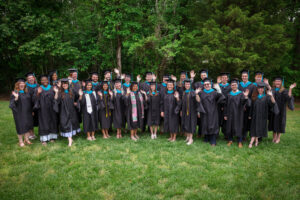
Honoring graduates
UNC MPA Director Willow S. Jacobson and School of Government Dean Aimee N. Wall welcomed and congratulated graduates for their achievements.
Carl W. Stenberg, James E. Holshouser Jr. Distinguished Professor of Public Administration and Government, presented the Wright Research Paper Award, honoring the legacy of its namesake—former faculty member and public administration visionary Deil S. Wright.
Stenberg presented the 2023 honor to Ben Lasley for his applied research project on Exploring Criteria for Assessing Collaborative Practices and Performance. Following graduation, Lasley will continue his career as an Environmental Protection Specialist with the U.S. Environmental Protection Agency.
Exploring what is meaningful
Peggy Merriss ’82, Executive Director for the Georgia City-County Management Association, served as keynote speaker and discussed the importance of graduates exploring what work will be purposeful and fulfilling to them.
“Think about what meaningful work is to you and why you want to do it so that you have a guiding principle and true north—because while there are plenty of days ahead of you, there will be some that are extremely challenging,” she remarked.
Merriss encouraged graduates to think beyond the basic and simple, to search for what is meaningful, and to commit to creating positive change.
She closed remarks by urging the public service leaders sitting before her to contribute to making this positive change for all community members they serve.
“It is incumbent [of them] to do it not just for some people, but for the most people in the most equitable, engaging, way.”
Student takeaways
Following the ceremony, graduates Danielle Badaki, Sherese Bonner, and Ben Lasley expressed what they will take away from the MPA program.
“This program has taught me the power of relationships, the ability to work across boundaries, and a passion for helping others,” said Lasley. “I’m incredibly thankful that I found a wonderful support system in our cohort—lifelong friends.”
Bonner, a Presidential Management Fellow at the U.S. Department of Commerce, shared her gratitude for the program laying the groundwork to build a successful public service career.
“This program taught me how to translate my passions into purpose. As a result of the exposure I received in public administration through my jobs, professional work experience, and coursework, I now have a more defined career path that will set me up for success in the future.”
Badaki, a client specialist for Fountainworks, reflected upon the strength of community within the program.
“The MPA program allowed me to cultivate relationships and build critical skills to become a public servant. Through this program, I was able to build a community that supported me short-term, in my education, and long-term, through my career.”
The School of Government and UNC MPA program extend their congratulations and warm wishes to all graduates of the Class of 2023.
When North Carolina native Sherese Bonner graduated with an undergraduate degree in public policy from the University of Virginia, she came to two conclusions: she wanted to learn how public policy was implemented, and she was ready to come back to North Carolina. Those conclusions led her to the UNC Master of Public Administration program.
“I wanted to learn how we bring programs and policies to life through implementation,” Bonner said. “I am also from North Carolina and grew up right outside of Charlotte. I knew I wanted to come back eventually, and a great way to do that was to complete my graduate studies here.”
Bonner is one of 37 UNC MPA graduates who will receive their degrees this weekend in Chapel Hill. She has used her rich and varied experiences—including a Professional Work Experience (PWE) with the Federal Reserve Board, a John M. Belk Impact Fellowship, serving on the program’s Diversity Committee, and serving as a Research Assistant for the Local Government Workplaces Initiative (LGWI)—to secure a finalist position with the U.S. Presidential Management Fellows (PMF) program. The inaugural Flo Miller Diversity in Public Service Scholarship recipient, Bonner has found many ways to apply her experiences in the MPA classroom to practical, real-world work.
Among her most meaningful experiences was her summer PWE with the Federal Reserve Board, which she continued during the academic year. Bonner began assisting with operations in the Large Institution Supervision Coordinating Committee. While working with human resources, she created a senior leadership onboarding manual, planned a training expo for bank regulators, and planned and hosting team-building activities. When the fall semester began, she transitioned to work with the Corporate Governance and Secretariat Team, where she worked on a policy gap analysis and joined senior leadership meetings.
“It’s been a tremendous and wonderful opportunity,” Bonner said. “I have been able to directly apply what I’ve learned in courses like Organizational Theory and Human Resources Management. It’s one of the best experiences of my graduate school career.”
With ongoing economic instability in the post-COVID era, Bonner also values the opportunity to watch the Federal Reserve response. “There is so much going on in our financial system, and I’ve had a front seat to what top decision-makers are thinking and doing in this really unique time. It’s been an amazing experience.”
Relationships with School of Government faculty, including Kimalee Dickerson and Leisha DeHart-Davis, were a valuable part of Bonner’s experience. She worked with DeHart-Davis in LGWI to carry out workplace climate surveys and advise local governments on best practices to improve workplaces. Her experiences with the initiative provided hands-on experience that directly translated to internships and fellowships.
“Dr. DeHart-Davis really trusts her research assistants to take on important projects, communicate with clients, and assist with deliverables,” Bonner said. “We’re meeting a critical need for local governments and that experience was very impactful. It added so many tools to my toolkit that I can carry forward in my career.”
Bonner also credits Dickerson for impacting her graduate school experience as advisor to the program’s student Diversity Committee. Through Dickerson’s “fantastic advice and support,” the committee put on a multitude of events for MPA students this year that tied diversity and equity to the public administration workplace.
Bonner also served as a John M. Belk Impact Fellow during her time in the MPA program. The fellowship serves as a training ground for future social impact leaders, placing students from graduate schools, four-year institutions, and community colleges in positions to support and advance education initiatives. Working in the Office of Governor Roy Cooper, Bonner assisted with an array of initiatives under the workforce policy advisor.
“I was able to work on projects related to early childhood transportation, youth apprenticeships, HBCU and minority-serving institutions, and prison education programs,” Bonner said. “It was great to apply much of what I studied during my undergraduate career and there were many connections to commerce that I’m hoping to use in my future work.”
The next chapter in Bonner’s journey will take her to Washington D.C. as a Presidential Management Fellow. PMF is the premier leadership development program for individuals launching careers in federal government. After a rigorous testing and interview process, Bonner landed a position in the Department of Commerce, working in the Office of Secretary Gina M. Raimondo. Her work as a program analyst will allow her to apply her MPA and professional experiences to policy implementation within the department’s 13 bureaus.
“Many bureaus need support with financial management, HR, contracts, risk management, and data governance to ensure smooth policy implementation,” Bonner said. “I’ll be working on a cross-cutting team to assist with this work in the Implementation Coordination Office.”
Bonner’s time in the classroom may be complete, but she will take her UNC MPA experiences with her every step of the way.
“I love North Carolina. UNC is a top tier institution and it was my dream school growing up. It felt like a full circle moment to end my time in higher education with a degree from Carolina.”
Now in its 26th year at the School of Government, the UNC-Chapel Hill Master of Public Administration program has once again been named one of “America’s Best Graduate Schools” by U.S. News & World Report in its 2024 rankings.
The program improved its ranking among the top 20 public affairs programs in the nation. It is ranked 19th overall and remains the top-ranked MPA graduate program in North Carolina. This marks the 11th consecutive year UNC MPA has maintained its position among the top 25 public affairs programs in the United States.
In addition, the program retained its prestigious second-ranked position in the local government management specialty area. UNC MPA also improved its ranking in the public finance and budgeting specialty, jumping four spots to rank 22nd in the country.
The program retained its top-20 standing in the public management and leadership field, ranking 13th overall.
This year’s list—released April 25, 2023—saw numerous University of North Carolina at Chapel Hill graduate programs earn high rankings. UNC MPA joins 15 other University programs in increasing their rankings this year, including programs in the Gillings School of Global Public Health, School of Nursing, College of Arts and Sciences, School of Education, and Kenan-Flagler Business School. Rankings for graduate medical and law programs will be released at a later date.
Find all of the U.S. News & World Report rankings online.
UNC School of Government faculty member Carl Stenberg received the Legacy Award in March 2023 at the American Society for Public Administration (ASPA) Annual Conference. Given virtually by ASPA’s Section on Intergovernmental Administration and Management (SIAM), this award celebrates public officials whose careers have “centered on advancing the study and practice of federalism in multiple roles.”
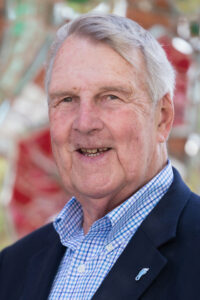
Legacy Award winners, an exclusive group, are recognized for making significant contributions to the academic literature on federalism, participating in a wide variety of assignments as part of SIAM, and taking active roles in the field—mentoring young public professionals in the infancy of their careers.
Stenberg has a long and established commitment to the Section, having joined in its founding and playing an instrumental role in advancing its mission to study, understand, and improve federal systems and other forms of intergovernmental relations.
His most recent Legacy Award adds to his collection of accolades from the Section—he has also won both of its Donald C. Stone Awards for practitioner and scholar contributions to the field.
As the nominator for Stenberg’s candidacy, School faculty member Kimberly L. Nelson was pleased to celebrate her colleague’s significant legacy in the field.
“Carl Stenberg has been a guiding force of ASPA’s (SIAM),” she said. “In 2014, he founded the Deil Wright Symposium at ASPA’s Annual Conference. The symposium continues today as the section’s main event, now heading into its 10th year. I can think of no other member who is more deserving of the Legacy Award.”
Willow S. Jacobson, director of the School’s Master of Public Administration (MPA) program, expressed similar esteem for Stenberg’s scholarship and its sustained positive impact within the public sphere.
“Carl is an example of a true engaged scholar, making a meaningful impact on the study and practice of public management,” she said. “His work in intergovernmental relations leaves a lasting legacy to students, the field of public administration, and communities across North Carolina.”
The James E. Holshouser Jr. Distinguished Professor of Public Administration and Government, Stenberg joined the School’s faculty in 2003. He is past president of ASPA and served as director of the UNC MPA program at the School from 2006 to 2011. He teaches local government courses to public officials, including in the Public Executive Leadership Academy, and instructs MPA students. Stenberg holds a BA from Allegheny College and an MPA and Ph.D. from the State University of New York at Albany.
By Brandon Bieltz, University Communications, Monday, March 20th, 2023
Shayla Douglas launched into a career giving back to North Carolina as the downtown and small business development manager in Garner, North Carolina. Douglas is working to revitalize the downtown area and strengthen the economy of the Wake County town of 31,000.
For Shayla Douglas, success after college meant finding a way to give back to the state she calls home and working toward a better future for North Carolinians.
The double Tar Heel is doing just that as the downtown and small business development manager in Garner, North Carolina. Douglas is working to revitalize the downtown area and strengthen the economy of the Wake County town of 31,000 by supporting small businesses and attracting new ones to establish roots in the community.
Read the full story on UNC.edu.