Weeks of June 3-16.
The quest for knowledge is at an all-time high and well suited at a place like Urban Institute. I immensely enjoy learning more about the Institute and working with Teresa Derrick-Mills, as well as, conversing with my junior buddy and other junior staff during the weekly check-ins. During the staff meetings, I get to learn how each research associate is working towards their goals and meeting expectations. Some have the fortune of being child or family welfare administrators and writing research protocols or requests for budgeting large-scale projects that impact many people. It is fascinating how many tasks and external research the associates are managing at one time. One notable task is working on building stronger fathers in the inner-city neighborhoods in the Bronx to build strong families.
Another special experience was attending the Convening held at Urban Institute by the National Women’s Law Center. The Center and advocates from around the United States met to discuss female and minority empowerment in the work place. They discussed litigation methods and ways to fight discrimination in the work place. The speakers ranged from a PhD in employment litigation, to experts in behavioral analysis and empowerment methods. Some had studied worker representation in the restaurant business, some had studied sex discrimination in the military, some had conducted research on employer retaliation methods and others provided consultancy for workplace inclusivity measures. I found an innate interest in the intersection between human resources and legal compliance within organizations relevant to the Urban Institute as an organization and its research projects.
Finally, the many brown bags offered by Urban Institute include topics from web scraping, to fighting the rising cost of living in poverty and importing data files in R. The opportunities to develop oneself professionally and learn more about American neighborhoods and demographics is so unique.
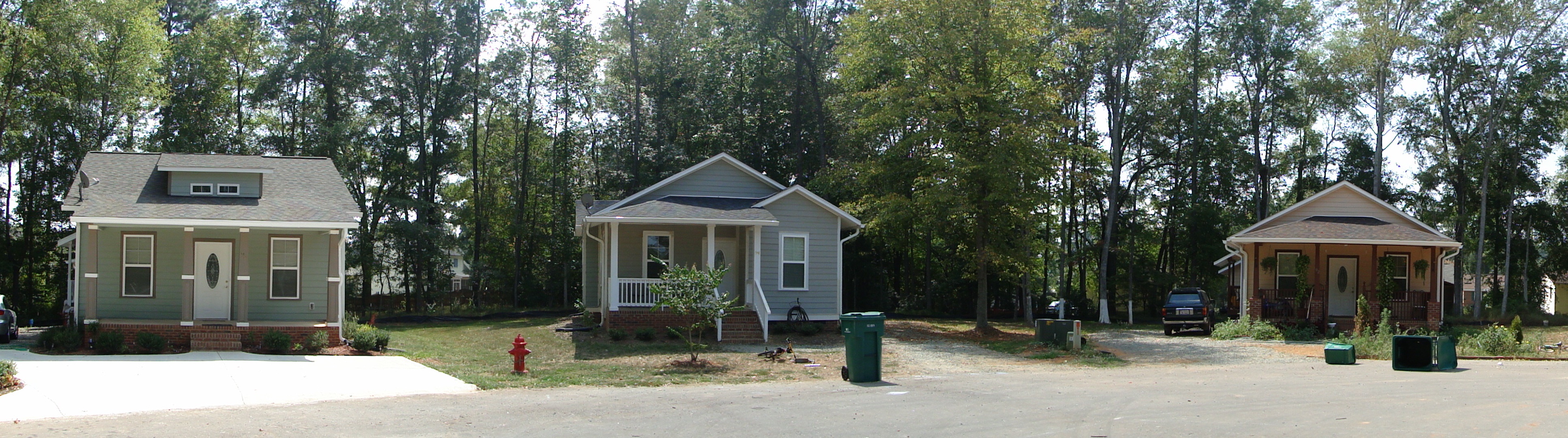
In my role at the Chatham County Manager’s Office, I am learning about the different challenges that the community faces. One of the key challenges that I have heard is the issue of affordable housing in the County. Since then, I have attended two housing meetings in the last few weeks, the Housing Implementation Group meeting and the Affordable Housing Advisory Committee meeting. They both provided me with a clearer picture of how local government and community agencies make plans to move projects forward to address housing equity challenges in the County. But before all of that exciting stuff, let’s provide some context for Chatham County’s affordable housing crisis.
According to a 2017 study conducted by the Triangle J Council of Governments, Chatham’s housing issue boils down to three core issues: supply, quality, and affordability. There is a 2,000 unit gap in affordable units in the County. Of those 2,000, about 1,400 are needed for individuals earning 0-30% of the area’s median income. The naturally occurring affordable housing is mostly aging mobile homes or other housing stock that is in need of repairs. Because of this large need, a substantial portion of Chatham County households are cost-burdened, meaning that they are paying over 30% of their monthly income on housing.
These issues impact various Chatham communities in different ways. Hence, the equity issue.
The Aging Population
Like in many other counties, there is a lack of housing for our lowest earning residents. Chatham County is unique in that it has a large aging population. In our county, older adult households have a lower median income than the general population. Those that earn below 30% often cannot find housing that is decent or affordable so they may be forced to leave their homes or stay in unhealthy and unsafe living conditions. The aging population may have mobility restrictions, health needs, and limited or no active income to ensure they age in their homes affordably.So those serving aging populations and working on affordable housing have to create different strategies targeted for this population.
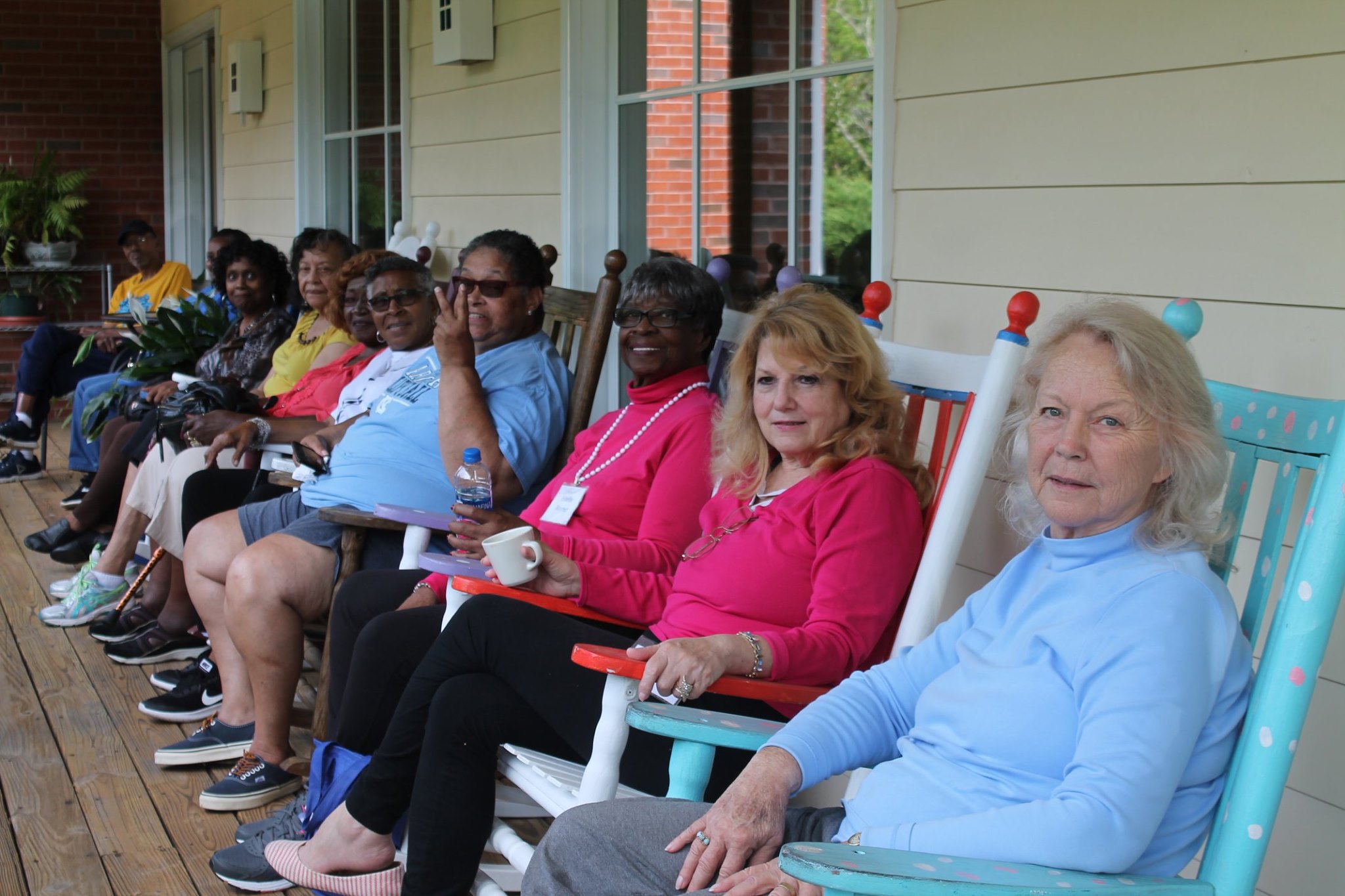
From the Council on Aging’s Senior Center
The Housing Implementation Plan meeting was focused on the Aging Plan to support the aging population. There are other implementation plan meetings, that focus on the other issues that impact the larger aging population in Chatham. This meeting had key players representing and serving the aging community in the County. They discussed how they could reach the greater aging community and gather information about their needs. It was pretty cool watching them brainstorm. I also got to see them evaluate and re-evaluate their strategic goals and deadlines. I could also tell their commitment to the work.
Emergency Housing
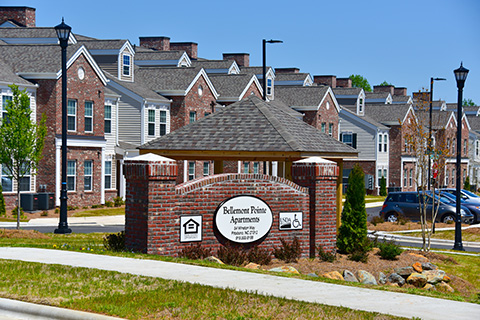
Bellemont Pointe Apartments, one of the few affordable housing developments in Chatham
The Affordable Housing Advisory Committee meeting was focused on the Chatham County Housing Trust Fund. These folks are committed to creating affordable housing opportunities in the County. From our County Manager’s staff, we had our Policy Analyst, Stephanie Watkins-Cruz. (You may remember her from my celebrity post a few weeks ago.) In addition, we had folks representing various fields such as realtors, community members, non-profit leaders, etc.
Random fun fact about me – I am really interested in policy! So, this meeting was really cool because the Committee was working on the Chatham County Housing Trust Fund & Location policy. Stephanie proposed a modification to the policy to address the County’s new role in providing some emergency housing funding. The best part was watching all of these key players in housing in Chatham County discuss the emergency fund’s location, the reasons for access, the protections, and policy.
Chatham Affordable Housing WINS
First and foremost, the fact that the County now has a Housing Trust Fund is a huge win! With this fund in existence, nonprofits who are creating or preserving affordable housing for families and individuals in need have a source of funding. Additionally, there is now a small allotment for emergency housing needs such as emergency shelter or displacement.
Even more excitingly, the Housing Trust Fund has OFFICIALLY deployed its first low-interest loan to the developer of the historic Henry Siler School to create more affordable housing. The plan is to have 44 new units on this property with shared community space. So, the inside scoop is that the core of the Historic Henry Siler School will be preserved and potentially turned into a shared community space. This project aims to both respect the history and meaning of the school and addresses an important community need. In Chatham, there aren’t many smaller units (1-2 bedrooms). Less than 1% of the housing stock in Chatham county is a 1 bedroom or studio. So this development will include 22 1-bedroom rental units priced at $355-$575, and 22 2-bedroom rental units priced at $423-$675.
I know that I came into the Chatham County affordable housing game a little late, but I am really excited to see these projects moving forward. Shout out to all the awesome folks working hard to improve housing equity.
Hello everyone!
This week I spent a lot of time talking about city planning, so it only feels appropriate that I dive more into my dual degree with y’all. I originally applied as a dual degree with City & Regional Planning on top of Public Administration because of my senior thesis. I wrote about how city planning impacts the anxiety and depression levels of residents in neighborhoods of Chicago. The findings I discovered during this project furthered my love of using planning to affect the lives of those living in a community. So when it came time to apply for graduate school, a dual degree felt like a necessity.
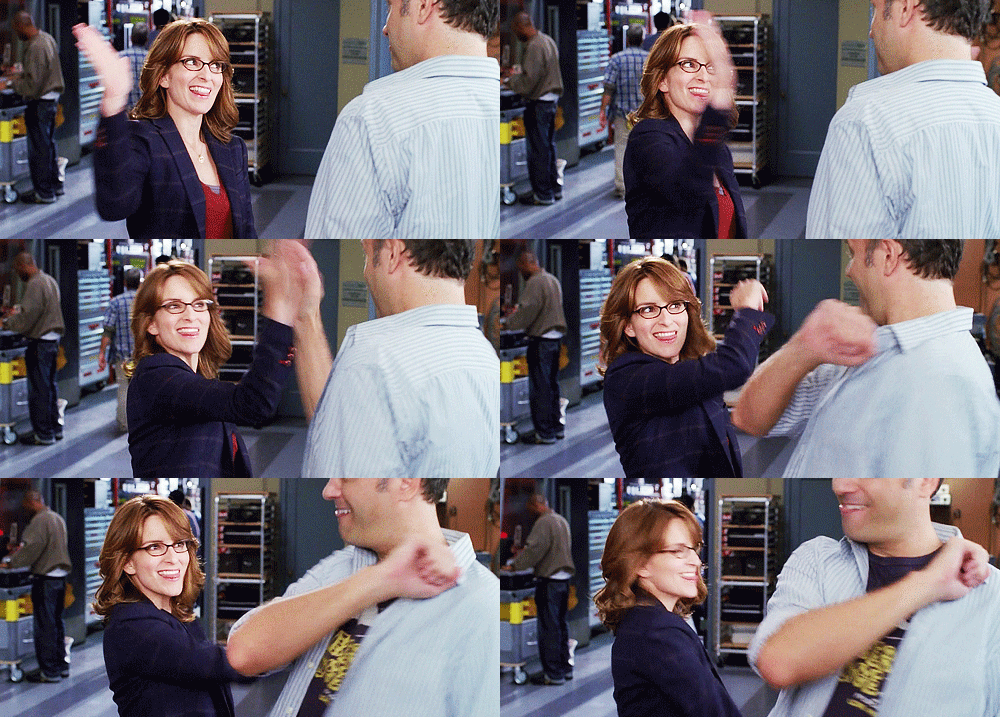
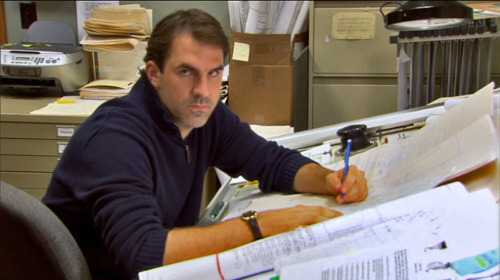
Many of us know about the planning department from “Parks & Recreation,” and the most boring character on the show, Mark Brandanawicz (pictured below). Although he may appear like he hates his job, most planners are extremely passionate about the work they do. Most folks only hear about the zoning work that planning departments do, but right now the City of Durham has a unique project going on. They are working on an update to Durham’s “Comprehensive Plan”, which will analyze the infrastructure of the City and plan for growth in the future. I have the opportunity to work on this with them, and will keep everyone updated on my progress as it continues.
Durham’s Comprehensive Plan hasn’t been updated in thirteen years, so the City is ecstatic to make changes to the original. These plans are essential to the future of Durham because they ensure that going forward, plans are already in place for improvement, and not all decisions are made on the fly. Additionally, this forward-thinking plan allows for more voices to be included in decisions because there will be more opportunities for discussion.
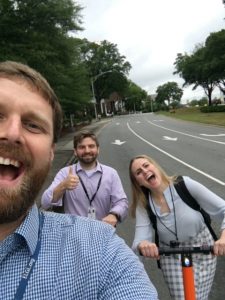
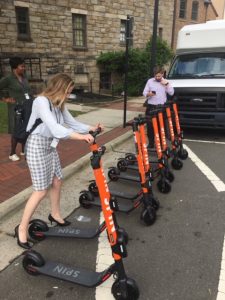
One of the benefits of being a dual degree student is that I can examine initiatives through an additional lens. For example, dockless scooters came to Durham this past week, and the differences in my degrees changed my analysis of the project. The MPA side of me was focused on the permits that would need to be approved for dockless transportation, while the Planning side was considering the changes to the general transportation system that this would cause, and what it implies for the future. Dockless transportation, such as scooters and bikes, will impact planners and the way they develop and zone the City going forward. Don’t worry, our trip was documented, and proof that I rode a scooter in heels can be found below.
For those of you considering a dual degree in Public Administration and City & Regional Planning, I highly recommend it. I realize I am slightly biased, but the dual degree has allowed me to take advantage of opportunities both programs offer. For example, this upcoming semester, most of my courses will be in the Planning department, and focusing on community development. I believe that these classes will pair well with my MPA courses, and allow me to be a better public servant in the future.
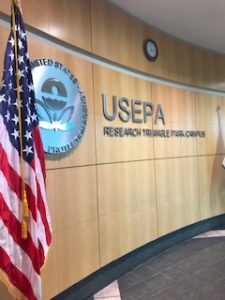
In the MPA program, we learn a great deal about the importance of stakeholders and bringing various voices to the table to help in the decision making process. We as public servants should be cognizant of the individuals we are serving and should listen and value their ideas. Since environmental issues touch every person in every sector, the EPA serves a multitude of stakeholders, including states, tribes, local governments, industry representatives, environmental groups, and more. Subsequently, the Agency works hard to bring all of these voices to the table in the development of environmental policy and regulation.
These efforts were discussed at length during the “Working Effectively with Tribal Governments” workshop I attended this week. American Indian tribes are unique in that they are recognized as sovereign governments. Currently, there are 537 sovereign tribal nations recognized in the United States. Each of these tribes exerts self-governance and are included in the broader community of American Indians and reservation lands defined in the United States Code as “Indian Country.”
The EPA was one of the first federal agencies to develop a formalized policy for interacting with tribal governments and considering tribal interests in carrying out its programs to protect human health and the environment. The EPA Policy for the Administration of Environmental Programs on Indian Reservations, known simply as the “1984 Indian Policy,” formally brought tribal governments to the decision making table.
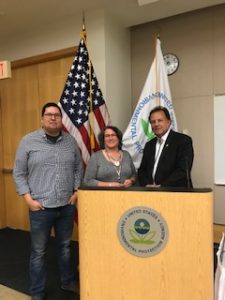
From left to right: Vallen Cook, Laura McKelvey, and Greogry Richardson
The workshop discussed the historical relationship between the United States and tribal governments as well as tribal jurisdiction, authority, and environmental programs. Presenters included environmental experts with American Indian heritage. Vallen Cook is an Air Quality Specialist in the Grand Portage Band of Lake Superior Chippewa. Laura McKelvey is manager of the Community and Tribal Programs Group in the Office of Air Quality Planning and Standards at the EPA. Greogry Richardson is Executive Director of the NC Commission of Indian Affairs.
One of the most interesting aspects of the workshop was the discussion on respecting tribal traditions, culture, and sovereignty. The EPA recognizes the contentious past between the US government and American Indians, and strives towards continuing to improve this relationship. Understanding and respecting tribal culture and identity is a key component of fostering trustworthy relationships with tribal governments so that their environmental interests and needs are recognized and addressed. Community members like Vallen, Laura, and Gregory advocate for American Indian interests and educate federal employees on how to work effectively with tribal governments. The first step is to offer them a seat at the table.
Thanks for reading!
Sydney

Toby Flenderson from HR in The Office
I know it may be hard, but try and ignore the impression of HR you got from Toby on The Office (okay, maybe I made it harder by putting a picture of him, but how could i not?). Not only is the Human Resources department more lively, they are also seen and used as a crucial asset by all of the departments in the City.
One of the topics that stuck out to me this week was benefits, which can be a bit of a problem for the City. For example, many people applying to jobs with the City don’t realize or don’t place importance on the great benefits that come with the job. The impression is that many people look at the pay and don’t apply or don’t accept the job because they are only focused on what they take home at the end of the pay period, missing the usually great benefits. This has unfortunately led to a few vacancies, which may require different methods of advertisement in the future. If there is one takeaway: look at benefits as much as you look at pay, because a job could have better perks than you realize.
That moves us on to interviewing! In addition to their daily tasks, each HR staff is a liaison for a few departments with the City and will help out with interviews. While departments can come up with their own question, they will sometimes ask HR for assistance in formulating questions or even style of interview. For example, we met with one department and tossed around some ideas for an interview process involving a supervisory role. One neat interview round idea was to have the applicant run a meeting, while the interviewers all took on personas that the applicant would have to deal with while presenting.
The department also started Salisbury University, which is a form of internal training. The six levels of training that involve an increasing number of classes allow internal staff to learn more about the organization and about being a leader, which ideally leads to promotion further down the line. I viewed this as another perk of the job, as leadership training and the skills it teaches add value to an employee, giving you a better chance at promotion or even skills that you could use in another organization should an opportunity arise. Plus, it shows that Salisbury is investing in its staff, which is a great environment to be a part of.
Last but not least – SWAY (the Salisbury Way). This is the new culture the City of Salisbury is trying to create for itself, and is a customer service oriented culture. In addition to encouraging staff to go above and beyond their duties, SWAY has various committees dedicated to workshopping ideas and spreading SWAY around the City. While SWAY is admittedly still in an early phase with kinks being worked out, it is already making Salisbury a better place to work and live. In one project, City staff could go visit and learn about different departments, which increases their knowledge base and builds a community. My personal favorite (which I think is SWAY related) is the Community Engagement Fridays, when a group of City staff go around a selected neighborhood and ask for feedback in person from citizens, as well as distribute flyers for any upcoming events. This is a great way to connect to citizens, especially if they can’t use the internet or come by the office. SWAY is hard for me to explain, but I definitely feel it when I am here.
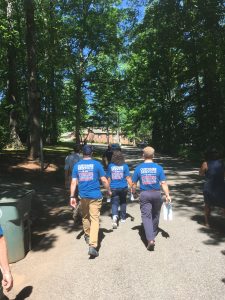
City of Salisbury Employees walking a neighborhood during Community Engagement
So, this won’t be a gossip column talking about local government romantic relationships (well, more specifically Chatham County romantic relationships). But instead, I want talk about a key theme I have learned from conducting 18 interviews and attending 10 community meetings since being at the County Manager’s Office. Drum roll, please….

RELATIONSHIPS MATTER…A LOT!
In Chatham County, I am an outsider asking for an insider scoop from community members about the County’s history and how we create a better Chatham County. I have been fortunate to find that community members have, generally, been willing to share and be vulnerable with me. But they also want the same in return, which is reasonable. Usually our interviews start off with everyone sitting down, awkwardly making small talk and then they hit me with the “so where are you from?” On face-value, this question is simple. But I always take this as a loaded question. I answer imagining that folks want to know who I am, where I come from, why I am here, and if I am truly invested in the community. I have to take the time to be genuine and explain my answer to folks before they are typically willing to open up to me. That is me…building trust and that relationship.
So far, I have learned so much about the County and the individuals that live, work, and play here. More importantly, I am beginning to learn why some of the challenges exist in the County, who folks trust and don’t trust, and how the community would like to see that trust be improved. Want to know the number 1 thing that folks have mentioned they want to see improvement on? ….here goes.

TRUST: Building relationships in meaningful ways with the community.
I want to be clear, it is not that public administrators do not support communities or build relationships at all – we definitely do! But we don’t always do it the ways that our communities are most receptive and understanding of. Government is complicated as is! So often times, we, as public administrators, show care and concern for our communities through our budget by funding road improvements and supporting more school staff. This is definitely important, but the public doesn’t always perceive this as support or even caring for the community. They see this as our job (and it is)! Sometimes, the public wants public administrators to listen, be vulnerable, and show up to their community events. Doing this, we also have the opportunity to explain the decisions we have made, manage expectations, and share information about government processes. This type of relationship building, beyond BOC meetings, obviously takes time, energy, and resources, but I think it could improve the public’s relationship with local government. Obviously, everyone is not going to like us or approve of all of our decisions, but maybe we can encourage more civil discourse and increase communication by building stronger community relationships.
Disclaimer: Relationship building and trust is not an issue specific to only Chatham County. It happens everywhere, in every city, county, and state. It is something that we as public administrators can always improve. So, let’s keep truckin’ along!

See ya at the next post!
Welcome to my weekly blog about life here in the Durham Budget & Management Services Department! This budget adoption season Council made a variety of changes to the proposed budget. The department is currently working on updating the budget to align with their decisions.

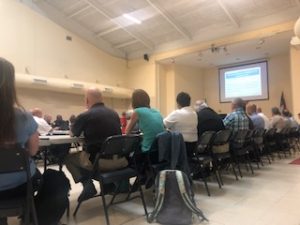
City Council held a special Work Session on Thursday, because there were a variety of choices still to be made around the budget. This additional session was to make final decisions on two main items: 1) whether or not to add more police officers to DPD and 2) if part-time city workers not making the Durham livable wage of $15.46 an hour should have their pay increased over time or all at once. These discussions have been forcing me to think back on my time in class this past year. For example, in Public Administration Institutions & Values, we were constantly discussing where residents place their values, and how this will vary no matter where you work. The values of the Council members were obvious in these decisions, focusing more on equitable pay and less on policing, but it also calls into question the values of the community. Opinions on social media have shown that for many, this does not express their values, and folks appear to be frustrated with the decision.
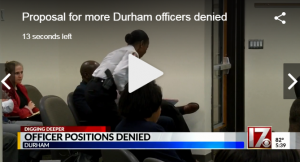
This meeting was very special to me, as it was my first time appearing on the Durham local news, pretending to know what I’m doing. You can see the article for yourself here. As you can also see in the screen grab, a request to add 18 additional officers to the Police Department was denied by Council. The proposal was to add the officers so that the beat schedule would allow for shifts to be less lengthy, which would hopefully improve quality of life for officers. After it was clear that a majority of Council members did not support the positions, the Mayor attempted to offer a compromise and bring it to nine officers. However, this still was not what a majority of the Councilors wanted, and in turn four Council members voted to remove the 18 officers from the proposed budget. The impacts of this decision will be seen in the next fiscal year. In the article hyperlinked above, you can see the City Manager discussing how plans will likely be pivoted going forward around this subject.
After making this decision, the Council discussed whether or not the city’s part-time workers would have their hourly pay increased to $15.46 an hour. The Human Resources Department recommended steady increases over time, which would be about $180,000 this year. However, the Council decided to increase them all this year, which will cost an additional $650,000 for FY 20.
Although the budget process took up a large part of the week, there were several other projects I was able to work on. As many of you may know, there was a gas explosion in Durham about two months ago, and all of the departments related to the accident attended a session to discuss responses to this occurrence. One topic brought up was how online communications to constituents could be improved. As social media grows, more cities need to have plans for publishing information in emergency situations.
This upcoming week I will be working on a few different projects. One meeting I am looking forward to is with the Director of the Planning Department to discuss my dual degree. In my next blog I plan to dive further into the dual degree of Public Administration and City Planning, so stay tuned.
Welcome back to my blog! This week, I learned a lot about the organizational culture of the EPA. Like any large organization, the EPA sometimes experiences challenges such as breakdown in communication channels and competing values. However, this week I discovered what makes the organization so successful, and its the people that work there!

I am constantly seeing new faces, learning about different roles, and forgetting the name of the person whose hand I just shook. It can be a bit overwhelming at times, but I am extremely grateful for every interaction–large or small–because everyone is just so nice. The career public servants at the EPA are intelligent, kind, supportive, passionate, and genuinely good people. I spent this week realizing that the EPA is filled with employees who care about the work they do and the people they work with, which is the perfect recipe for an enjoyable and productive work environment. From the moment I set foot on campus, there is always a smiling face wishing me a Happy Friday or offering to discuss the latest SIP proposal. Whether it is a friendly “Good Morning!” at the security checkpoints (of which there are many) or a weekly check-in with my boss, everyone offers support and guidance in any capacity that they can.
When I was not in awe of the incredible people that I work with, I was looking over the latest SIP proposals. State Implementation Plans or SIPs are plans that each state must develop to meet the National Ambient Air Quality Standards (NAAQS) established by the Clean Air Act. The EPA is responsible for reviewing these SIPs, approving or denying them, and offering guidance regarding their substance. The latest SIP proposals can be found in the Federal Register and approved revisions can be found in the Code of Federal Regulations! SIPs are extremely complex and important, so nearly every day we are on the phone with the Office of General Counsel (OGC), which is an entire office dedicated to legal guidance and representation for the EPA. If you are ever curious to learn about the actions your state is taking to protect its air quality, check out its SIP at: www.epa.gov

President Nixon signed the original Clean Air Act into law in 1970.
That is all for this week–thanks for reading!
Sydney
That’s right. It was my week with Planning! I had an amazing time with the many people and jobs that make up the Planning department in Salisbury. But before I continue, a trivia question: Why can a parcel of land within a certain airport zone NOT have a stormwater pond? The answer is at the end of this post, with the hope that you will accidentally read the whole thing while scrolling down.
I started the week learning a little more about the Comprehensive Plan, which lays out goals for the future quality of life and development in Salisbury with steps the City can take to reach them. The last Comprehensive Plan done by the City was in 2001, so they are due for an update. I had the opportunity to seek out the most recent data from the US Census Bureau in order to measure progress toward community goals. This data included measures such as housing affordability in relation to income, education levels, and employment levels and types. While the Comprehensive Plan is just a guideline, it is the first step in shaping the future of Salisbury.
Zoning is, of course, a very crucial part of planning. Zoning determines what type of development can occur in a certain area of the city and is the reason you don’t find a large industrial park in the middle of a residential neighborhood. One thing I didn’t realize about zoning was how specific the Land Development Ordinance (LDO) can be. For example, a residential zone not only requires a residential unit, but it can be broken down into different types of residential units with a certain number of parking spaces and a certain setback from the road etc. depending on the category. I definitely have a greater appreciation for zoning, knowing now that a lot of thought and planning is involved in simply making the environment around me make sense. Click here to see the current zoning map and some other awesome maps made with GIS (an essential in a planning department and life).
Something that makes Salisbury unique are the national and local historic districts of the City. Driving through downtown, it would be hard to miss the fact that Salisbury cares about preserving its past, with faded Cheerwine murals on worn brick buildings and period houses lining some residential streets. In fact, the local historic districts’ require that owners get permission before making any changes to the exterior of their building, all the way down to approving period colors of paint for historic houses in which people currently live. It sounds burdensome for business owners and homeowners alike, but the citizens love it and I’ll admit that I do, too.

A Brick Company building in the old industrial district repurposed into a retail store.
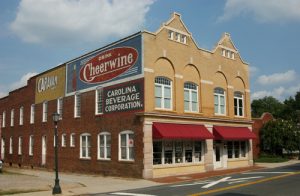
An old Cheerwine advertisement
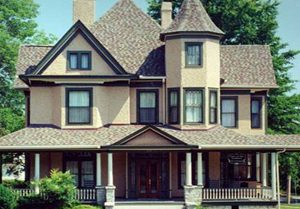
Period House that is still in use
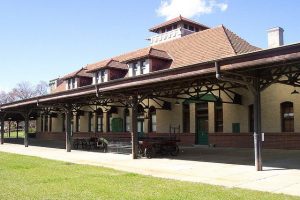
The Salisbury Train Station
I would like to mention an amazing program put on by the Planning Department: BlockWork. Through this program, citizens can submit applications for the city to pay for and help clean up a neighborhood block, with the hope of improving property value and encouraging others to clean up their own blocks as well. A large group of volunteers will come out and, with permission, put new paint on the side of houses, clean the landscape, rebuild sidewalks, and even repair a few roofs. It’s a great way of reaching out to the community and helps the City and its neighborhoods look better one block at a time.

Volunteer putting together fence for BlockWork
While I would love to keep going about my week with planning, I have promised an answer to a trivia question and I will deliver. Parcels of land within certain airport zones (yes, Salisbury has a small airport!) cannot have a stormwater pond because those ponds attract geese, which can then fly up into planes taking off and landing. Just another example of an easy-to-miss yet crucial development ordinance that your local government planners are taking care of for you!
Thank you for making it to the end, even if you just scrolled down for the trivia answer! Come back next week for a little Human Resources, and maybe some more local government trivia!
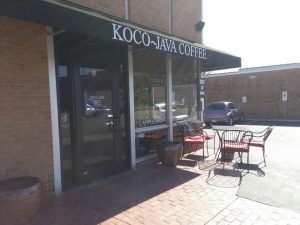
My favorite coffee shop in Salisbury! Koco-Java
Memphis, Baltimore, Kansas City, Montgomery, Prescott, Charlotte, Highlands Ranch, Savannah, Parkland—what do all of these cities have in common?
Schools that have lost students and educators to school shooting incidences on campus.
With an increase in not only school shootings, but also a heavy prevalence of bullying, cyber bullying, self-harm, suicide ideation, and suicides at school-age students, school safety has become the number one priority for lawmakers and administrators across North Carolina. Superintendent Johnson firmly believes all students should feel welcomed and comfortable attending school daily, and not fearful of if their school is next to be listed above.
As I have been working in the Superintendent’s office for the past week, the issue of school safety has repeatedly been brought to the forefront. Whether it was meeting with legislators about the budget to ensure school safety grants are funded, attending press conferences with Superintendent Johnson about his plan to address school safety concerns, participating in State Board of Education meetings, or listening to Sandy Hook Promise, an organization dedicated to preventing school shooting crises, the safety of North Carolina students has been the number one concern for not only parents, teachers, administrators, and students, but also lawmakers, private organizations, and my team at the Superintendent’s office.
While the schools that have been impacted by these incidences vary in size, location, age, demographic, magnitude of incident, and connection to shooter, what is not unique are the many students at these schools that told administrators and law enforcement that they saw signs of concern prior to the incident. However, many students reported they “thought someone else would report it,” or “thought the person probably wasn’t serious,” or they did not feel comfortable telling a teacher or student resource officer.
Based on the feedback of schools, law enforcement officers’ input regarding these incidences, and organizations that are experts in best practices, students are the eyes and ears on the ground in these circumstances. Thus, the Superintendent has partnered with Sandy Hook Promise, founded by a mother who lost her son to the Sandy Hook massacre, to create an app that allows students to report any concerns they have anonymously. This app will be launched in every middle and high school in North Carolina in the coming school year, and teachers and students will be trained by these professionals on how to spot signs of students who might be planning to hurt themselves or others.
While parents and school personnel will have access to the app to make reports, the app is designed to be a tool by the students, for the students to help students feel empowered to speak up, protect themselves, and protect others. There will be a control center dedicated to North Carolina that will take-in each report and determine if it is life threatening at that time and take action by contacting local law enforcement, school officials, and teachers, all while continuing communication anonymously with the tipster to obtain the most information possible.
While this app was not my idea, I am super excited to be a part of the Superintendent’s team as he continues rolling out plans for this partnership this summer; the legislative team as we continue working with the General Assembly to ensure these priorities are reflected in the budget and bills, and the team of those that care deeply about protecting the students of our schools. It will be great to be a part of such a big project being launched nationwide, and I’ll keep y’all posted!
P.S. I attended the Council of State meeting this week with all statewide elected officials and got to snap a pic with Governor Cooper 😉