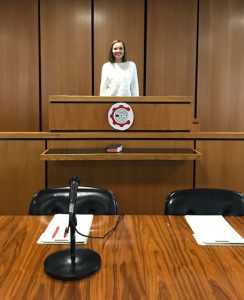
 effectively without knowing the Town rules, right?
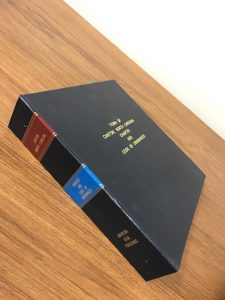
Week two has been filled with research. Lots of research. In my first day on the job, I was handed a large binder containing the Town Code of Ordinances. I spent a couple of days reading through the binder familiarizing myself with the Town’s laws. The Town Code is available online, but I liked having the binder. It felt very official. Starting off with this assignment turned out to be really constructive given my lack of experience in local government and limited knowledge of the laws in my Town. After all, it would be difficult to work effectively without knowing the Town rules, right?
One of the benefits of completing my PWE here in the town manager’s office is the opportunity to work on projects like the one I completed this week. After taking the time to read the Canton Code of Ordinances, I began conducting research on sections that town officials expressed an interest in updating. My report this week related to the Town Sign Ordinance. I reviewed the current Sign Ordinance and researched ordinances in comparable municipalities then provided some recommendations in a report to the town manager. Throughout this process, I spent a lot of time searching Municode, reviewing Supreme Court cases, and reading through state statutes. Next week the Locating Legal Resources Activity is due in my Law class, and after all this research in my PWE, I am much better prepared to tackle that assignment! My experience this week also confirmed just how relevant that Law class is to a public service career. Next week I will be working on a really fun project that I am excited to share with you! Stay tuned!
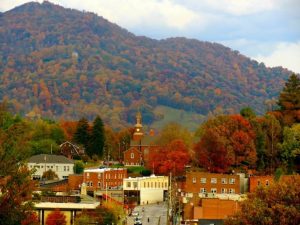 On Monday, I began my PWE in the office of the town manager in Canton, North Carolina. Canton is located in Haywood County just twenty miles outside of Asheville. Surrounded by the Appalachian Mountains. Canton attracts adventure seekers who enjoy hiking the surrounding trails that include popular landmarks like Cold Mountain, floating down the Pigeon River that runs through town, or visiting downtown businesses that feature delicious southern food and locally made goods. In the center of town sits a large papermill that manufactures Starbucks coffee cups, juice cartons, and other paper products. Due to the central location and large size of the mill, the locals affectionately refer to Canton as “Papertown.”
As a current graduate student, one of my favorite things about this program is the fact that we have such a small cohort. Our cohorts usually range from 20-25 students. These are the students that you will share all of your core classes with. (To see a list of the core courses, click here). Even though our online students don’t typically meet in-person (outside of electing to do the immersion course), the MPA program tries to replicate the small cohort feel by using video conferencing and small class sizes of about 15 people. In my opinion, here are the best parts about having a small cohort.
The perks of the small, personable cohort is one of the main reasons that I was so drawn to this program.
As an extension of our last post, we wanted to share another perspective with you about pursuing an MPA and/or a JD. As the last part of this series (for now), we want to introduce you to Lori Gershon. Lori is in her first year of the MPA program. She was a practicing attorney for 22 years, focused on child welfare. Lori was actively appearing in court and trying cases up until the time she began the MPA program. Check out Lori’s perspective on the JD and the MPA.
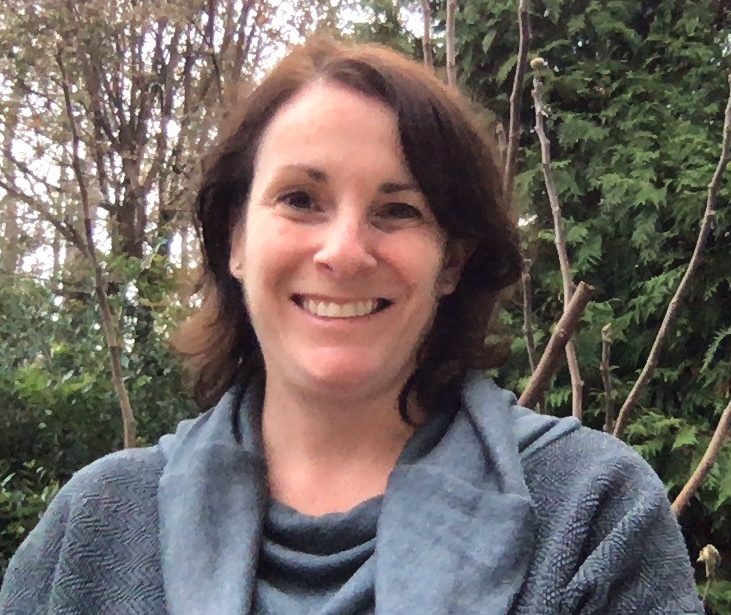
Lori Gershon, JD and MPA Candidate 2021
Why did you choose law?
Lori: I always wanted to help people, especially vulnerable populations (kids, elderly, victims of domestic violence) and I thought using the law would be a powerful tool to achieve that goal. My seventh grade English teacher planted the initial seed, even though in retrospect it was probably because I was argumentative.
What made you decide to pursue an MPA?
Lori: At this point in my career, I was looking for a leadership and management position. I want to take the years of experience in the community and in the courtroom and apply them on a larger scale. But, I needed to learn management and administration skills which is why I applied to the MPA program.
What is law school like vs the MPA program?
Lori: Law school is its own creature. It focuses on teaching you a new way of thinking and solving problems. It is more rigid than the MPA program. The MPA program teaches through creativity and theory, and not through rules and precedent. Both are valuable means of solving a problem, but they are very different.
What do you hope to do with your MPA degree after graduation?
Lori: I hope to continue to serve the public in local government.
If you could do it all over again, would you still get your JD?
Lori: Absolutely! I have enjoyed being a lawyer and have gained valuable analytical skills that serve me. I have had the privilege of helping children and families achieve justice and have played a role in ensuring a fair system.
Any advice for someone contemplating between a JD and an MPA?
Lori: I would recommend highly getting both a JD and MPA. If someone would like to work in the courtroom and in a law firm first, I would advise getting the JD first and taking time to work to get the most courtroom/real life experience, and then take time off to get the MPA. If someone knows that they prefer to go directly into management and bypass the courtroom/in the trenches experience, then I would recommend a dual degree program to receive the JD and MPA in a combined course of study.
Thanks, Lori! We hope that these two perspectives were helpful in helping you choose between MPA and JD or pursuing both!
The MPA program recruits students with varied academic interests and backgrounds. One of these academic areas is law. We meet students who started law school and decided it wasn’t for them. We hear from people who thought they wanted to go to law school until they found us. And then we see people in our program who actually completed law school, worked for a couple of years, and then came back for the MPA. Currently, we have at least 5 students with JD’s in our program, and a number of alumni who have a JD and MPA.
This will be a two-part series independently featuring two of our resident JDs. This post will feature, Richard Carey. Rich is currently in his second year of the MPA program. Rich served as a litigator for 7 years in Chicago. His focus was on commercial litigation. His main line of work was representing construction companies who did not get paid for their work. Check out Rich’s perspective on the JD and the MPA.
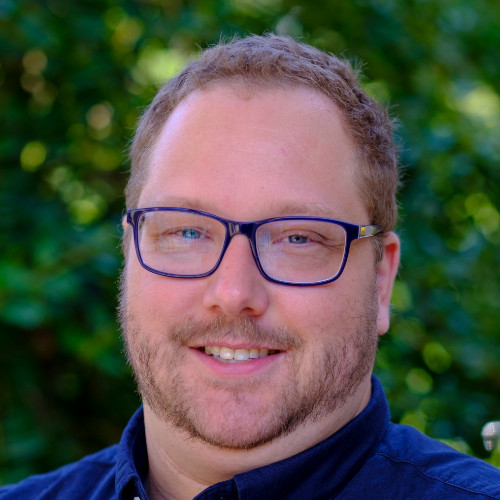
Photo of Richard Carey, JD and MPA Candidate 2020
Why did you choose law?
Rich: I went to law school because, at the time, the market for lawyers seemed very robust. Additionally, I went to law school because it was a career I was familiar with and I did not know about the many other options for graduate education when I graduated from undergrad. Getting either a JD or MBA seemed like my only option after coming out of undergrad and, frankly, I did not consider anything else. On a purely academic front, studying law appealed to me because it combines many of my favorite subjects. Law has connections to economics, history, and political science. The amalgamation of those topics was what I really liked about it.
What made you decide to pursue an MPA?
Rich: The practice of law is very different from what, I think, most people think it is. It is not like Law & Order or any other show/movie. Lawyers spend a great deal of time working alone, they spend a great deal of time working to find more work and clients, and they spend a great deal of time working on things that are not the practice of law. None of this appealed to me. I decided I needed an MPA to get back to my life’s goal of helping others as part of a community, and to work collaboratively with others to solve complex problems.
What is law school like vs the MPA program?
Rich: Law school is incredibly competitive and by its very nature, zero-sum. If you get an A in a class that means someone else got a B because of strict rules regarding grading curves. That makes it seem more like a competition and less like a journey towards learning. Graduating in the top 25% of your law school class literally decides your career for the next 30 years, so the pressure is intense. The MPA program is far more collegial and welcoming. Professors know your name, and they reach out to you as a student. Law school classes can have 100 people in them, no MPA class at UNC-Chapel Hill has more than 25 and many electives have less than 10.
What do you hope to do with your MPA degree after graduation?
Rich: I want to work for a small- or medium-sized local government in the manager’s office as a policy analyst or budget professional. My end goal would be to work as a city/town manager for a community of 10,000 people or under.
If you could do it all over again, would you still get your JD?
Rich: With perfect hindsight, I would have made several different changes. I think if I could have done it all over, I would have tried to do a JD/MPA joint degree at Northern Illinois University. If I had known what I know now about what the practice of law really entailed, I would have tried for a career as Town/City Attorney. I am very proud that I got through law school, passed the bar exam, and did some very good work for my clients. That being said, if I had picked the right graduate program for me back in 2005, it means I could have 12 years’ experience in local government work. But also my current path brought me to meeting my wife, my cohort, and a nice house in Chapel Hill, so I don’t know if I would change that if I could.
Any advice for someone contemplating between a JD and an MPA?
Rich: I would encourage anyone who wants to go to law school to spend a day or two with someone who is actually practicing law. And not a senior person, someone a year or two out of law school. And not on a special day where they are on trial or something, a regular Tuesday. People applying to law school need to know that it could be years (or a decade) before you have your own clients, before you can choose which cases you work on, and even when those two are true, you are going to be spending the majority of your time working on things that are not legal-related. You will be looking for clients, helping to run a law firm, and chasing down clients who owe you money. Ten years out of a UNC-Chapel Hill MPA program, you could be the city manager of fairy large municipality.
The MPA offers a bunch of advantages for the right person. It is a two-year degree instead of three. They are usually cheaper than law school, especially private law schools. You will start helping your community while you are in graduate school through research and coursework. When you graduate you will be ready to start helping in your community immediately and you will find that there are plenty of employers looking to hire you. You will be working on actual policy for actual people right away!
Thanks, Rich for providing that insight! Be on the lookout for next’s responses from Lori, our other resident JD who is in her first year of the program.
Given the recent challenges across the United States with confederate statues, building names, and town names, public service leaders are charged with listening and navigating highly emotional and challenging spaces to best serve the public. In Chapel Hill, there were challenges with Silent Sam on campus. Silent Sam is a confederate statue that once stood on UNC-Chapel Hill’s campus in the upper quad (McCorkle Place). It was granted to the University in 1913 by the United Daughters of the Confederacy. In recent years, there has been growing controversy over the existence and placement of the statue on UNC-Chapel Hill’s campus. After years of debate and days of protest, Silent Sam was torn down the day right before the first day of classes in August 2018. (To learn more about Silent Sam’s History, click here).
However, these challenges reach farther than UNC-Chapel Hill and its surrounding towns. Currently, I work for Chatham County Manager’s Office and we are navigating the removal of a Confederate statue at our Historic Courthouse in Pittsboro, NC. Chatham is a neighboring county to Orange County (where Chapel Hill and Carrboro are located). Since March of 2019, there has been a large push to remove the Confederate Statue placed at the Courthouse in the Town’s center. (To learn more about the contention in Chatham around the monument, click here). The list of places working through these types of challenges does not end here. Given the current times, these are some of the challenges that public service leaders are continuing to face.
To support future public service leaders and current practitioners, the MPA Diversity Committee hosted a breakfast panel about managing conflict and promoting inclusion in difficult political climates on 11/6/19. The Committee brought three panelists that represented the city, county, and non-profit contexts of public service.
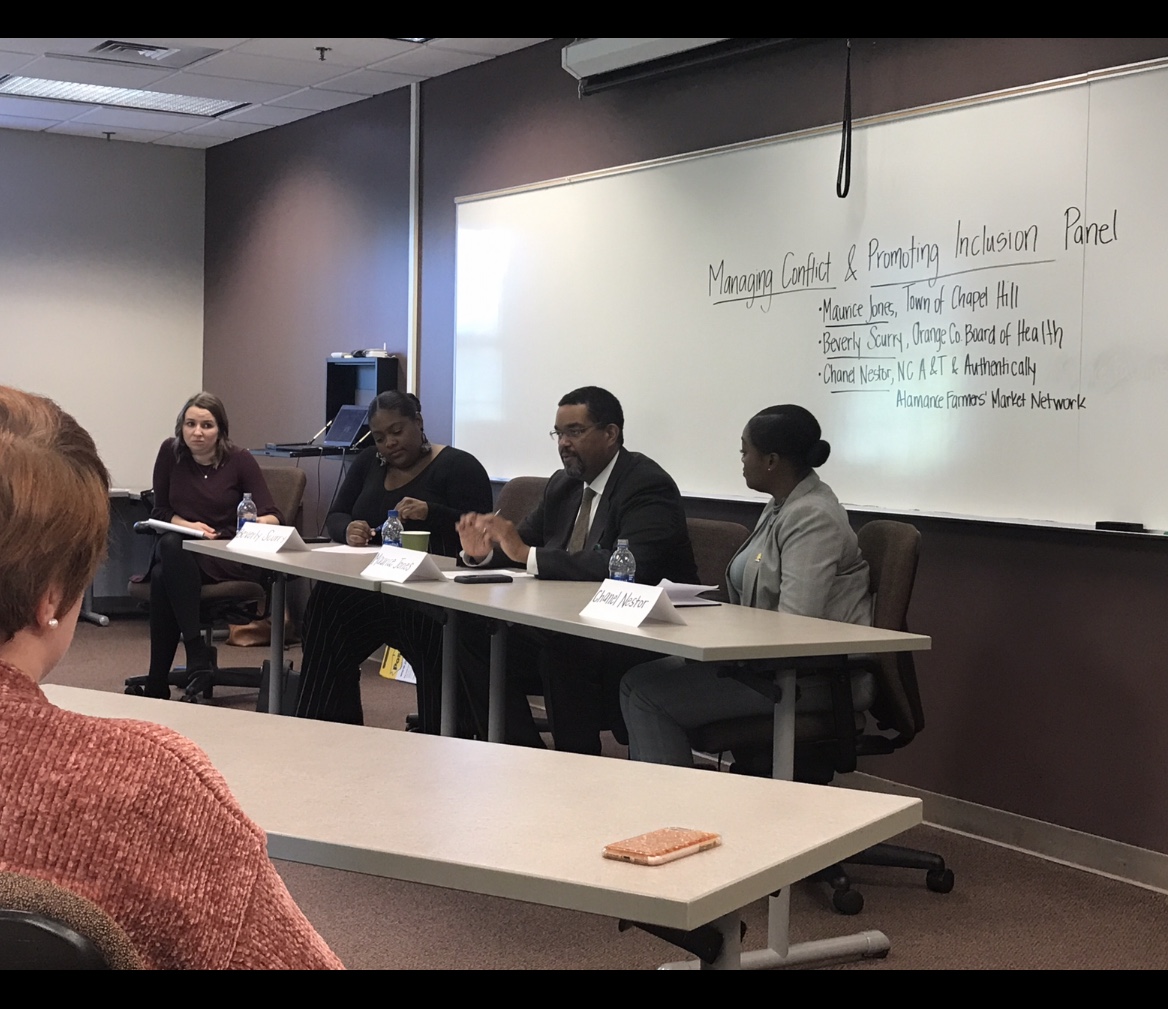
From left to right, Maggie Bailey (moderator), Beverly Scurry, Maurice Jones, and Chanel Nestor.
For the city context, the Diversity Committee invited Maurice Jones who is the current Town Manager of Chapel Hill and served as the previous Town Manager of Charlottesville during the Unite the Right rally. Beverly Scurry represented the county context by speaking about her experience as the Orange County Board of Health Strategic Plan Manager and community organizer in Alamance County. For the non-profit sector, the Committee invited Chanel Nestor who serves as an Adjunct Lecturer of Rural Sociology at NC A&T and Farmers’ Market Coordinator of the Authentically Alamance Farmers’ Market Network in Alamance County. Chanel was able to speak not only about the non-profit context, but also the rural context.
The panel served as a great opportunity to learn about implementing inclusive measures and goals into strategic planning, balancing competing values, and equity implementation in rural versus urban settings. Each member of the panel brought a unique perspective from their personal and professional experiences of navigating difficult political climates through managing conflict and continuing to promote inclusion. The panelists’ different specialties demonstrated the true intersectionality and opportunity for inclusion in public service.

Downtown Chapel Hill – Franklin Street
Today is October 21, 2019 – this puts us 3/4ths of the way through hurricane season.
Chapel Hill, even though it is pretty inland, has been hit by hurricanes in the past. Just last year, Hurricane Florence hit Chapel Hill bringing more than nine inches of rain over four days.
Weather emergencies pose a unique challenge to local government leaders (often MPA graduates). In times of emergencies, local governments benefit from having an infrastructure to be able to communicate to residents during times of high need. This information includes providing evacuation routes, shelter locations, and weather updates.
DID YOU KNOW…
That the Town of Chapel Hill won an Award of Excellence for Hurricane Florence Communication. The Town was awarded this recognition by the City-County Communications & Marketing Association (3CMA) last month.
We are so proud to be apart of the Chapel Hill community. It’s also good to know that our local government works hard to serve us well in our times of highest need!
See original article here.
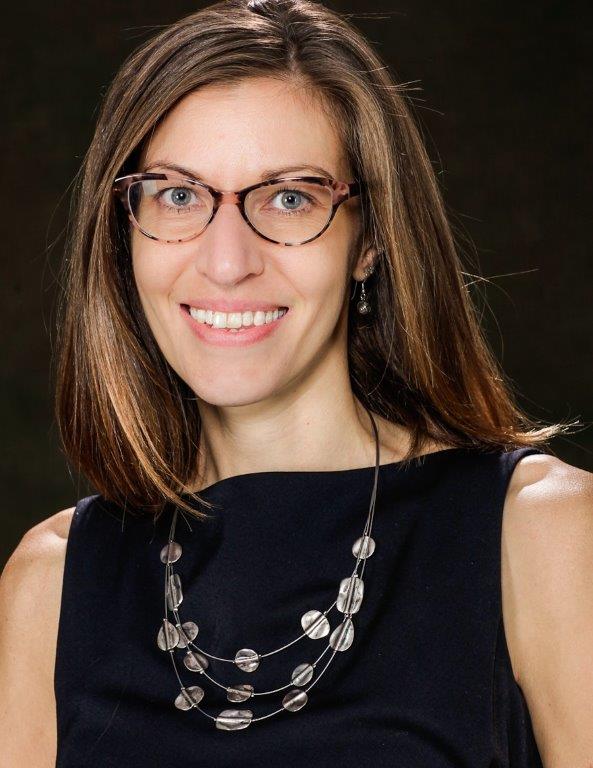
Welcome to the MPA team, Krisitin!
Kristin Pawlowski is our new Associate Director of Alumni and Employer Relations for the MPA Program! Kristin is coming to us with great experience and skills, especially after serving UNC students for more than 3 years. We are super excited to have her as an addition to our team. To learn more about Kristin, we decided to do a Q&A with her!
Where are you from? Kristin: I grew up outside of DC in Potomac Falls, VA
What is a fun or interesting fact about your hometown? Kristin: Growing up outside of DC gave me access to all of the Smithsonian Museums and Galleries; however, this resulted in me not realizing until college that it is actually customary to have to pay to gain access to a museum or gallery.
What are you most excited about in your new role? Kristin: Being a part of a service minded community! I am eager to leverage skills and experiences to pave pathways that enable the individuals who comprise our community to serve as the future public leaders.
What is something that surprised you about your chosen career path? Kristin: EVERYTHING! Nothing about my career path has been anticipated. I am fortunate to have been raised by parents who consistently encourage me to reflect on my experiences, embrace change as an opportunity for growth, and confident in following paths reflective of my values. While my path has been serendipitous, my experiences have brought me a lot of joy and meaning.
Who inspires you? Kristin: My parents and the students with whom I engage. You all are doing some pretty inspiring things!
What is the best piece of professional advice that you have ever received? Kristin: Develop and retain a core set of professional mentors.
Any parting wisdom for prospective MPA students? Kristin: Be okay with not having all of the answers; opportunity lies in the uncertainty. Take the time to reflect upon what excites and motivates you, be intentional about the actions/decisions you make; and what something is exciting and totally scary, go for it, as those are the environments in which you will be your best-self.
Thanks so much, Kristin! We can’t wait to continue working with you.
When most people think MPA at UNC-Chapel Hill, they think local government. Rightfully so, we are ranked #2 in the nation for the local government area of study. However, that is not where our knowledge stops.
Like I mentioned a few blog posts ago, the MPA program has many different concentrations (see here). One of our concentrations is non-profit management. We offer courses such as Financial Management of Nonprofit Organizations and Grant Writing and Evaluation.
Click here to see a full list of the courses for our nonprofit management concentration.
Want to know some of the cool, not local government things our alumni are doing?
Check out Wad Khalafalla, a 2018 MPA graduate with a nonprofit management concentration. Currently, she serves as the Deputy Director of Spread the Vote in Virginia! This year, Wad was awarded the Fulbright U.S. Student Program award to teach English in Malaysia. We are super excited to see where life takes you, Wad!
To learn more about Wad’s award, click here.
Check out Ashley Kazouh, a 2019 MPA graduate with a nonprofit management concentration. She currently works as a policy analyst for the Public School Forum. Ashley supports the policy team by monitoring, documenting, and providing analysis of current education policy issues in North Carolina. Talk about impact!
To learn more about Ashley’s role, click here.
Check out Ebony West, another 2018 MPA graduate, who now works at the Triangle Community Foundation as the Programs and Engagement Associate. In her role, Ebony establishes and strengthens relationships with nonprofit organizations and other partners in the region. She provides the Foundation with the community and nonprofit research about systemic inequities. Amazing!
To learn more about Ebony’s role, click here.
These are only some of the options that MPA graduates have. Cara and I are always working to strengthen our relationships with nonprofits so that we can support our students! So much so that yesterday, I went to the Orange County Third Sector Alliance Nonprofit Fair. It was an awesome opportunity to network and connect with nonprofits like the Compass Center for Women and Families, Wonder Connection, the Dispute Settlement Center, and Grow Your World. Needless to say, they were excited to know that MPA-ers are interested in nonprofit work as well!
See you next time!
Did you know that the MPA program offers a few weekend-intensive courses?
They sure do! The weekend intensive courses are called immersion courses. They are intended to allow collaborative learning between our online and on-campus students. You spend a few weeks before your weekend meet date doing preliminary work online, which can include reading, quizzes, and assignments. Then, once your meet time rolls around, you get the opportunity to meet up with online and on-campus students from Thursday night, and Friday and Saturday all day! All of this earns your 1.5 credit hours…crazy cool, I know!
Honestly, I had never heard of this until I came to the MPA program! On a whim last year, I decided to sign up for my first ever immersion course. Last year’s course was on Collaboration and Collective Impact. This year’s course is on Data Visualization. The course title is “Communicating Data for Public Impact.” It will be taught by John Quinterno.
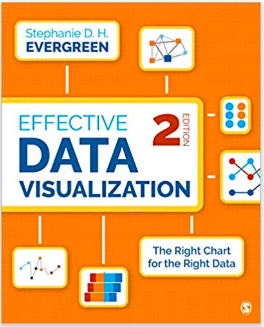
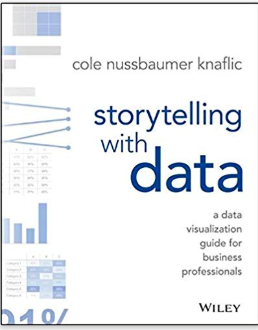
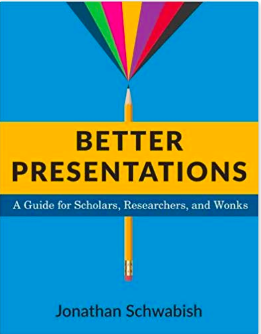
Here are the books that we are using for the course: Effective Data Visualization: The Right Chart for the Right Data by Stephanie Evergreen, Storytelling with Data: A Data Visualization Guide for Business Professionals by Cole Nussbaumer Knaflic, and Better Presentations: A Guide for Scholars, Researchers, and Wonks by Jonathan Schwabish
According to Quinterno’s syllabus, “Data Visualization has become the catch-all term used to describe the methods, techniques, and tools for organizing and disseminating the kinds of information common in public life in ways grounded in recent scientific insights.” He describes that this will be a skills-based crash course where we will cover how to develop clear messages, design effective visual representations of data, and create more effective oral presentations.
The books, so far, have been informative, light reads. I am excited to expand my skills base in an area that I know will only increase in demand. Plus, I will get to interact with the online MPA students that I don’t get to see very often. And one of the nights, we actually have a dinner/networking session with MPA Alum.
Needless to say, I am pretty excited about what I will learn in this course!
For a general overview of the MPA Immersion, click here.