Welcome back to my blog! This week, I learned a lot about the organizational culture of the EPA. Like any large organization, the EPA sometimes experiences challenges such as breakdown in communication channels and competing values. However, this week I discovered what makes the organization so successful, and its the people that work there!
I am constantly seeing new faces, learning about different roles, and forgetting the name of the person whose hand I just shook. It can be a bit overwhelming at times, but I am extremely grateful for every interaction–large or small–because everyone is just so nice. The career public servants at the EPA are intelligent, kind, supportive, passionate, and genuinely good people. I spent this week realizing that the EPA is filled with employees who care about the work they do and the people they work with, which is the perfect recipe for an enjoyable and productive work environment. From the moment I set foot on campus, there is always a smiling face wishing me a Happy Friday or offering to discuss the latest SIP proposal. Whether it is a friendly “Good Morning!” at the security checkpoints (of which there are many) or a weekly check-in with my boss, everyone offers support and guidance in any capacity that they can.
When I was not in awe of the incredible people that I work with, I was looking over the latest SIP proposals. State Implementation Plans or SIPs are plans that each state must develop to meet the National Ambient Air Quality Standards (NAAQS) established by the Clean Air Act. The EPA is responsible for reviewing these SIPs, approving or denying them, and offering guidance regarding their substance. The latest SIP proposals can be found in the Federal Register and approved revisions can be found in the Code of Federal Regulations! SIPs are extremely complex and important, so nearly every day we are on the phone with the Office of General Counsel (OGC), which is an entire office dedicated to legal guidance and representation for the EPA. If you are ever curious to learn about the actions your state is taking to protect its air quality, check out its SIP at: www.epa.gov

President Nixon signed the original Clean Air Act into law in 1970.
That is all for this week–thanks for reading!
Sydney
Memphis, Baltimore, Kansas City, Montgomery, Prescott, Charlotte, Highlands Ranch, Savannah, Parkland—what do all of these cities have in common?
Schools that have lost students and educators to school shooting incidences on campus.
With an increase in not only school shootings, but also a heavy prevalence of bullying, cyber bullying, self-harm, suicide ideation, and suicides at school-age students, school safety has become the number one priority for lawmakers and administrators across North Carolina. Superintendent Johnson firmly believes all students should feel welcomed and comfortable attending school daily, and not fearful of if their school is next to be listed above.
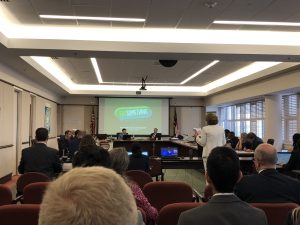
As I have been working in the Superintendent’s office for the past week, the issue of school safety has repeatedly been brought to the forefront. Whether it was meeting with legislators about the budget to ensure school safety grants are funded, attending press conferences with Superintendent Johnson about his plan to address school safety concerns, participating in State Board of Education meetings, or listening to Sandy Hook Promise, an organization dedicated to preventing school shooting crises, the safety of North Carolina students has been the number one concern for not only parents, teachers, administrators, and students, but also lawmakers, private organizations, and my team at the Superintendent’s office.
While the schools that have been impacted by these incidences vary in size, location, age, demographic, magnitude of incident, and connection to shooter, what is not unique are the many students at these schools that told administrators and law enforcement that they saw signs of concern prior to the incident. However, many students reported they “thought someone else would report it,” or “thought the person probably wasn’t serious,” or they did not feel comfortable telling a teacher or student resource officer.
Based on the feedback of schools, law enforcement officers’ input regarding these incidences, and organizations that are experts in best practices, students are the eyes and ears on the ground in these circumstances. Thus, the Superintendent has partnered with Sandy Hook Promise, founded by a mother who lost her son to the Sandy Hook massacre, to create an app that allows students to report any concerns they have anonymously. This app will be launched in every middle and high school in North Carolina in the coming school year, and teachers and students will be trained by these professionals on how to spot signs of students who might be planning to hurt themselves or others.
While parents and school personnel will have access to the app to make reports, the app is designed to be a tool by the students, for the students to help students feel empowered to speak up, protect themselves, and protect others. There will be a control center dedicated to North Carolina that will take-in each report and determine if it is life threatening at that time and take action by contacting local law enforcement, school officials, and teachers, all while continuing communication anonymously with the tipster to obtain the most information possible.
While this app was not my idea, I am super excited to be a part of the Superintendent’s team as he continues rolling out plans for this partnership this summer; the legislative team as we continue working with the General Assembly to ensure these priorities are reflected in the budget and bills, and the team of those that care deeply about protecting the students of our schools. It will be great to be a part of such a big project being launched nationwide, and I’ll keep y’all posted!
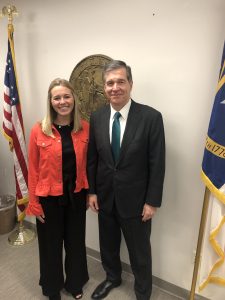
P.S. I attended the Council of State meeting this week with all statewide elected officials and got to snap a pic with Governor Cooper 😉
That’s right. It was my week with Planning! I had an amazing time with the many people and jobs that make up the Planning department in Salisbury. But before I continue, a trivia question: Why can a parcel of land within a certain airport zone NOT have a stormwater pond? The answer is at the end of this post, with the hope that you will accidentally read the whole thing while scrolling down.
I started the week learning a little more about the Comprehensive Plan, which lays out goals for the future quality of life and development in Salisbury with steps the City can take to reach them. The last Comprehensive Plan done by the City was in 2001, so they are due for an update. I had the opportunity to seek out the most recent data from the US Census Bureau in order to measure progress toward community goals. This data included measures such as housing affordability in relation to income, education levels, and employment levels and types. While the Comprehensive Plan is just a guideline, it is the first step in shaping the future of Salisbury.
Zoning is, of course, a very crucial part of planning. Zoning determines what type of development can occur in a certain area of the city and is the reason you don’t find a large industrial park in the middle of a residential neighborhood. One thing I didn’t realize about zoning was how specific the Land Development Ordinance (LDO) can be. For example, a residential zone not only requires a residential unit, but it can be broken down into different types of residential units with a certain number of parking spaces and a certain setback from the road etc. depending on the category. I definitely have a greater appreciation for zoning, knowing now that a lot of thought and planning is involved in simply making the environment around me make sense. Click here to see the current zoning map and some other awesome maps made with GIS (an essential in a planning department and life).
Something that makes Salisbury unique are the national and local historic districts of the City. Driving through downtown, it would be hard to miss the fact that Salisbury cares about preserving its past, with faded Cheerwine murals on worn brick buildings and period houses lining some residential streets. In fact, the local historic districts’ require that owners get permission before making any changes to the exterior of their building, all the way down to approving period colors of paint for historic houses in which people currently live. It sounds burdensome for business owners and homeowners alike, but the citizens love it and I’ll admit that I do, too.

A Brick Company building in the old industrial district repurposed into a retail store.
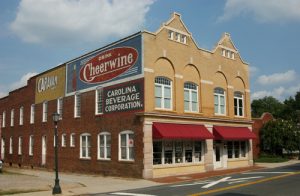
An old Cheerwine advertisement
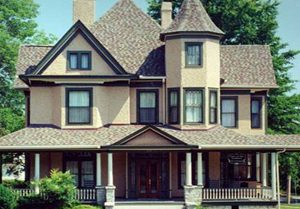
Period House that is still in use
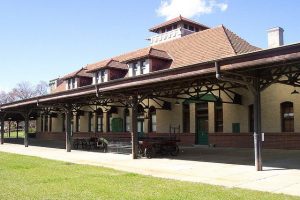
The Salisbury Train Station
I would like to mention an amazing program put on by the Planning Department: BlockWork. Through this program, citizens can submit applications for the city to pay for and help clean up a neighborhood block, with the hope of improving property value and encouraging others to clean up their own blocks as well. A large group of volunteers will come out and, with permission, put new paint on the side of houses, clean the landscape, rebuild sidewalks, and even repair a few roofs. It’s a great way of reaching out to the community and helps the City and its neighborhoods look better one block at a time.

Volunteer putting together fence for BlockWork
While I would love to keep going about my week with planning, I have promised an answer to a trivia question and I will deliver. Parcels of land within certain airport zones (yes, Salisbury has a small airport!) cannot have a stormwater pond because those ponds attract geese, which can then fly up into planes taking off and landing. Just another example of an easy-to-miss yet crucial development ordinance that your local government planners are taking care of for you!
Thank you for making it to the end, even if you just scrolled down for the trivia answer! Come back next week for a little Human Resources, and maybe some more local government trivia!
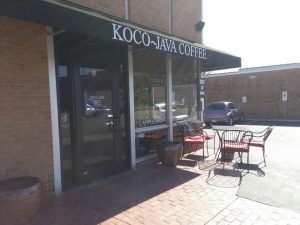
My favorite coffee shop in Salisbury! Koco-Java
This week was one for the books. For everyone who has watched “Parks and Recreation,” we all remember the moment Leslie Knope explains the feeling of town halls and although there was no yelling, there were many moments full of folks caring for their community.
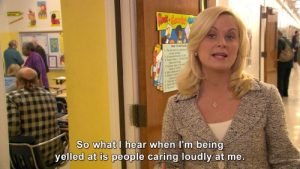
The week was all about taking the budget from proposed to adopted in the City of Durham. It started with budget work sessions on Wednesday and Thursday. These lasted all day and consisted of each department explaining their upcoming budgets, as well as highlights from the previous fiscal year. It was a great opportunity to learn more about what different departments have planned for the coming year. City Council members use this time to understand what is in the proposed budget and ask a variety of questions. This helps ensure they can answer questions that arise from constituents. A photo from the event can be seen below.
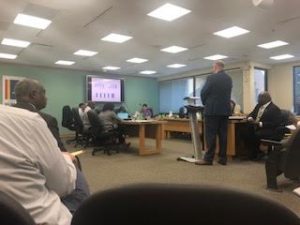
After this finished, it was clear that the Council had more information they wanted to discuss about some items in more detail before making a decision. So they will be holding another work session this Thursday to dive deeper on a handful of topics they will decide to fund or remove from the proposed budget. I will be sure to update everyone on these discussions next week.
I am excited that I will now be working on a multi-departmental project about fees in the City of Durham. The team working on the project has not decided which fees to look at, but we are in the brainstorming stages. Once this is decided, we will dive into the data and look at the equity of fees, and what changes could be made to benefit residents that need it the most. Updates will come on this initiative, but I am extremely excited to learn more from our findings.
In other exciting news, Durham reached their Participatory Budgeting goal and in the first year of voting had over 10,000 residents vote on how they want to spend $2.4 million! The votes are still being tallied and the winning projects will be announced later in June, but it will be great to find out the winners and see the implementation of these projects. I am assisting in tallying the votes, and have loved watching the democratic process. 
Welcome back to my blog posts!
Last week was a fairly short week for me given Memorial Day and being out of town on Friday, so I figured I would take a different spin on this week’s blog post. Let’s talk about the nitty gritty of PWEs as a dual-degree student with the School of Social Work.
First things first, my experience as a dual-degree student has been challenging, but rewarding! Both degrees open doors to many different opportunities. Generally, I think the public is often confused about what social workers (outside of therapists and CPS caseworkers) and public administrators really do. But that confusion provides me with an opportunity to engage with folks about my career goals and the versatility and flexibility of both social work and public administration. For me, the best part of studying in both fields is that it provides me with complementary skills that are necessary for a macro social worker dealing with systems and a public administrator working with people. It is definitely the best of both worlds.
In addition to gaining those extra skills, you also gain some extra experience as a dual-degree student with social work. To ensure that my PWE counts towards both degrees, I have to put in a little extra work. So, I put together a list of some of the key differences that I have noticed thus far in:
A social worker interested in local government?!

Most people’s reaction when I tell them my career goals
As a social worker, people expect that you will want to do non-profit work or work in a Department of Social Services, both of which are great experiences. However, that just wasn’t what I wanted from my PWE. Also, it didn’t really align with my career goals of working in an equity department in a local government. So, I kept my fingers crossed hoping that I would hear of a PWE that could utilize my social work skills in a local government setting. (Shout out to Chatham County!) I was very fortunate that Chatham was looking for someone with a social justice background. Going a non-traditional route challenges me in many ways. I have a lot to learn about navigating local governments, but it also gives me a unique opportunity to share my academic knowledge and skills around working with diverse populations, disparities, and community engagement.
A couple extra hours
Another key difference is that I am required to work a few extra hours. Ok, I think a few might be an understatement. I am actually required to work a little over 600 hours to complete program requirements. My hours count towards both degrees, but the School of Social Work actually requires more hours. Normally, social work students have their PWE (or field placement as we call it in the social work world) throughout the school year, so they are working a significant amount of hours 1 to 3 days a week. Since I am doing my PWE (field placement) during the summer, I am still required to work the same amount of hours. So, I will work quite a bit more hours during the summer compared to my fellow cohort members and blogging buddies…AKA I get to spend more time at Chatham County.

My excitement for being with Chatham County an extra few weeks.
Double SUPPORT
Aside from being able to spend more time working with Chatham County, I also get to the support of TWO supervisors in Chatham County and TWO faculty members at UNC-Chapel Hill. I regularly meet with my immediate supervisor in the Manager’s Office and have once a week meetings with my social work supervisor in the Department of Social Services. With both supervisors, I get to talk about how I see both of my degree fields interacting and supporting each other. I also get the support of Susan Austin in the School of Government and Robin Sansing in the School of Social Work. They both help me frame experiences and reflections to support my academic progress. Honestly, it’s a pretty cool set-up.

I am one lucky person!
Even though dual-degree with social work requires a little extra work, I wouldn’t trade it for the world. I love my degrees and how perfectly they interact to support me during my PWE with Chatham County and my career goals.
Thanks for sticking around! I look forward to updating you more next week!
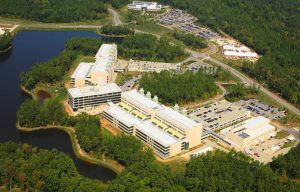
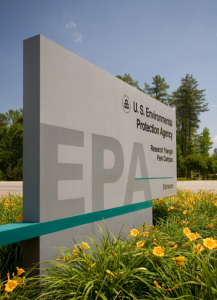
Greetings from Research Triangle Park! My first week at the Environmental Protection Agency was incredible, and I am so thankful for the opportunity to be working here. The RTP headquarters houses over 2,000 EPA employees and 15 different offices, including the Office of Air Quality Planning and Standards (OAQPS) where I am employed–an aerial photo of the RTP headquarters can be seen below! Within OAQPS, I work in the State and Local Programs Group in the Air Quality Policy Division. My group works directly with the 10 different Regional EPA Offices across the country to ensure that states are meeting the National Ambient Air Quality Standards established by the Clean Air Act.
This week, I spent a lot of time meeting new people as well as seeing some familiar faces, including Jenny Noonan and Jackie Ashley, two UNC MPA alums! I shadowed my new coworkers and sat in on numerous meetings related to air quality policy and regulation. There are THOUSANDS of acronyms within the EPA, so it is possible to sit through an entire meeting without knowing what anyone is talking about! Fortunately, my coworkers are incredibly kind and helpful and take the time to answer all of my questions about SSM SIP call actions and the PM 2.5 NAAQS (see what I mean?)
Most of my work this summer will be with the EPA Advance Program, which supports states, tribes, and local governments to take proactive steps to keep their air clean by promoting local actions to reduce ozone and/or fine particle pollution. While most of the OAQPS is focused on regulatory action, this program encourages voluntary commitments and actions to improve air quality. I am very excited about this opportunity to work with various levels of governments and stakeholders on environmental issues.
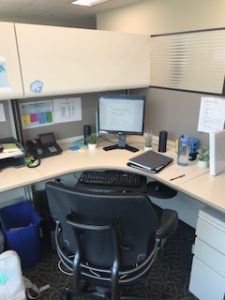
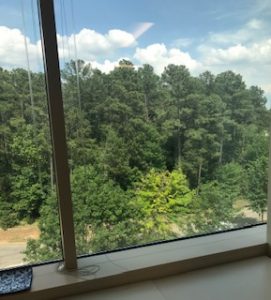
Perhaps the most exciting part of my new job is that I have my own office WITH a window! It’s pretty fulfilling to turn around in my chair and see a Carolina blue sky, reminding me of the natural resources and environment we’re all working to protect. In addition, there is a large lake and walking trails surrounding campus that employees are free to utilize and enjoy!
I am so grateful for this opportunity and eager to learn about the Agency in the coming months!
Until next week,
Sydney
Week 1 at the Urban Institute
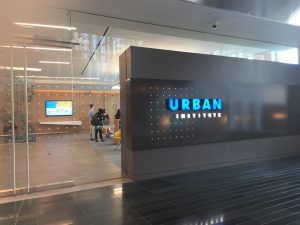
Day 1 walking into the wide glass doors and spacious marble floor of the Urban Institute located at 500 L’Enfant Plaza in Washington D.C. was impressive. Urban Institute is a non-partisan organization founded by Lyndon B. Johnson in 1968 as a response to the need for more equitable social science research to develop urban communities. In their “Next 50” campaign Urban Institute sets goals to attain more progress, more funding and more sustainable impacts on the surrounding communities by improving the policy making process with research. My internship concentration is promoting a more diverse research breadth by recruiting more diverse research associates and interns. The ability of the Urban Institute to retain and gain more diverse employees is crucial to developing policy that is more reflective of urban communities.
The other interns are from universities throughout the U.S. and relocated to the DC area for the summer. They work in centers such as labor, human capital and population, urban development and international development. The interns contribute skills in public policy, international relations, data science, economics and business. Throughout the Urban Institute there is a sense of pride in each intern class and junior hires. They are also proud of the research that the associates and senior staff produce in the long term and contribute to public policy as a whole. I am impressed with the academic and research backgrounds of all my colleagues.
This summer, I am joining UNC MPA alumna, Teresa Derrick-Mills (1992) as she contributes to Urban Institutes efforts to improve the diversity of staff composition, equity and inclusion in workforce culture, and diversity and equity-respectful content and language in the research. Teresa is a principal research associate at the Urban Institute who obtained her PhD in public policy and public administration at George Washington University after using her MPA to support early care and education systems-building efforts in North Carolina for 15 years. She now studies early care and education issues, workforce development systems, juvenile justice, and various human services, and supports research and evaluation capacity building for governments and nonprofits.
Each day is a fantastic opportunity to walk through the DC neighborhoods and see famous sites such as the Capitol Building, Jefferson Memorial and the Wharf District. It truly is remarkable location and place to be interning this summer.
500 L’Enfant Plaza
Even the best public administrators make mistakes, which is why it is important to surround yourself with excellent staff (and summer interns of course). My shining moment in my week with Finance came after reading through the proposed budget, when City Manager Lane Bailey walked in and asked me if I had any thoughts. I mentioned my interest in an “Animal Tax” in the budget ordinance that charges $1 per dog, and went on to explain my real concern – that cats were not being charged, too (clearly the tax was created by a cat lover). At this moment, City Manager Bailey realized that he wasn’t aware of this tax and had not paid it for his own dog, pulling out a dollar and handing it to the Finance Director. It was certainly a close call, but thankfully an MPA intern was there to catch the oversight.
On a more serious note, I had some interesting conversations about the budget with finance staff throughout the week. One question I had was why more line-item detail was put in this years’ budget compared to last year. Apparently, a council member (or multiple) requested more information compared to last years’ budget, which mostly had totals for different departments and funds. This prompted another discussion about how the council members shape the budget details and priorities, and specifically how these areas can change with changes in elected officials. This is especially true for Salisbury, as all 5 council seats come up for election at the same time every 2 years, meaning the council could actually be 5 new and completely different people from cycle to cycle.
Another interesting part of Salisbury’s budget is the inclusion of capital replacement funds. That is, the budget already allocates money to replace capital assets when they reach their designated use life, without departments having to request new funds whenever a piece of equipment gets old. For example, when a computer is 4 years old (not sure on the lifetime assigned to a computer but go with it) funds are already there to replace that computer without requiring a department to complain about a slow computer and send in a request for new computers in their next budget. You may have the same question I did – what do you do with the old computer? The City of Salisbury utilizes a website called GovDeals.com, which allows local governments to sell equipment to anyone (YES, EVEN YOU!) and make some money back for the City. Supposedly one municipality used the site to sell a whole water tower for $2, but they saved the $50,000 it would have cost them to tear it down as the buyer is responsible for picking it up (I don’t really know how the process of taking a water tower works because I doubt it fits in a truck bed, but I assume the buyer paid for it to be taken apart himself).
I would like to end by mentioning a tougher meeting I attended with Finance this week. Essentially, a department was getting feedback on potentially requesting an expensive but important backup generator setup. The setup would cost nearly $80,000, but would be the backup if the power and first generator went out at the location, potentially providing power to crucial systems during an emergency. Further, the setup would also provide power to the designated Emergency Operations Center that houses those systems, which is a crucial location to have power in emergency situations. It is tough to spend a lot of money on something you hope you never need to use, and while the decision seemed to be in favor of the project, the question then becomes about when you pay for it, especially around fiscal year end.
That does it for Finance Week. Feel free to check out Salisbury’s proposed budget here, and check back later to see the adopted budget (fun fact: Salisbury’s adopted budget includes an Addendum that lists changes between the proposed and the adopted budgets).
Come back next week for Planning!
As a reward for making it through this long post with no pictures, here is my current fav restaurant in Salisbury, Yummi Banh Mi:
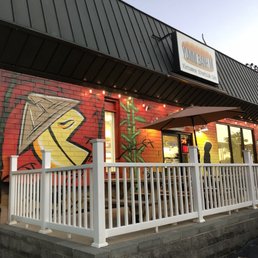
Yummi Banh Mi – Vietnamese Streetfood Restaurant
Well, I finished my first day in the office of North Carolina Superintendent of Public Schools, Mark Johnson. It has been my dream for as long as I can remember to be a part of state education policy and administration. I have prayed about finding a position where I can be the link between schools and policymakers—where I voice the priorities and needs of teachers, administrators, students, and parents to policymakers, ultimately influencing their policy decisions surrounding K-12 education. As an intern with the legislative team, I have already interacted with legislators following the release of the General Assembly’s 2019-2021 biennium budget on my first day. We attended appropriation committee meetings, made phone calls, met with legislative staff, and drafted amendments all before 10:00 am the next day when amendments were due to make sure the Superintendent’s priorities were included in the proposed budget.
I am already questioning the dynamics of the politics-administration dichotomy often debated by scholars and our cohort alike. As Woodrow Wilson wrote, “The field of administration is a field of business. It is removed from the hurry and strife of politics…. Administration lies outside the proper sphere of politics. Administrative questions are not political questions. Although politics sets the tasks for administration, it should not be suffered to manipulate its offices.” While I only have a first glance at the inner workings of the department, I am not so sure I agree with President Wilson. The legislative team of the superintendent was certainly in the “hurry and strife of politics” on my first day to ensure that the “set tasks for administration” align with the priorities and values of the administrators. I have defined our team as “public sector lobbyists” that lobbies from within the department—that is certainly not outside the “proper sphere of politics” that President Wilson suggested.
Despite the overwhelming feeling of first day feels, the anxious look in my eyes as I wander around lost, and the flurry of remembering everyone’s names, I still feel valued, supported, and needed here. I am so excited to continue pursuing my passion for serving children through bettering education policy one day at a time. It is going to be a crazy few weeks, working late nights as the G.A. moves towards passing the new budget and going to conference. Following the passage of the budget, I am eager to start working with the policy team to figure out implementation policy. First day finished, feeling fine 🙂
It’s week three and I am hitting the ground running! I found my two favorite Pittsboro coffee shops and a restaurant that sells an amazing strawberry red velvet cake. So, I think it’s safe to say that I finally feel like I am getting into the swing of things out here in good ol’ Pittsboro, NC.

Davenport’s Cafe Diem: they have my favorite matcha latte’s and serve as an amazing place to meet and chat with community members
Before I dive deep into what I’ve been up to over the last few weeks, I figure I should provide some context to the Human Relations initiative that I am working on with Chatham County. So, prior to starting my internship the County Commissioners expressed a desire for wanting a Human Relations entity. The County then created a Human Relations Task Force to establish a framework for the entity, which they are now hoping will be a community-led Human Relations collaborative.
One of my key tasks for the summer is to learn about the County through engaging with community members. The hope is that I will be able to identify some challenges that the Human Relations Collaborative will be able to rally around and tackle. Two weeks ago, I started meeting with Chatham County community members to get a better understanding of the community. So far, I have completed 14 interviews. Each interview is semi-structured with four main areas of exploration:
So far, I have been handwriting notes during interviews and then transcribing them into an excel document so that I can code them to find key themes. I am very excited to see the outcome!
My weeks haven’t been filled only with interviews…I have also attended some community meetings as well. I’ve met with the Public Health Department, Better Angels, faith communities, and I can’t wait to do more! Last week, I went to a community lunch hosted by St. Bartholomew’s Episcopal Church. Their mission is to provide a healthy, appetizing meal at no cost to all who come to us hungry. The community lunch had a great turn out with even better food! I was able to talk with people involved at the church as well as a local artist and a farmer. This lunch gave me the opportunity to meet people from all over the County.

St. Bart’s Community Lunch Logo: another great meeting place
If there is anything I know about community engagement, it is that you first must listen to and learn from the community. While at the community meetings, I am often just listening and taking notes of comments and concerns and looking for key themes.
Through the interviews and meetings, I have learned quite a bit about the history of the County and some of the challenges it faces. For me, the best part about this process has been making new connections to community members.
Look forward to updating you again next week!